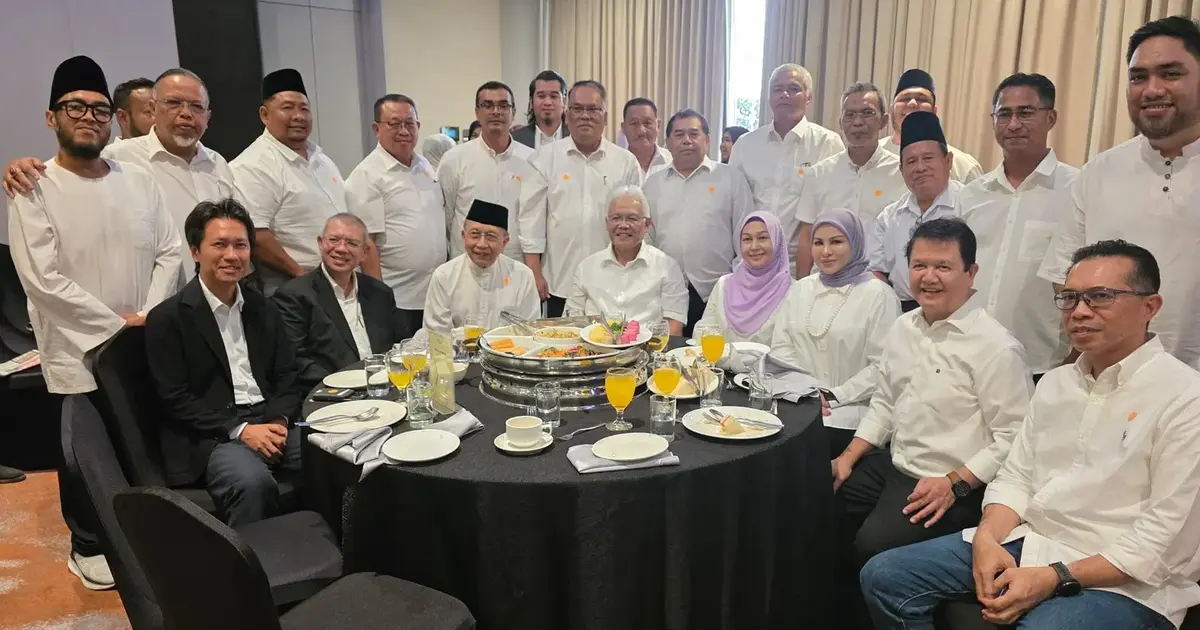
Wawasan has completed a major overhaul of its leadership structure, appointing Hamzah to the position of president in a move that reflects the party's efforts to consolidate its organisational framework and strengthen its political positioning. The announcement marks a pivotal moment for the party as it navigates the increasingly complex landscape of Malaysian politics and seeks to establish clearer direction and purpose among its membership.
Rais Yatim, a figure with extensive experience spanning multiple decades in Malaysian politics and previous ministerial roles, has been selected to serve as chairman of the party. His appointment signals Wawasan's intention to leverage the experience and credibility of seasoned political operators who have navigated the country's shifting political alliances. Yatim brings substantial institutional knowledge and connections that could prove instrumental as the party works to expand its influence and relevance within the broader political ecosystem.
The role of secretary-general has been assigned to Saifuddin Abdullah, the Member of Parliament representing the Indera Mahkota constituency. Abdullah's appointment at this level of party administration reflects recognition of his parliamentary standing and organisational capabilities. His position in the Dewan Rakyat provides direct linkage between the party's administrative machinery and its representation in the nation's legislative chamber, potentially enhancing coordination between party strategy and parliamentary activity.
The structural changes appear designed to create a more defined hierarchy and clearer division of responsibilities within Wawasan's administrative framework. By establishing distinct roles for the president, chairman, and secretary-general, the party appears to be moving towards a more formalised operational model that distinguishes between ceremonial or strategic leadership functions and day-to-day administrative oversight. This type of reorganisation is often undertaken by political parties seeking to professionalise their operations and improve internal coordination.
For Malaysian political observers, these developments underscore the ongoing process of party consolidation that has characterised the post-2018 electoral landscape. Political parties across the spectrum have been compelled to reassess their structures and leadership models in response to shifting voter preferences and changing coalition dynamics. Wawasan's moves reflect this broader trend of modernisation and adaptation that parties consider necessary to remain competitive and relevant.
The appointment of multiple leaders with parliamentary experience demonstrates Wawasan's apparent focus on bridging the gap between grassroots party operations and legislative work. This integration of parliamentary MPs into senior party positions ensures that electoral considerations and legislative strategy inform internal party decision-making. Such alignment can be critical for parties seeking to maintain coherent messaging and coordinate their members' activities across different institutional levels.
Rais Yatim's extensive history in Malaysian governance—including previous ministerial appointments—potentially positions him to attract experienced party members and develop sophisticated policy positions. His presence at the helm suggests Wawasan may be positioning itself as an alternative for voters and politicians seeking a party led by figures with proven administrative track records. This approach differs from parties built primarily around charismatic individuals or single-issue platforms.
The significance of these appointments extends to considerations of party stability and continuity. Leadership transitions in Malaysian political parties often generate internal tensions and questions about policy direction. By bringing in experienced figures like Yatim alongside parliamentarians like Saifuddin Abdullah, Wawasan appears to be attempting to create a leadership team that balances stability with dynamism and connects different organisational layers.
From a regional perspective, Malaysia's ongoing political reorganisation continues to influence how political parties operate across Southeast Asia. The mechanisms through which Malaysian parties restructure themselves, recruit talent, and distribute authority offer lessons to neighbouring countries navigating their own political transitions. Wawasan's moves represent part of a broader trend within the region towards more professionalised party management and clearer institutional design.
The success of this leadership reshuffle will ultimately depend on how effectively Hamzah, Yatim, and Saifuddin Abdullah work together to articulate a compelling political vision and translate it into electoral support. Malaysian political history demonstrates that organisational changes alone cannot guarantee party success without coherent strategy, effective communication, and genuine resonance with voter concerns. The coming months will reveal whether these new leadership structures translate into practical improvements in party performance.
For members and supporters of Wawasan, the appointments represent a moment of potential renewal. The party now has an opportunity to leverage its leadership's combined experience to develop clearer policy platforms, expand its parliamentary representation, and establish itself more firmly within Malaysia's competitive political marketplace. How the party capitalises on these leadership changes will significantly influence its trajectory over the coming electoral cycle.

