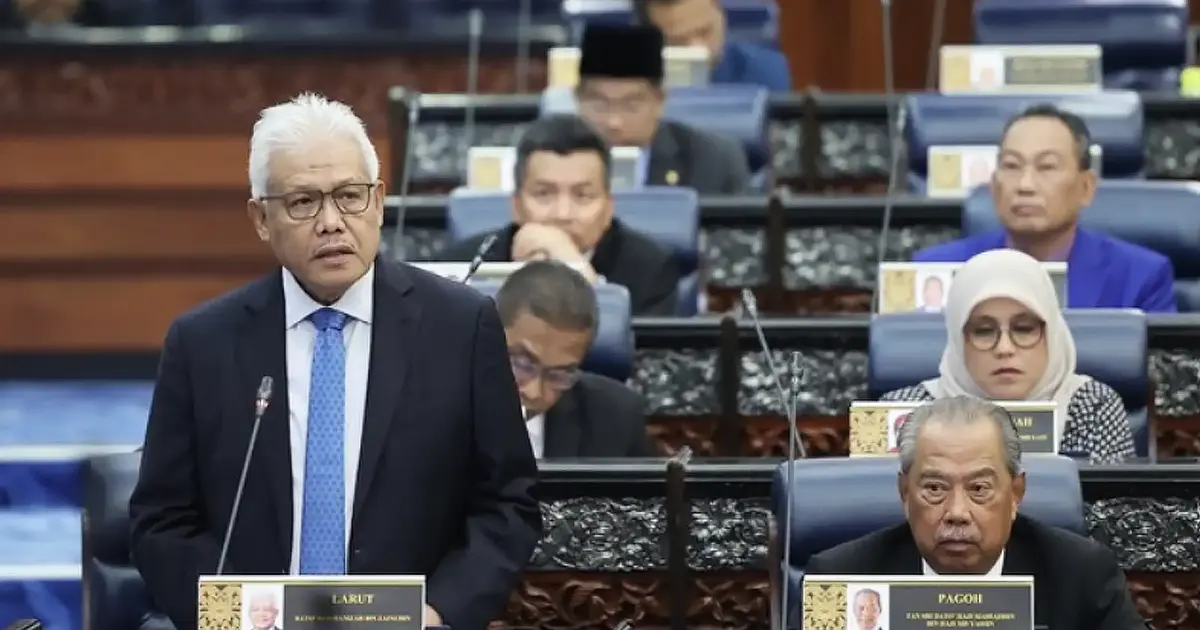
Hamzah Zainudin has reclaimed the prime front-row seat designated for the opposition leader in the Dewan Rakyat, marking a significant repositioning within Parliament's opposition ranks. The move sees Bersatu president Muhyiddin Yassin relocated eight seats down the front row, a change that underscores evolving power dynamics within Malaysia's fragmented opposition coalition as it continues to challenge the government.
Seating arrangements in Parliament carry considerable symbolic weight in Malaysian politics, extending far beyond mere logistics. The opposition leader's position directly adjacent to the Prime Minister represents not only parliamentary protocol but also public recognition of an individual's standing within the opposition bloc. That Hamzah has been restored to this prominent placement signals a consolidation of his authority within opposition ranks, particularly following the earlier precedence accorded to Muhyiddin when Bersatu held greater political leverage during earlier parliamentary configurations.
Muhyiddin Yassin's tenure as Bersatu president has been marked by complex political manoeuvring. His party emerged as a significant player following its 2022 formation by former Prime Minister Mahathir Mohamad, and it secured considerable parliamentary influence through strategic alliances. The previous arrangement placing Muhyiddin in the opposition leader's adjacent seat reflected Bersatu's positioning as a heavyweight faction capable of challenging government policies. His relocation now suggests either a recalibration of the opposition's internal hierarchy or a shift in how opposition parties wish to present their unified challenge to the ruling coalition.
Hamzah Zainudin's background as a seasoned political operator positions him to effectively utilise the visibility that comes with the front-row placement. His track record in parliamentary affairs and opposition coordination makes his restoration to this seat a statement about continuity in opposition leadership and the desire to present a clear, recognisable face to the electorate and to the government bench. The move may also reflect broader agreement among opposition parties about representation and the need for cohesion as they prepare for future electoral contests.
The reshuffling occurs within a broader context of Malaysian opposition fragmentation. Unlike the unified coalitions that have characterised some electoral cycles, the current opposition comprises multiple entities with distinct agendas, funding sources, and geographical strongholds. Hamzah's elevation attempts to create a focal point for these disparate forces, offering a semblance of coordinated opposition even when underlying unity remains tenuous. This is particularly important for Malaysian voters seeking clarity about who leads the alternative government narrative.
For Muhyiddin and Bersatu, the repositioning represents a diminishment of their previous parliamentary prominence, though it need not signal terminal decline. Political fortunes in Malaysia shift rapidly, and a party occupying eight seats back from the front row remains capable of wielding considerable influence through strategic voting and coalition-building. However, the visual and symbolic demotion may impact party morale and external perceptions of Bersatu's trajectory within the opposition ecosystem.
The implications for Malaysian governance extend beyond mere parliamentary theatre. A clearer, more hierarchical opposition structure could theoretically enhance scrutiny of government policies and hold the ruling coalition more effectively accountable. Conversely, if the seating change masks continued fragmentation and strategic disagreements, it may diminish the opposition's capacity to present compelling alternative governance models to the electorate. Malaysia's political system functions most effectively when opposition pressure forces governments toward transparency and policy refinement.
Regional observers note that Malaysia's opposition dynamics influence broader Southeast Asian political patterns. As democratic practice in the region faces pressures from populism and executive dominance, the manner in which Malaysian opposition parties organise themselves carries lessons for neighbouring democracies. A well-coordinated, professionally managed opposition can reinforce institutional checks and balances even in challenging political environments.
The seating realignment also reflects practical parliamentary management. With limited front-row positions and numerous opposition members, decisions about placement inevitably favour some figures while disappointing others. The Dewan Rakyat's Speaker and procedural officials likely consulted with opposition leadership regarding this arrangement, balancing considerations of party seniority, previous contributions, and the desire for a visible, effective opposition voice.
Looking ahead, these arrangements remain fluid and subject to change as political circumstances evolve. Future electoral outcomes, shifts in coalition membership, or changes in party leadership could precipitate further reshuffling. For now, Hamzah's restoration signals that opposition coordination efforts centre on his person and parliamentary role, while Muhyiddin and Bersatu adapt to a recalibrated position within opposition structures. Whether this arrangement facilitates more effective opposition governance remains a question that only parliamentary performance over coming months will answer.

