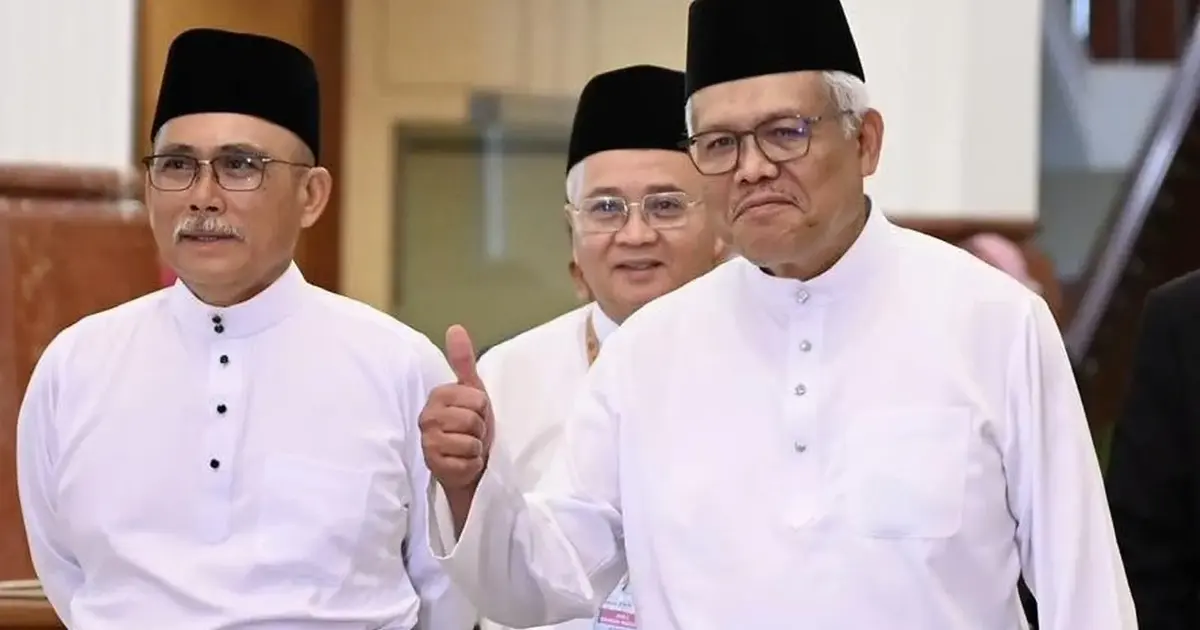
Hamzah Zainudin's appointment as opposition leader stems from commanding support across multiple coalition partners, according to Bersatu's suspended vice-president Kiandee. The Larut MP secured overwhelming backing from PAS as a unified bloc, complemented by the backing of most Bersatu members in parliament, establishing the numerical foundation necessary for the role. This consolidation of support across party lines underscores the complex political realignment currently reshaping Malaysia's opposition framework, where traditional party loyalties have become increasingly malleable in the pursuit of parliamentary influence and leadership positions.
The designation of an opposition leader represents a critical juncture in Malaysia's political landscape, particularly given the fractured nature of current opposition arrangements. Unlike the more straightforward leadership structures of the ruling coalition, opposition leadership must be earned through demonstrable parliamentary numbers and inter-party consensus. Hamzah's elevation reflects this dynamic, as he managed to build sufficient backing not merely within his own Bersatu contingent but across the ideologically distinct PAS, an Islamist-oriented party with its own organizational hierarchy and decision-making processes.
Kiandee's statement carries particular significance given his suspended status within Bersatu, suggesting that even party members operating at the margins of official standing retain meaningful voices in major political decisions. His willingness to publicly articulate the rationale behind Hamzah's appointment indicates that the decision enjoyed broad validation across the opposition camp, despite whatever internal tensions or disagreements may exist regarding other party matters. The suspension itself highlights ongoing turbulence within Bersatu, yet appears not to have diminished Kiandee's capacity to speak authoritatively on major political developments.
The consolidation of PAS support en-bloc represents a strategic alignment of considerable importance. PAS, as a significant parliamentary force with considerable influence particularly in the northern states, functions as a power broker in opposition politics. Its collective backing of Hamzah, rather than backing of individual PAS MPs, demonstrates organizational discipline and suggests high-level agreement among the party's leadership regarding the utility of this alliance. For Malaysian political observers, this bloc voting pattern indicates that PAS leadership made a calculated determination that Hamzah's elevation would serve the party's broader strategic interests within the opposition framework.
Bersatu's contribution to Hamzah's political standing revolves around majority rather than unanimous support among its parliamentary delegation. This distinction proves important, as it indicates that while a commanding number of Bersatu MPs backed his designation, some members either abstained or opposed the arrangement. Such divisions within Bersatu reflect deeper fault lines within the party, which has experienced considerable internal discord since its formation and subsequent repositioning in Malaysian politics. The fact that Hamzah could still achieve opposition leader status despite lacking complete party unity demonstrates that numerical majorities, rather than ideological unanimity, drive contemporary Malaysian politics.
The Larut MP's background and political trajectory made him a plausible candidate for opposition leader, despite the competitive nature of the role. Hamzah brings parliamentary experience and demonstrated capacity to operate effectively within Malaysia's complex political environment. His appeal across multiple opposition parties suggests that colleagues viewed him as a figure capable of providing leadership that transcended narrow party interests, though whether such transcendence actually materializes remains an open question given the historically contentious nature of opposition politics in Malaysia.
For Malaysian readers and regional observers, Hamzah's designation carries implications extending beyond symbolic or ceremonial considerations. Opposition leadership in Malaysia's system carries substantive responsibilities, including articulation of alternative policy visions, parliamentary strategy, and public representation of opposition positions. The legitimacy of opposition leadership depends significantly on the breadth and depth of support underpinning the appointment, making the specificity of Kiandee's claims regarding PAS's en-bloc backing and Bersatu's numerical majority essential to understanding Hamzah's political foundation.
The broader context of opposition politics in Southeast Asia illuminates Malaysia's current situation. Across the region, opposition movements frequently struggle with organizational cohesion and internal divisions that limit their effectiveness. Malaysia's opposition, despite its numerical strength in parliament following recent electoral patterns, remains institutionally fragmented across multiple parties with competing interests and ideological frameworks. Hamzah's ability to command cross-party support suggests that opposition figures can still achieve significant political positioning through consensus-building, even within fractious environments.
Kiandee's public endorsement of Hamzah's designation also reflects calculations about Bersatu's positioning within the broader opposition ecosystem. As a party that has experienced dramatic shifts in its political alignment and internal stability, Bersatu's support for opposition leadership matters significantly to the party's credibility and influence. By rallying most of its parliamentary delegation behind Hamzah, Bersatu signals its commitment to opposition cohesion while presumably securing reciprocal benefits or at least leverage within opposition councils. Such transactional arrangements characterize much of contemporary Malaysian politics, where formal positions translate into real power through the bargaining structures that underpin parliamentary governance.
The months ahead will test whether Hamzah can translate his current parliamentary backing into effective opposition leadership. The sustainability of the support Kiandee describes depends on how Hamzah navigates the competing interests of PAS and Bersatu, both of which have distinct organizational cultures and strategic priorities. Any perceived favoritism toward one coalition partner over another could fracture the consensus that enabled his appointment. Furthermore, the development of government policy responses to opposition initiatives will shape whether the opposition maintains its current cohesion or fragments further, potentially requiring reassessment of leadership arrangements currently in place.