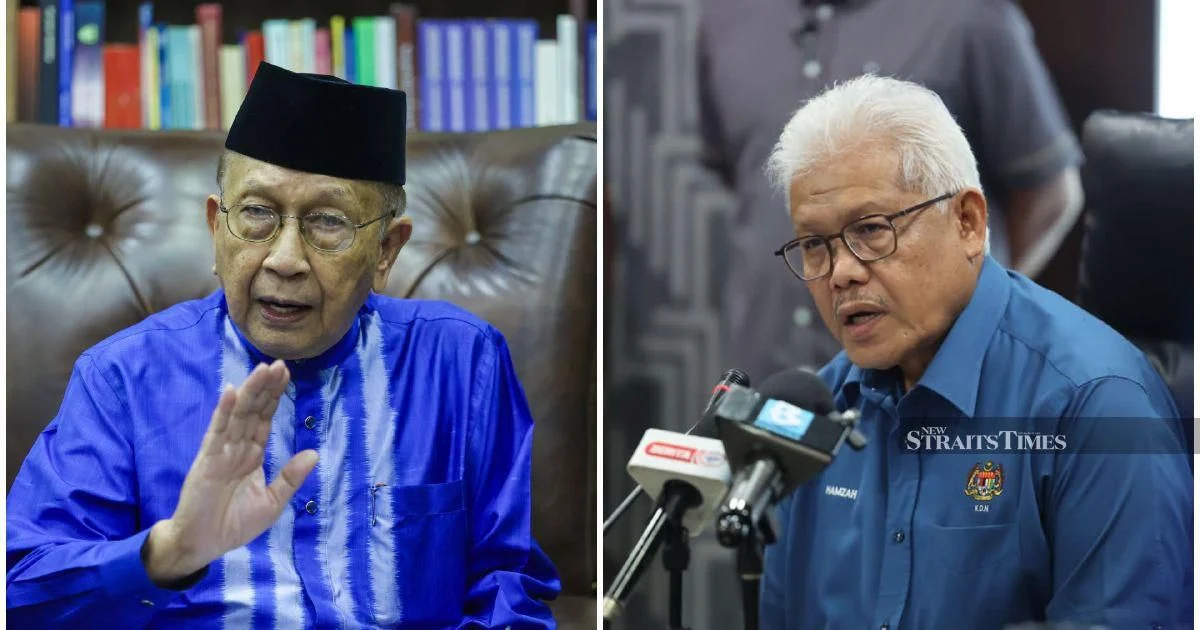
Parti Wawasan Negara has formally announced the composition of its central leadership council, assembling a cadre of seasoned political figures, former government ministers, sitting parliamentarians, and professionals from diverse sectors. The appointment of Hamzah and Rais Yatim to lead the organisation signals the party's ambition to establish credibility through experience in Malaysian politics.
The party's decision to structure its leadership around individuals with prior ministerial exposure reflects a deliberate strategy to leverage established networks and policy expertise. Rais Yatim, whose career has spanned multiple government portfolios and legislative responsibilities, brings institutional knowledge accumulated over decades of political engagement. Similarly, the selection of Hamzah underscores Wawasan's intention to position itself as a serious contender capable of governing at the national level.
The inclusion of sitting members of parliament within the leadership hierarchy demonstrates Wawasan's efforts to bridge grassroots electoral representation with centralised decision-making structures. These parliamentarians contribute direct exposure to constituent concerns and legislative processes, providing practical grounding for the party's policy formulation. Their involvement suggests the organisation views parliamentary experience as essential to credible governance advocacy.
Beyond politicians, Wawasan's recruitment of professionals from outside the conventional political establishment indicates an attempt to diversify perspective within its leadership apparatus. The inclusion of individuals from business, academia, civil society, and technical professions potentially equips the party with broader analytical frameworks and sector-specific expertise that purely political backgrounds might not provide. This hybrid composition reflects contemporary trends in political organisation that seek to blend electoral experience with technocratic competence.
The timing of this leadership announcement carries significance within Malaysia's current political environment. Wawasan's emergence and formalisation of structure occurs amid ongoing coalition realignments and voter uncertainty about existing political alternatives. By showcasing a leadership team spanning generational and professional divides, the party endeavours to present itself as a stabilising force capable of bridging traditional political divisions that have characterised Malaysian politics.
Rais Yatim's appointment particularly signals continuity with Malaysia's administrative traditions. His tenure across various ministerial portfolios has exposed him to the machinery of government, international diplomatic protocols, and the complexities of implementing policy across different sectors. Such background typically enhances a party leader's credibility when articulating governance philosophies or managing expectations around programme implementation.
The formal announcement of Wawasan's full central leadership council represents a developmental milestone for the party, moving beyond initial formation stages to operational governance structures. This maturation suggests the organisation intends serious electoral competition rather than functioning as a temporary protest vehicle or ideological think tank. The specificity in naming a complete leadership hierarchy indicates commitment to sustained organisational development and regular institutional functioning.
From a Malaysian political economy perspective, Wawasan's leadership composition reflects calculated positioning within competitive political space. By assembling figures with cross-sectoral credentials, the party attempts to appeal beyond traditional voter demographics that have anchored major coalitions. The strategy implicitly challenges narratives that electoral success requires membership within established coalition frameworks, instead proposing that assembled competence and fresh organisational culture might attract constituencies dissatisfied with existing options.
The party's ability to attract both former ministers and sitting parliamentarians suggests sufficient perceived viability to encourage defection from existing parties or to prevent sitting legislators from viewing Wawasan participation as career-limiting. This recruitment success, even if limited in absolute numbers, indicates meaningful penetration into conventional political networks—a prerequisite for any emerging party seeking to establish itself as electorally relevant at the national level.
For Southeast Asian observers, Wawasan's structural approach mirrors patterns visible elsewhere in the region where incumbent coalition dominance has prompted alternative political formations. The specificity and formality of Wawasan's leadership architecture distinguishes it from purely personality-driven or faction-based groupings, suggesting institutional ambitions extending beyond individual leadership cycles. The involvement of professionals alongside politicians also reflects regional trends toward incorporating non-traditional political voices into formal governance structures.
The implications for Malaysian political dynamics merit careful tracking. If Wawasan successfully leverages its leadership team to articulate coherent policy platforms and secure meaningful electoral support, it could fragment existing coalition voter bases and force recalibration of coalition strategies. Conversely, if the party struggles to translate leadership credentials into electoral performance, it may reinforce existing coalition dominance while demonstrating the practical challenges confronting new political entrants in Malaysia's structured political environment.

