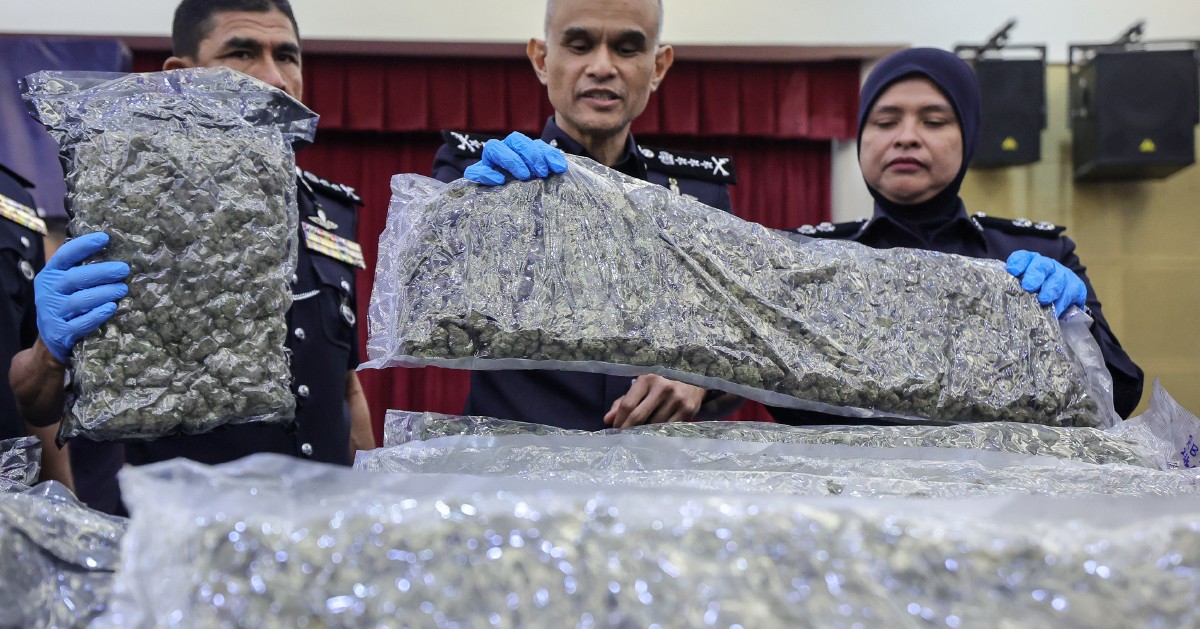
Law enforcement authorities in Shah Alam announced a significant breakthrough in narcotics enforcement this week, revealing that more than 650 kilograms of cannabis buds have been intercepted at Kuala Lumpur International Airport since the start of the year. The seizure marks one of the larger quantities of processed cannabis detected in recent airport operations, underscoring the growing sophistication of drug trafficking rings attempting to exploit Malaysia's primary aviation hub for international smuggling.
The operation, which led to the detention of 38 suspects including multiple foreign nationals, represents a coordinated investigation into an international supply chain designed to move illicit drugs through one of Southeast Asia's busiest transport corridors. The arrests span across nationalities, suggesting the network operated as a transnational enterprise with compartmentalised roles and responsibilities. The involvement of foreign subjects indicates trafficking organisations are increasingly targeting KLIA as a strategic point for moving contraband into and through regional markets.
Detailed patterns from the interdiction effort reveal smugglers have adapted their methods to evade airport security screening, employing multiple concealment techniques within luggage, cargo, and passenger baggage. The 650-kilogram haul did not materialise from a single discovery but rather accumulated through consistent border operations, demonstrating that authorities are maintaining sustained vigilance despite the volume of passengers and freight processed daily at the airport. This consistency reflects evolving intelligence gathering and improved coordination between customs and narcotics units at KLIA.
The seizure assumes particular significance given Malaysia's geographical position as a potential transit nation for substances originating from production zones in Southeast Asia and destined for markets across the region and beyond. Cannabis cultivation and processing operations in parts of the wider region have expanded markedly over recent years, prompting trafficking networks to seek faster, more reliable delivery mechanisms. KLIA's status as a major international hub makes it an attractive target for such organisations, despite the airport's substantial security infrastructure.
The composition of the drug haul—specifically cannabis buds rather than crude plant material—indicates these were processed goods destined for retail or intermediate distribution markets where such products command premium pricing. The sophistication required to move processed cannabis through international borders suggests these networks possess financial resources, established logistics capabilities, and contacts within receiving markets. The 38 arrests likely represent only the visible portion of a larger organisational structure that may extend across multiple jurisdictions.
Malaysian drug enforcement agencies have intensified airport-based operations in recent years, responding to documented increases in attempted smuggling incidents through major ports of entry. The cumulative capture of 650 kilograms over several months indicates either a particularly active trafficking window or heightened detection rates reflecting improved scanning capabilities and informant networks. Distinguishing between these possibilities remains crucial for assessing whether interdiction efforts are effectively reducing overall supply or merely disrupting particular trafficking routes.
The successful operation at KLIA carries implications for broader regional drug policy coordination. Southeast Asian nations have established cooperative frameworks for intelligence sharing and joint enforcement, yet successful international smuggling suggests implementation gaps remain. The presence of foreign nationals among the arrested individuals indicates that addressing the problem requires engagement with law enforcement in other countries, particularly those where conspiracy planning and financing originate.
These arrests also touch on enforcement priorities within Malaysia's own drug control strategy. While cannabis trafficking receives substantial attention, the country maintains among the region's strictest drug laws, including capital punishment for trafficking large quantities of certain substances. The relatively substantial quantity involved here—650 kilograms—places cases within serious trafficking categories that invite enhanced investigative and prosecutorial resources.
The timing of the announcement reflects standard practice wherein authorities publicise major seizures to demonstrate enforcement effectiveness to the public and international partners. Such transparency serves deterrent functions, potentially discouraging prospective traffickers from attempting similar operations. Conversely, sophisticated criminal organisations typically incorporate expectations of law enforcement loss into operational planning, treating seizures as calculable business costs rather than existential threats to their enterprise.
Looking forward, the KLIA operation underscores persistent challenges in securing aviation infrastructure against determined smuggling attempts. The airport processes hundreds of thousands of passengers monthly alongside vast cargo volumes, creating inevitable gaps that determined traffickers can exploit. Future interdiction success will likely depend on evolving technological capabilities for non-intrusive screening, expanding intelligence networks within trafficking communities, and sustained international cooperation that pursues conspiracy participants across borders and jurisdictions.

