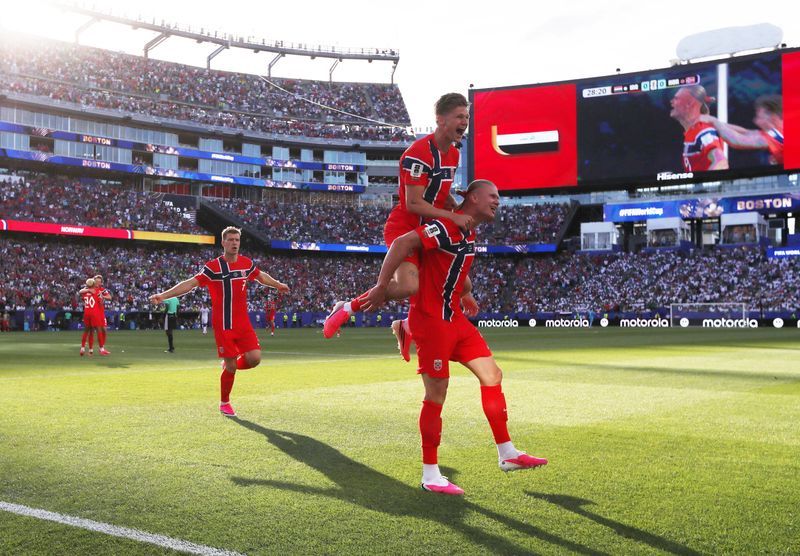
Erling Haaland marked his World Cup entrance with a commanding performance, netting twice to propel Norway to a 4-1 victory over Iraq on Tuesday. The Norwegian striker's double in the first half represents yet another milestone in an extraordinary career trajectory, adding the World Cup finals to an already impressive list of competitions where he has found the back of the net on his debut. Having previously scored on his maiden appearances in the German Bundesliga, English Premier League, and UEFA Champions League, Haaland demonstrated that his reputation as a prolific marksman extends seamlessly to international football's grandest stage.
The tactical setup devised by Norway head coach Stale Solbakken appeared straightforward in conception but demanding in execution: create opportunities for Haaland and allow his movement and finishing instincts to decide matches. Norwegian Prime Minister Jonas Gahr Stoere underscored this philosophy the day before kickoff, reminding observers that while individual brilliance scores goals, collective team effort determines victory. This philosophy proved prophetic, as despite Norway's uneven overall performance and numerous wasteful passages of play, Haaland's clinical finishing rescued his side from what could have been a far more precarious contest.
Norway's opening fixture at a men's World Cup tournament since 1998 began with considerable promise but quickly revealed defensive vulnerabilities and midfield inconsistencies. Captain Martin Odegaard, the playmaker tasked with orchestrating Norway's attacking movements, surprisingly failed to impose himself on proceedings, leaving gaps that Iraq threatened to exploit. The Iraqi equaliser through Aymen Hussein exposed inattentive defending when Norwegian players became preoccupied with the ball's location rather than their positional responsibilities, a lapse that could have proven costly against more clinical opponents.
Haaland's opening goal showcased textbook centre-forward positioning. Receiving David Moller Wolfe's measured delivery across the six-yard box, he demonstrated the anticipation and composure that separates elite finishers from competent strikers, converting with the precision expected of someone accustomed to operating at Europe's highest levels. His second goal carried greater drama, illustrating how aggressive pressing can create scoring opportunities. By maintaining pressure on Iraq's rearguard, Haaland forced a careless back-pass that invited the goalkeeper's intervention. Rather than retreating, the Norwegian forward blocked the clearance attempt, allowing the ball to deflect into the net—a goal that combined intuitive movement with opportunistic awareness.
The scoreline of 4-1 flattered neither side's overall execution, yet circumstances aligned to favour Norway. Their defensive organisation frequently appeared fragile, and their passing lacked the precision expected of a competitive World Cup participant. Multiple sequences featured elementary errors and positional confusion that left goalkeeper Orjan Nyland unnecessarily exposed. Against a team ranked higher in FIFA's standings, such deficiencies would likely have proven punishing. Iraq demonstrated technical competence and tactical discipline without the finishing capability to capitalise on Norwegian sloppiness.
Norway's position atop their group following the opening round owes entirely to Haaland's intervention. France's emphatic 3-1 victory over Senegal later on Tuesday placed the tournament favourites just one point behind on goal difference, a narrow margin that underscores how fine the margins operate at World Cup level. Haaland himself acknowledged post-match that his side's performance demanded significant improvement, recognising that while three points provide a solid foundation, the manner of achievement revealed concerning technical and organisational weaknesses.
Haaland's reticence with media commentary has become characteristic throughout his professional career. Rather than engaging in extensive post-match analysis or projecting confidence through verbose interviews, he permits his performances to communicate his intentions and capabilities. This approach resonates with Norwegian supporters accustomed to understated excellence rather than ostentatious celebration. Following Tuesday's triumph, however, even the normally laconic striker permitted himself visible satisfaction, acknowledging the extraordinary circumstances of representing his nation at football's premier tournament after Norway's prolonged absence from the World Cup stage.
The 28-year absence since 1998 represents a significant drought for Norwegian football, during which an entire generation of supporters have experienced only World Cup tournaments as spectators rather than participants. This context infuses Tuesday's victory with emotional significance beyond its three Group C points. For the broader Norwegian sporting community, reinstatement at this competition validates years of development investment and international recruitment strategies that culminated in squad qualification. The nation's football establishment will capitalise on this return, recognising that World Cup visibility provides unparalleled marketing platforms and inspirational benefits for younger players.
Haaland's personal trajectory intersects meaningfully with Norwegian national football ambitions. His emergence as a world-class striker has elevated the nation's profile in global football consciousness. Previous Norwegian strikers of international repute—including John Carew and Tore André Flo—operated during different eras without contemporaneous media penetration matching today's digital ecosystem. Haaland's World Cup debut instantly generated headlines across continents, amplifying Norway's tournament participation beyond what traditional media cycles might have achieved. This amplification carries commercial and developmental implications for Norwegian football's infrastructure.
The immediate challenge confronting Norway involves translating opening victory into consistent performances throughout the group stage. France and Senegal represent formidable opponents requiring markedly superior execution compared to Tuesday's display. Odegaard and the midfield must elevate their contributions, whilst defensive organisation demands systematic improvement. Haaland's presence provides psychological reassurance that goals remain achievable, yet overreliance on individual brilliance ultimately proves insufficient at World Cup level, where tactical sophistication and collective discipline separate tournament winners from early eliminations.