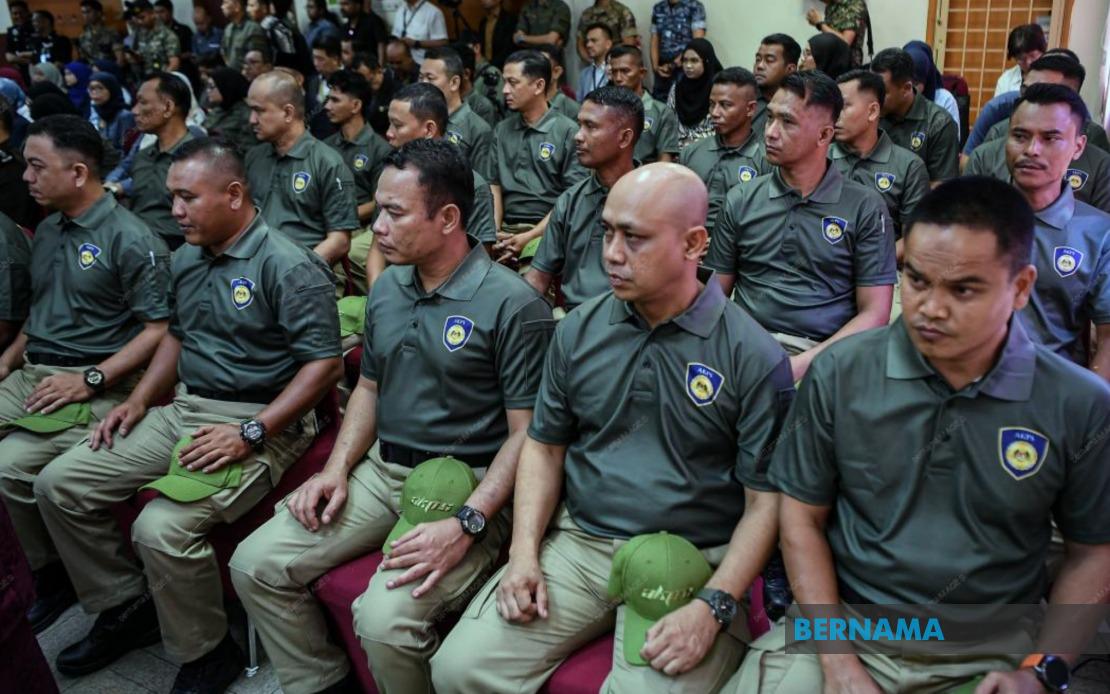
The Malaysian government has moved to reassure thousands of Border Control and Protection Agency (AKPS) personnel that their welfare, promotion prospects and retirement entitlements will remain intact during the transition to a new service scheme under the Public Service Department (PSD), which commences on July 1. Deputy Home Minister Datuk Seri Dr Shamsul Anuar Nasarah delivered these assurances during a Special Chamber session of parliament, addressing concerns raised by lawmakers about the structural changes affecting enforcement personnel across the nation's immigration checkpoints.
Under the reformed arrangements, AKPS officers who elect to remain within their original service classification and parent agencies will face no disadvantage in career progression or benefit accumulation. The deputy minister emphasised that seniority rankings, advancement opportunities and the full suite of retirement provisions will be preserved for those who decline transfer to the new unified scheme. This commitment represents an attempt to mitigate anxiety among the workforce regarding potential job security implications of the institutional restructuring.
The AKPS itself represents a consolidation of multiple enforcement bodies into a single coordinating entity responsible for border management across Malaysia's 122 international entry points. Prior to the scheme transition, staffing within AKPS occurred through temporary assignments from the original agencies—a practice that created uncertainty about permanent placements and career paths. The deputy minister clarified the process by which officers would be managed going forward, distinguishing between those accepting permanent appointments and those remaining in interim status.
For officers who decline transfer offers, two pathways exist. Some may remain with AKPS in a temporary capacity, their future placement determined by PSD decisions. Alternatively, they may be reassigned to their respective parent departments, with specific positions allocated based on available roles and departmental requirements as determined by their original heads of service. This dual-track approach provides flexibility for personnel while maintaining organisational continuity, though it also introduces an element of uncertainty for those awaiting permanent placement decisions.
The transition has occurred against a backdrop of significant vacancy challenges. As of mid-June, AKPS had successfully filled 6,824 of its 8,403 allocated positions, leaving 1,579 vacancies that represent nearly 19 percent of the authorised establishment. The government acknowledged these gaps and outlined a collaborative recruitment strategy involving AKPS, the Home Ministry, the Public Service Department and contributing agencies. This progressive filling of positions suggests the transition will extend beyond the July 1 commencement date, creating ongoing organisational adjustments for several months.
To incentivise deployment to AKPS positions—particularly at border checkpoints where working conditions can be demanding—the government has structured an enhanced remuneration package. In addition to standard civil service salaries, AKPS appointees receive an extra annual salary increment (KGT) and a RM200 service incentive payment. These supplementary allowances explicitly target the maintenance of operational capacity at the country's entry points, recognising that sustained staffing at these locations is essential for maintaining border security and facilitating legitimate cross-border movement of people and goods.
The parliamentary question from Rushdan Rusmi of Padang Besar reflected broader anxieties within the civil service about institutional stability and employee welfare during periods of administrative reform. Such concerns are particularly acute in enforcement agencies where staff morale directly impacts operational effectiveness. By providing detailed parliamentary assurances, the government sought to address not only the specific technical questions about placement procedures but also the underlying anxiety within the workforce about whether bureaucratic restructuring would result in disadvantage or precarity.
The AKPS establishment itself marked a significant evolution in Malaysia's border management architecture. Rather than operating as separate, semi-autonomous entities, the various enforcement functions—immigration control, customs clearance, quarantine inspections and related duties—would be coordinated under unified command. This consolidation aims to improve efficiency and reduce inter-agency friction at busy checkpoints, but it requires careful handling of the existing workforce to succeed. Personnel transferred or seconded from multiple source agencies bring different institutional cultures, salary histories and career expectations, making harmonisation complicated.
The emphasis on preserving seniority and retirement benefits addresses one of the most significant sources of employee concern during service restructuring. In Malaysia's civil service, where pension entitlements and length-of-service calculations directly influence retirement income, any ambiguity about how transitions will affect these calculations can generate substantial anxiety. By explicitly protecting these rights, the government reduced one major category of uncertainty, though questions about promotion velocity and career ceiling opportunities—particularly for officers in the interim category—may persist.
The phased filling of vacancies reflects practical constraints in recruitment and vetting procedures for sensitive border management roles. Security clearances, competency assessments and formal appointment processes cannot be accelerated indefinitely without compromising the integrity of the staffing process. The government's acknowledgment of ongoing recruitment efforts signals realistic expectations about how long transition-related operational challenges may continue, which itself represents a form of transparency that may help manage workforce confidence during the changeover period.
For Malaysian readers and regional observers, this transition exemplifies the ongoing evolution of Southeast Asian border management institutions. As migration pressures, trade volumes and security concerns continue mounting across the region, countries increasingly consolidate enforcement functions to improve coordination and reduce duplication. The treatment of existing personnel during such transitions—whether with protective measures, clear communication or enhanced incentives—influences both the success of reform initiatives and the broader morale of public sector workforces facing institutional change.

