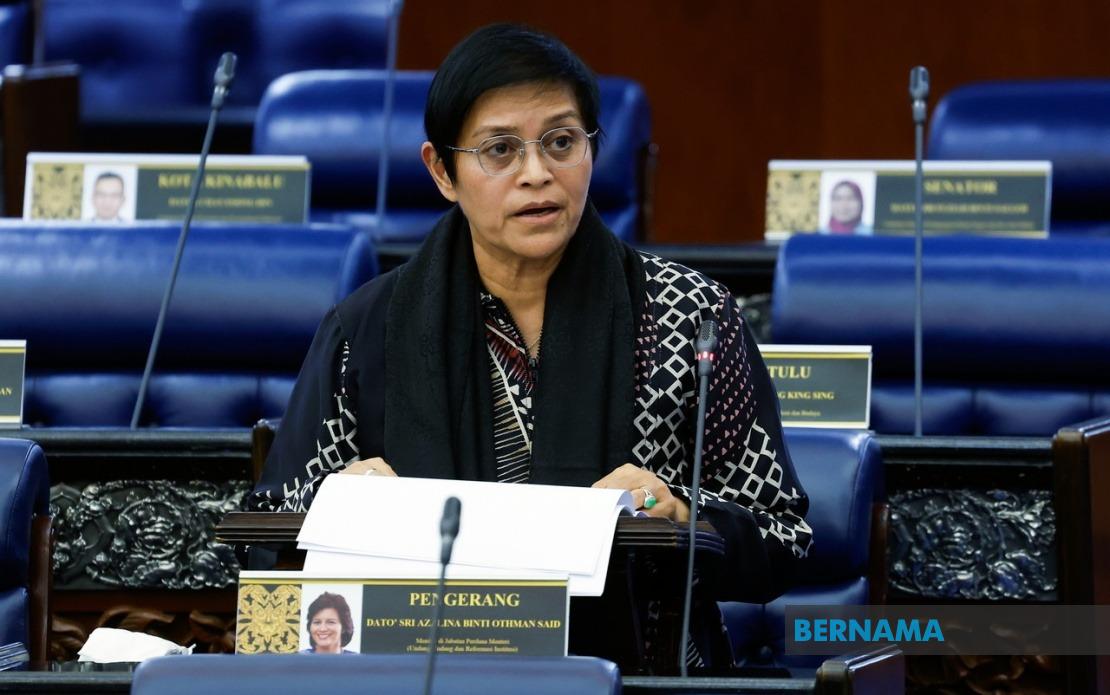
The government is treating allegations of 'corporate mafia' involvement with considerable seriousness, recognising that such activities pose a direct threat to public institutions and could erode confidence in governance structures, according to Datuk Seri Azalina Othman Said, Minister in the Prime Minister's Department (Law and Institutional Reform). Speaking in Parliament on July 17, Azalina emphasised that the integrity of Malaysia's public systems depends on thorough and credible investigation of such matters, particularly when they raise questions about institutional accountability and the conduct of those occupying positions of authority and trust.
Azalina's statement came in response to questions raised by RSN Rayer, the Member of Parliament for Jelutong representing the opposition Pakatan Harapan coalition, who pressed the government for an update on investigation progress and sought clarification regarding proposals to establish a Royal Commission of Inquiry specifically to examine the corporate mafia allegations. The parliamentary exchange reflects growing public and political interest in ensuring that any suspected wrongdoing involving organised corporate misconduct is handled with appropriate rigour and transparency, rather than processed through routine administrative channels.
Central to the minister's response was her emphasis that all investigative work must proceed independently from political interference or bias, must maintain full transparency in its methods and findings, and must be conducted comprehensively to ensure no relevant evidence is overlooked. Azalina stressed that the government recognises the importance of basing all consequent actions and policy decisions on factual evidence rather than speculation or incomplete information, ensuring that any outcomes reflect genuine justice and adherence to the rule of law. This framing suggests official acknowledgment that public confidence in the investigation process itself is nearly as important as its ultimate conclusions.
The minister outlined the formal legal and procedural framework governing the establishment of Royal Commissions of Inquiry in Malaysia, explaining that such mechanisms fall under the Commissions of Enquiry Act 1950 (Act 119). This statutory basis provides the legal authority and parameters within which such inquiries must operate, establishing clear rules about their scope, powers, and procedures. Understanding this legislative framework is important for Malaysian observers seeking to grasp why RCI establishment cannot be pursued as a purely executive or ad-hoc decision, but must follow constitutionally appropriate channels.
According to Azalina, the standard operating procedure for establishing an RCI begins with the relevant lead ministry preparing a comprehensive Cabinet memorandum that makes the case for inquiry on grounds of serious public interest. This initial stage represents a critical gatekeeping function, as it requires the ministry to demonstrate why an RCI is necessary and proportionate rather than alternative investigative or oversight mechanisms. The memorandum must articulate the public interest dimensions of the matter in question and explain why conventional investigative channels are deemed insufficient to address public concerns.
Following Cabinet approval of such a proposal, the procedural sequence requires that the Prime Minister seek an audience with the Yang di-Pertuan Agong to obtain the consent and authority of the Monarch. This constitutional step underscores that Royal Commissions derive their legitimacy not merely from executive decision-making but from the sovereign authority of the Crown, reflecting Malaysia's constitutional monarchy structure. The requirement for royal involvement adds an additional layer of institutional weight and solemnity to the RCI process, signalling to the public that such inquiries represent serious state instruments rather than routine administrative exercises.
Once royal consent is formally granted, the process of establishing the RCI advances to operational details including finalising the precise terms of reference that will govern the inquiry's scope, determining the composition and leadership of the commission, and establishing the timeframe within which investigations must be completed. These elements must then be formally published in the Federal Government Gazette, providing official public notice of the RCI's establishment and operating parameters. Only after this formal publication can the commission commence its substantive investigative work.
Azalina's statement notably kept the door open to RCI establishment while stopping short of committing the government to proceeding with such a mechanism. She indicated that the government "remained open to considering" an RCI or other appropriate investigation mechanisms "if deemed necessary in the public interest." This conditional language suggests that no final decision has been reached, and that the government is in an evaluative phase, likely gathering more information from ongoing investigations before determining whether additional or alternative investigative frameworks are required.
The minister emphasised that any decision regarding an RCI would be grounded in the facts, findings, and latest developments emerging from investigations already underway by relevant authorities. This approach suggests a sequential logic: ordinary investigative channels will proceed first, their results will be assessed, and only if those results suggest that more comprehensive or politically insulated investigation is warranted will an RCI be pursued. Such an approach balances the desire to address public concerns with the principle that extraordinary investigative mechanisms should not be deployed prematurely or without clear justification.
For Malaysian observers, the significance of this statement extends beyond the immediate corporate mafia matter. It signals official acknowledgment that public confidence in institutions depends on visible commitment to independent and transparent investigation of serious allegations. The government's willingness to consider an RCI, contingent on evidence and circumstances, suggests recognition that certain matters may require investigation mechanisms that offer greater insulation from ordinary political pressures than conventional investigative bodies provide. This reflects international best practice in handling allegations that potentially implicate powerful institutional actors or systemic corruption.
The RCI option also carries implications for Southeast Asia's broader governance landscape. As regional economies grapple with questions about institutional integrity and the relationship between state power and corporate influence, Malaysia's approach to potentially establishing investigative mechanisms specifically designed to address corporate mafia allegations could set precedents or inform discussions in neighbouring countries facing similar concerns. The transparency and rigour with which such investigations are conducted can influence regional perceptions of Malaysia's commitment to institutional accountability.
Azalina's emphasis on proceeding according to law and established procedures, while seemingly procedural, carries substantive significance in a political context where shortcuts or selective enforcement sometimes occur. By foregrounding legal requirements and constitutional processes, the minister was signalling that any investigation or RCI must operate within predictable institutional frameworks rather than through emergency powers or extraordinary executive discretion. This commitment to procedural regularity, if genuinely maintained, could itself contribute to public confidence in outcomes regardless of what those outcomes ultimately reveal.

