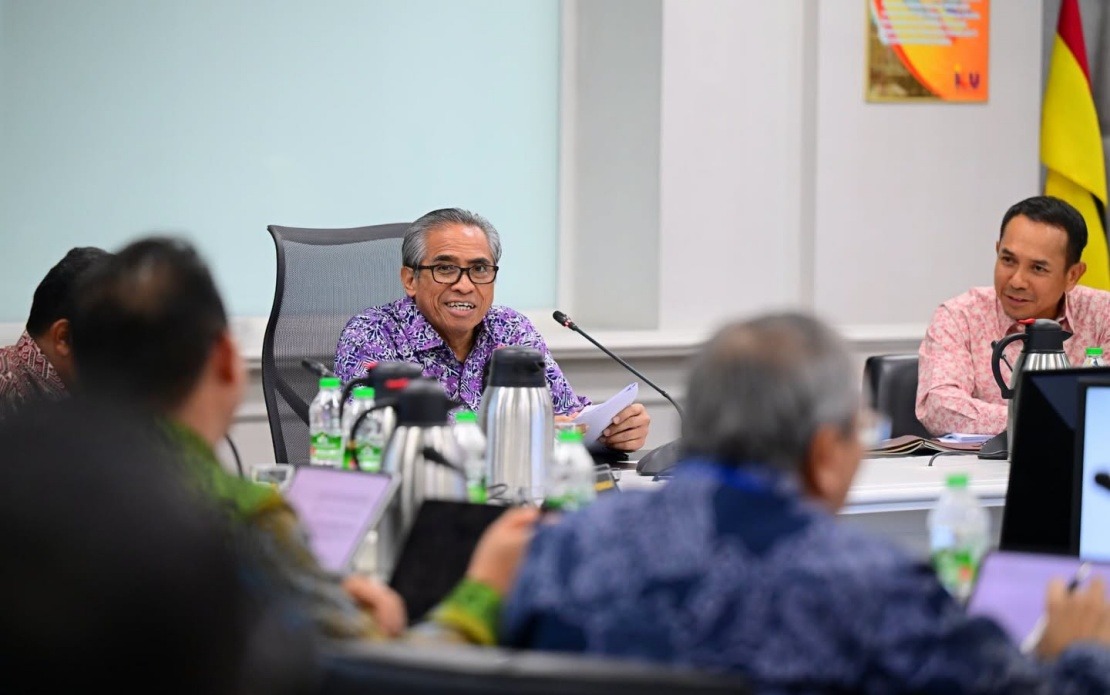
The Malaysian government is placing renewed emphasis on delivering tangible infrastructure improvements at the grassroots level, with Chief Secretary to the Government Tan Sri Shamsul Azri Abu Bakar directing all ministry secretaries-general to prioritise the implementation of more than 40,000 identified small-scale development projects across the country. The mandate, announced following a National Development Action Committee meeting, reflects a strategic pivot towards projects that, while individually modest, collectively address the everyday concerns of ordinary Malaysians and can be realised relatively swiftly.
Shamsul Azri characterised these initiatives as "low-hanging fruit"—projects requiring modest resources and technical coordination but yielding immediate public benefit. His emphasis on their widespread appeal underscores a political calculus: governments gain credibility by delivering visible improvements to neighbourhoods, towns, and villages rather than pursuing grandiose schemes that remain perpetually under construction. The directive signals that the administration intends to demonstrate its capacity to execute efficiently across the federal bureaucracy.
The portfolio of projects encompassing road repairs, drain maintenance, refurbishment of government quarters, repairs to school classrooms, upgrades to healthcare facilities, and improvements to public stalls and markets collectively addresses chronic maintenance backlogs that have accumulated across Malaysia's public infrastructure. Schools with deteriorating classrooms, health clinics functioning below capacity due to facility constraints, and deteriorating transportation networks in secondary towns represent systemic challenges that smaller, targeted interventions can meaningfully address without requiring legislative approval or extended procurement processes.
A critical component of the directive involves KSU accountability. Shamsul Azri instructed ministry secretaries-general to conduct site visits personally, closely monitor progress, and actively resolve obstacles as they emerge. This administrative discipline—positioning permanent secretaries as project supervisors rather than distant administrators—aims to eliminate the bureaucratic inertia that frequently delays smaller projects. When implementation authority disperses across multiple layers, responsibility becomes diffuse and accountability diminishes; by anchoring oversight at the KSU level, the government intends to create clear chains of command and measurable timelines.
The three-to-six-month completion horizon is particularly significant for Malaysian governance. Rather than pursuing projects spanning years, this compressed timeline ensures that citizens experience tangible government action within electoral cycles and budget years. Infrastructure beneficiaries—parents in schools with renovated classrooms, vendors in upgraded market facilities, drivers on repaired roads—directly associate improvements with government delivery capacity. This contrast with large-scale megaprojects, which frequently encounter delays, cost overruns, and extended construction periods that alienate rather than mobilise public sentiment.
For Southeast Asian context, Malaysia's approach mirrors strategies employed across the region as governments respond to public expectations for efficient service delivery. Singapore's maintenance-intensive approach to public infrastructure, Vietnam's emphasis on community-level projects, and Indonesia's village development initiatives all reflect recognition that visible, timely improvements—even at modest scale—strengthen public confidence in institutions. Malaysia's 40,000-project initiative positions the government as responsive to practical needs rather than fixated on developmental grandstanding.
The initiative also addresses regional disparities. Small-scale projects in secondary towns, rural areas, and underserved communities can proceed without competing against major urban infrastructure for resources or attention. A rural health clinic upgrade or a provincial town's market renovation contributes to spatial equity and reduces the perception that development concentrates in major metropolitan zones. This geographical inclusiveness carries political dividends in constituencies where residents frequently feel neglected by centralised planning.
Implementation challenges nonetheless exist. Coordinating 40,000 discrete projects across multiple ministries and state jurisdictions requires robust systems for tracking, financing, and problem-solving. Supply chain constraints, contractor availability, and labour capacity could create bottlenecks. Weather disruptions, unforeseen site conditions, and administrative delays at local levels frequently derail even modest projects. The success of this initiative depends substantially on whether central coordination can translate intentions into sustained execution across the bureaucracy.
Resourced adequately, the programme offers Malaysia a practical pathway to demonstrating governmental competence and responsiveness. Citizens experiencing improved local conditions develop more favourable assessments of state capacity and legitimacy than those witnessing perpetual construction sites or deteriorating facilities. For a government navigating complex political environments and competing development priorities, delivering concrete improvements in schools, health facilities, and public spaces represents efficient use of public resources and political capital. The coming months will reveal whether coordinated bureaucratic action can transform this mandate into visible improvements across Malaysia's towns and villages.

