The Prime Minister's Department (Religious Affairs) has unveiled a fresh institutional push to democratise access to the scholarship and vision of eminent Islamic thinkers through a new Maal Hijrah Lecture Series. The initiative, officially launched in Putrajaya on June 18, seeks to move the intellectual output of these figures from specialised academic settings into mainstream public discourse across Malaysia. This shift reflects a strategic understanding within government circles that knowledge creation by leading Islamic scholars carries value beyond universities and specialist networks, and ought to reach citizens across different educational and social backgrounds.
Dr Zulkifli Hasan, the Minister in the Prime Minister's Department (Religious Affairs), articulated the rationale for the programme during the inauguration ceremony. He emphasised that confining the ideas of Maal Hijrah figures to restricted institutional spaces or limited groups contradicts the broader purpose of intellectual leadership. By opening these platforms and distributing such thinking throughout society, the government aims to ensure that Malaysian Muslims—and potentially non-Muslim citizens—can engage with the contributions of scholars who command respect both domestically and globally. The minister framed this approach not merely as administrative convenience but as a matter of democratic principle: that valuable ideas should not remain sealed within metaphorical closed rooms.
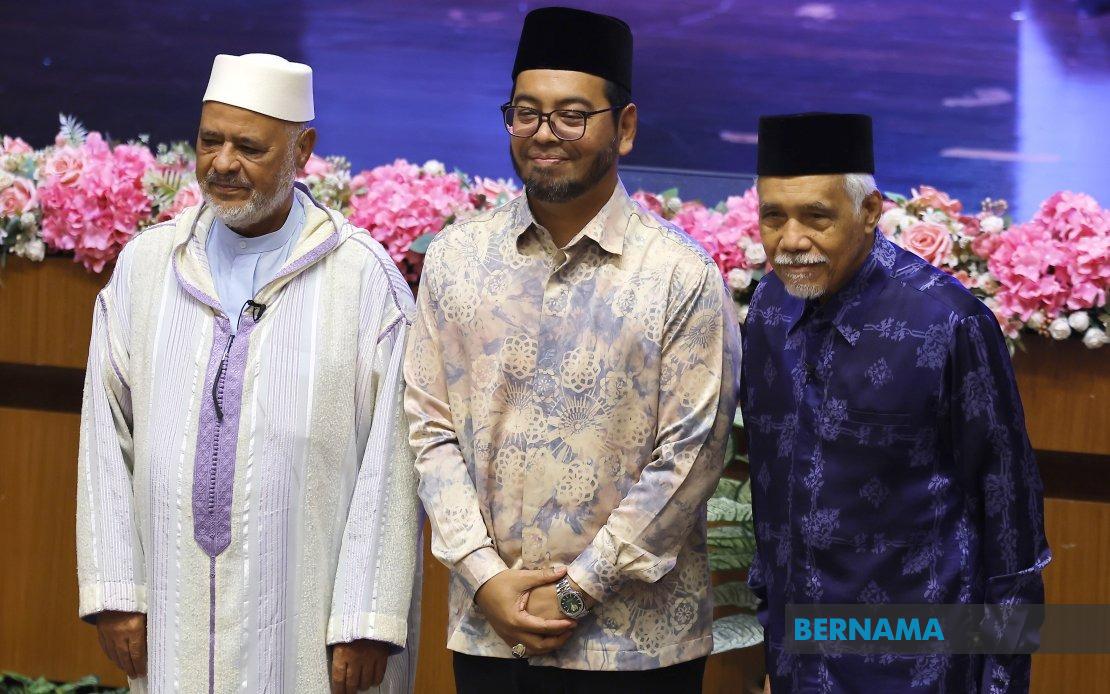
The timing and scope of the Maal Hijrah 1448H/2026 lecture series carries symbolic weight in Malaysia's religious governance landscape. Two distinguished scholars were simultaneously honoured during the launch. Emeritus Professor Osman Bakar, rector of the International Islamic University Malaysia (IIUM), received recognition as the national Maal Hijrah figure, while Prof Sheikh Dr Ahmad Al-Raysuni, an Islamic jurisprudence specialist based in Morocco, was named the international Maal Hijrah figure. Both recipients were formally recognised at the national-level Maal Hijrah 1448H/2026 celebration at Masjid Putra, where Sultan Nazrin Shah of Perak presented certificates of appreciation, trophies, and cash prizes. This two-tier recognition system—one domestic, one international—suggests the government's interest in positioning Malaysian Islamic scholarship within a transnational intellectual ecosystem while simultaneously cultivating local expertise.
The collaborative framework underpinning the lecture series already demonstrates institutional buy-in from key players in Malaysia's higher education landscape. Universiti Sains Islam Malaysia (USIM) and IIUM have both pledged support for the initiative, signalling that religious universities view this dissemination effort as aligned with their own missions. However, Dr Zulkifli indicated that the partnership network would expand considerably. The explicit intention to involve additional universities and institutions across the country suggests a deliberate strategy to geographically distribute the lecture series, reducing dependency on Kuala Lumpur-based venues and reaching student populations and public audiences in other states. This decentralisation approach could significantly amplify the programme's reach compared to concentrated, centralised delivery models.
The intellectual ambition embedded in this initiative warrants closer examination. By sponsoring lectures from scholars of Al-Raysuni's calibre—a figure known for contemporary jurisprudential scholarship addressing modern ethical dilemmas—the government appears to be signalling interest in Islamic thought that grapples with present-day challenges rather than primarily historical or theological abstraction. Similarly, Osman Bakar's scholarly focus on the relationships between science, philosophy, and Islamic learning positions IIUM's contribution to the series within a progressive intellectual current. For Malaysian audiences, particularly university students and educated professionals, exposure to such scholarship could reshape conversations about how Islamic principles apply to issues like technological change, economic policy, and social pluralism.
Dr Zulkifli's comment that the government hopes these ideas will be appreciated by non-Muslims as well as Muslims opens an interpretive question about Malaysia's interfaith intellectual landscape. Whether the lecture series will genuinely attract and engage non-Muslim participants, or whether this represents aspirational rhetoric, remains unclear. Nevertheless, the articulation of this ambition suggests recognition within the Religious Affairs Ministry that scholarly contributions on ethics, governance, and knowledge production often possess cross-communal relevance. For a multiethnic, multireligious country, Islamic intellectual traditions that consciously address pluralistic concerns rather than exclusively internal sectarian issues could contribute usefully to national cohesion conversations.
The structural positioning of this initiative within the Prime Minister's Department rather than within the Islamic Development Department or other religious bodies indicates a specific governmental priority. Placing the programme at the apex of the executive branch signals that knowledge dissemination is not merely a religious or educational concern but a whole-of-government priority. This positioning may facilitate resource mobilisation, coordination with other federal agencies, and integration with broader national development narratives. It also suggests that the current administration views Islamic intellectual leadership as intrinsically connected to its governance agenda.
From a Southeast Asian perspective, Malaysia's formalisation of Islamic scholar visibility through structured lecture series may hold regional significance. Other countries in the region grapple with similar questions about how to promote religious scholarship while maintaining secular governance frameworks and managing diverse religious populations. Malaysia's approach—public sponsorship, university partnerships, and explicit commitment to cross-community intellectual engagement—offers a potential model that other administrations might study or adapt. The inclusion of an international figure like Al-Raysuni also subtly signals Malaysia's role as a convener of Islamic intellectual discourse beyond its borders.
Looking forward, the practical success of the Maal Hijrah Lecture Series will depend on factors beyond the official launch ceremony. Content accessibility, audience development, and genuine engagement with ideas presented will determine whether this initiative genuinely mainstreams Islamic scholarship or remains a well-intentioned but symbolically hollow programme. The level of media coverage, student attendance, and public discussion following inaugural lectures will indicate whether the government's aspiration to distribute these ideas throughout society finds material realisation. Additionally, how the series addresses potentially controversial or debated topics within Islamic thought will test whether the initiative can accommodate intellectual pluralism or whether it functions primarily as a platform for officially sanctioned perspectives.