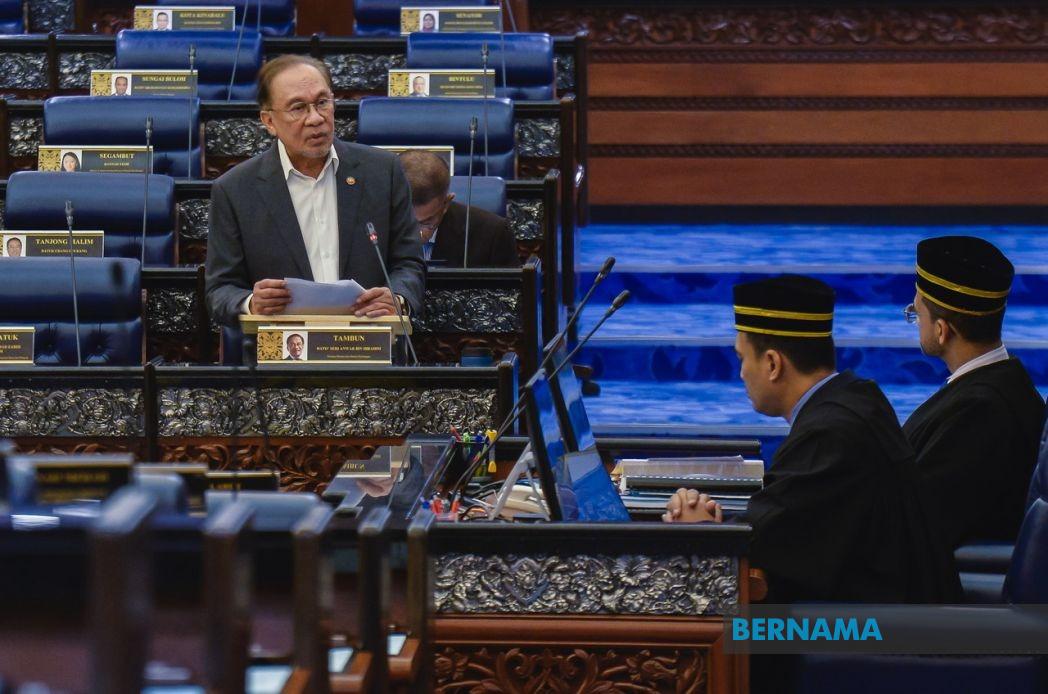
Prime Minister Datuk Seri Anwar Ibrahim has moved to dispel confusion surrounding government policy on Federal Land Development Authority settlements, firmly stating that no blanket prohibition exists on programmes held within FELDA areas. Speaking during Minister's Question Time in the Dewan Rakyat, the Prime Minister emphasised the distinction between organising activities in FELDA communities and the regulatory framework governing how government resources may be deployed during election periods.
The clarification came in response to questions from Datuk Seri Hamzah Zainudin of Perikatan Nasional, who raised concerns about the apparent cancellation of the FELDA Settlers' Day programme scheduled for Kluang, Johor on June 20 and 21. Anwar explicitly denied that his administration had issued directives to halt the event, rejecting suggestions that the government was restricting community activities in FELDA settlements. The distinction the Prime Minister drew is significant for understanding the government's actual regulatory approach.
State governments maintain full autonomy to organise their own events and programmes within FELDA settlements, according to Anwar's clarification. A menteri besar faces no impediment to entering a FELDA settlement and conducting state-level activities or initiatives independently. Similarly, state administrations retain their prerogative to issue land titles and pursue development projects within their jurisdictions. These activities fall entirely within the discretion of state governments operating within their constitutional remit.
However, the Prime Minister emphasised that the critical constraint lies in election law, not in programme restrictions per se. Malaysian electoral regulations explicitly prohibit the use of government machinery and resources—whether federal or state-level—for political campaigning. FELDA resources, which constitute public assets managed under federal auspices, cannot be deployed for partisan election purposes. This distinction between the legitimacy of holding programmes and the legality of resource allocation forms the crux of government policy.
The MADANI Government has positioned itself as committed to comprehensive welfare improvements for FELDA communities, particularly addressing what Anwar characterises as historical neglect. Under previous administrations, according to the Prime Minister, FELDA settlements experienced inadequate attention and fell behind in rural development initiatives. This perception of past management failures underpins the current government's stated rationale for enhanced support and resource allocation to these communities.
Concrete measures are already underway to improve living standards in FELDA areas. The establishment of dialysis centres within settlements represents targeted health infrastructure investment addressing specific community healthcare needs. Beyond medical facilities, the government has expanded development infrastructure through federal agencies, signalling a broader commitment to modernising FELDA settlements. These initiatives reflect the administration's intent to reverse what officials view as developmental stagnation.
Deputy Prime Minister Datuk Seri Dr Ahmad Zahid Hamidi shares responsibility for the enhanced FELDA strategy, indicating that support for settler welfare represents a priority shared across senior government leadership. The explicit invocation of the Deputy Prime Minister's involvement suggests this is not a peripheral policy initiative but rather a core government agenda. The framing positions FELDA modernisation as a fundamental commitment of the MADANI administration.
The timing and substance of this clarification carry implications for Malaysia's political landscape, particularly concerning rural constituencies where FELDA settlements hold considerable electoral significance. FELDA represents one of the nation's most extensive rural development schemes, encompassing hundreds of thousands of settler families distributed across multiple states. Political parties have traditionally invested effort in cultivating support within these communities, making clarity on programme restrictions and resource access a matter of substantive concern.
For Southeast Asian observers, Malaysia's approach to regulating government resource use during election campaigns reflects broader democratic governance challenges across the region. The tension between enabling state governments to serve their constituents effectively and preventing partisan abuse of public resources appears in various forms throughout Southeast Asia. Malaysia's attempt to maintain this balance through regulatory distinction rather than outright prohibition offers one model for consideration.
The clarification also addresses potential investor and development concerns regarding FELDA areas. If programme restrictions were broadly interpreted as limiting state government activities, this could create uncertainty affecting rural development initiatives. By explicitly permitting state-level programmes and restricting only the election-campaign dimension of resource utilisation, the government attempts to maintain policy predictability and encourage continued investment in FELDA modernisation.
Moving forward, the practical implementation of these clarified principles will be closely monitored by political stakeholders and FELDA settler communities themselves. The distinction between programme organisation and election-law compliance, while clearly articulated by Anwar, requires consistent application across various state governments and federal agencies. Any perception of inconsistent enforcement could undermine the government's intent to separate administrative flexibility from electoral propriety.

