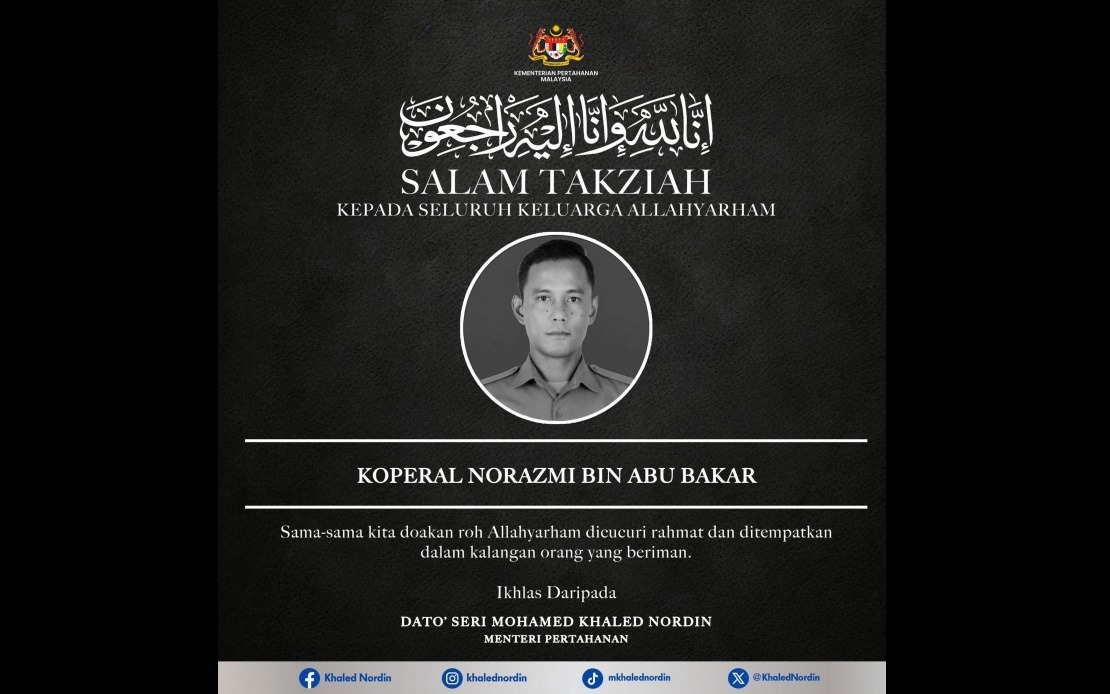
The Malaysian government and Defence Ministry have expressed deep condolences following the death of two military personnel in a fatal training accident. Corporal Norazmi Abu Bakar of the 6th Battalion, Royal Malay Regiment, and Private Siti Khadijah Sungip of the 1st Squadron, Royal Army Engineers Regiment, were killed in an explosion during a grenade-throwing exercise at Hobart Camp firing range in Gurun, Kedah. The incident occurred at 10.57 am, marking a tragic loss for the armed forces and a sobering reminder of the inherent dangers associated with combat training.
Defence Minister Datuk Seri Mohamed Khaled Nordin released a statement expressing his profound sorrow at the deaths of the two servicemen. In his social media post, the Defence Minister conveyed prayers for the families, asking that they receive strength and resilience as they navigate the difficult period ahead. His remarks underscored the government's commitment to supporting grieving families and recognising the sacrifice made by military personnel in their service to the nation.
The minister's statement invoked Islamic prayers, seeking mercy for the deceased soldiers and forgiveness for their sins. This religious acknowledgment reflects the inclusive nature of official condolences in Malaysia and demonstrates respect for the predominantly Muslim composition of the armed forces. The Defence Minister's words emphasised that the entire government institution shares in the mourning process alongside the families of the fallen soldiers.
According to the Malaysian Army's official confirmation, both servicemen sustained severe injuries during the explosion and were immediately evacuated. Despite rapid medical intervention, they succumbed to their wounds en route to Sultan Abdul Halim Hospital in Sungai Petani. The emergency response highlighted the challenges of providing timely medical care at remote training facilities, though the hospital's proximity to the firing range suggests that established protocols were followed during the evacuation.
Army Chief General Tan Sri Azhan Md Othman has initiated a comprehensive investigation into the circumstances surrounding the blast. This inquiry will focus on identifying the precise cause of the explosion and determining whether procedural lapses, equipment failures, or other factors contributed to the tragedy. Such investigations are standard practice following fatal military training accidents and serve multiple purposes, including identifying systemic improvements and ensuring accountability throughout the chain of command.
Training exercises involving live grenades carry inherent risks, and such accidents, while rare, underscore the operational hazards faced by military personnel during peacetime. The incident at Hobart Camp represents a significant event for the Malaysian armed forces, particularly as both victims came from different military units. The involvement of personnel from the Royal Malay Regiment and the Royal Army Engineers Regiment suggests that the training exercise may have been a joint operation or part of a broader training programme accommodating multiple units.
Private Siti Khadijah's presence among the casualties is particularly noteworthy, reflecting the increasing integration of female personnel within Malaysia's military structure. Women serving in combat-support roles face identical training demands and risks as their male counterparts, and this incident underscores the universal nature of military service hazards. Her loss represents not only a personal tragedy but also a reflection of women's active participation in national defence.
Gurun, located in Kedah, has established itself as a key military training location in northern Peninsular Malaysia. The Hobart Camp firing range serves multiple units across the armed forces, and its use for intensive training exercises is routine. However, this incident may prompt reviews of safety protocols at the facility and potentially across other training venues. Such reviews often lead to enhanced safety measures, revised training procedures, or upgraded equipment inspection regimes.
The timing of this tragedy coincides with the armed forces' ongoing operational readiness initiatives. Training exercises are essential for maintaining military effectiveness, yet incidents such as this tragedy highlight the need for continuous refinement of safety practices. Defence establishments must balance the operational necessity of realistic, challenging training with the imperative to minimise unnecessary risks to personnel.
For Malaysian defence policy, this incident raises important questions about training safety standards and the adequacy of emergency medical capabilities at remote training facilities. The investigation's findings will likely inform future decisions regarding training protocols, equipment specifications, and safety management systems across the armed forces. Such tragedies, while difficult, often catalyse positive systemic changes that enhance overall military safety culture.
The incident will have ripple effects throughout military units and the broader armed forces community. Fellow servicemen and women who trained alongside the deceased will be processing grief and trauma, necessitating adequate psychological support and counselling services. Military institutions typically provide such support, recognising that the mental health of personnel is integral to operational effectiveness and organisational resilience.
Regionally, this incident contributes to broader discussions about military training safety standards across Southeast Asian armed forces. Many regional militaries conduct similar training exercises with comparable equipment and methodologies, making lessons learned from Malaysian investigations potentially valuable across the region. International military partnerships often include information-sharing regarding safety incidents and best practices, strengthening collective knowledge about preventing similar tragedies.