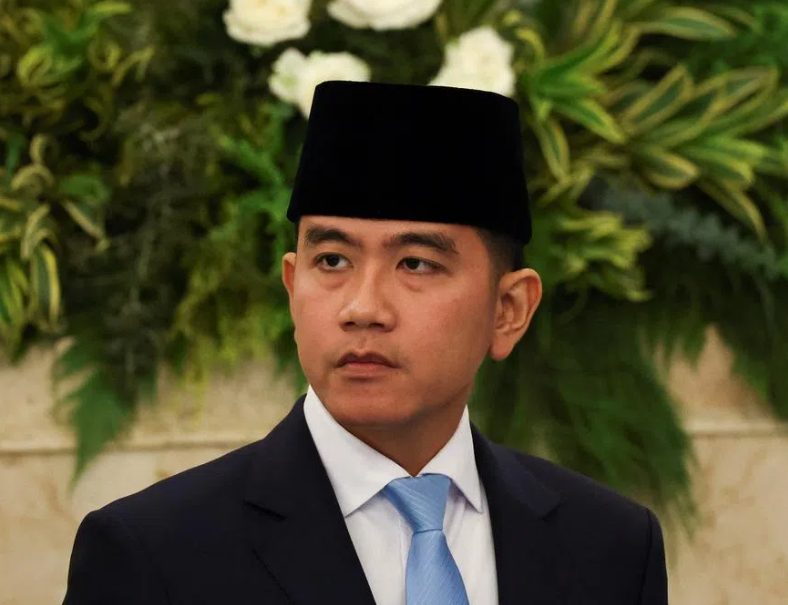
Vice-President Gibran Rakabuming Raka's recent embrace of student protesters marks a striking departure from traditional government responses to public dissent, yet observers remain divided on whether his engagement signals substantive commitment to addressing grievances or merely represents careful political positioning. Just three days after meeting with student representatives who had mobilised against the government's free meals programme and Red and White Cooperative initiative—two of President Prabowo Subianto's most ambitious and contested policy agendas—Gibran personally invited five university students to board a plane with him for a working visit to eastern Indonesia in mid-June. The move thrust the 38-year-old vice-president into greater public prominence at a moment when student-led demonstrations have gained traction across Indonesia and government flagship programmes face intensifying scrutiny.
The closed-door meeting between Gibran and student leadership, held three days before the eastern Indonesia trip, occurred at a particularly sensitive moment for the administration. Muhammad Abdi Maludin, a leader from Bung Karno University, subsequently issued statements indicating that Gibran had responded positively to student research findings and concerns spanning both the free meals scheme and the cooperative ventures. According to official messaging from the Vice-President's Office, Gibran pledged to audit and consolidate the students' evidence before briefing President Prabowo Subianto on their recommendations. This apparent receptiveness provided students with rare direct access to high-level government figures and suggested openness to outside criticism.
However, the engagement generated decidedly mixed reactions across social media platforms, with several online commenters questioning the authenticity of the interaction and the representativeness of the students selected. Critics noted that Gibran had apparently chosen representatives from smaller, less prominent institutions rather than inviting student leaders from Indonesia's largest and most visible university campuses, suggesting the encounter had been carefully curated rather than organically motivated. The decision to include only five students from relatively obscure institutions prompted speculation that the Vice-President was selecting participants unlikely to pose difficult questions or generate public controversy. Some observers characterised the entire episode as performative, a calculated exercise in appearing responsive while avoiding substantive engagement with organised student movements.
Analysts from Jakarta's Centre for Strategic and International Studies view Gibran's outreach through a distinctly political lens, particularly given Indonesia's 2029 presidential election timeline. Nicky Fahrizal, a CSIS researcher, suggests that the Vice-President is intentionally cultivating an image as a communicative, accessible leader willing to engage with students and ordinary citizens—a carefully constructed persona designed to accumulate political capital ahead of possible future electoral contests. Although Gibran has not publicly declared his intention to contest the next presidential election, speculation has circulated regarding his potential candidacy. His recent visibility around controversial programmes appears strategically timed to build name recognition and project an image of relevance and influence within the Prabowo administration during this early window.
Despite this apparent engagement strategy, structural constraints significantly limit Gibran's actual capacity to implement policy changes. The free meals programme, which supplies breakfast and lunch to school students across the archipelago, operates under the purview of the National Nutrition Agency (BGN), an organisation that reports directly to President Prabowo rather than to the Vice-President's office. Similarly, the Red and White Cooperative initiative, which aims to establish thousands of village-run businesses as an economic development mechanism, falls under coordination by multiple ministries and agencies designated as presidential priority programmes. This administrative architecture means that Gibran's involvement in shaping these initiatives remains peripheral to actual decision-making power, a reality that several analysts emphasised when evaluating the likely impact of his recent statements and engagements.
The free meals programme has faced mounting public criticism following significant corruption revelations that emerged in June. National Nutrition Agency chief Dadan Hindayana was removed from his position and subsequently arrested alongside two former deputies as investigators examined alleged procurement irregularities and misappropriation of funds. The scandal prompted heightened scrutiny of governance mechanisms and implementation quality across the sprawling programme, which represents one of the government's most visible and expensive welfare initiatives. When Gibran visited a primary school in East Nusa Tenggara during his four-day official trip, he publicly acknowledged shortcomings in the programme's administration and called for improved governance structures, while simultaneously instructing officials to accelerate implementation in areas where supporting infrastructure already existed. This balancing act—simultaneously defending a flagship programme while acknowledging problems—exemplifies the delicate political positioning Gibran has attempted to maintain.
Since assuming the vice-presidency alongside Prabowo in October 2024, Gibran has struggled to establish a clearly defined governmental role that extends beyond ceremonial functions. Although his office has been formally linked to high-profile assignments including Papua's development trajectory and the construction of the new capital, Nusantara, he has remained noticeably absent from major policy deliberations and decisions. Unlike some predecessors who received substantial policy portfolios or ministerial-equivalent responsibilities, Gibran operates without direct administrative authority over significant government functions. This structural marginalisation means that his ability to influence major policy directions remains constrained, pushing him toward less formal, more personalised avenues for establishing relevance and visibility within the administration.
According to analysis by CSIS researcher Edbert Gani Suryahudaya, Gibran's recent initiatives represent a deliberate strategy to capitalise on public anger and student mobilisation by appearing responsive and engaged. However, Suryahudaya cautions that such engagement, while potentially beneficial for image-building and public relations purposes, is unlikely to generate substantive policy modifications. The Vice-President's outreach appears calibrated to demonstrate relevance and influence during a political moment when student activism has gained traction, yet his actual capacity to reshape government programmes remains severely limited by administrative structures that concentrate decision-making authority in the President's office and relevant ministers. This mismatch between perceived influence and actual power raises questions about whether Gibran is addressing genuine policy gaps or merely performing political responsiveness.
Further complicating assessments of Gibran's intentions, reporting by domestic news outlets Kompas and Tribunnews revealed that several students who attended the palace meeting subsequently received monetary compensation. Kompas reported that one student leader from Bung Karno University acknowledged receiving 20 million rupiah (approximately S$1,444), while Tribunnews indicated that other attendees received sums ranging from 2 million to 2.5 million rupiah. The Presidential Palace announced that it would investigate these payments, stating that the source and purpose of the transfers remained unclear. These revelations prompted critics, including Padjadjaran University analyst Irman Lanti, to question whether the engagement represented genuine dialogue with independent student protesters or rather a carefully choreographed public relations exercise designed to create the appearance of responsiveness while controlling the narrative.
Irman Lanti's assessment suggests that Gibran deliberately selected students from less prominent institutions rather than engaging with leadership from Indonesia's largest campuses, a choice that appears inconsistent with authentic attempts to engage representative student voices. By curating participant selection and subsequently providing monetary transfers that recipients themselves revealed to journalists, the Vice-President's office may have inadvertently confirmed critics' suspicions that the entire exercise was orchestrated to project an image of engagement rather than generate substantive policy dialogue. Lanti further argues that Gibran's visible involvement in discussions around the free meals and cooperative programmes does not necessarily indicate meaningful influence over their direction, noting that military and police forces appear to exercise greater control over these initiatives than the Vice-President's office.
Edbert Gani Suryahudaya characterises Gibran's approach as reliant on relatively simple, low-cost mechanisms for attracting public attention during a period when widespread criticism has been directed at the government and its officials. The strategy emphasises staying visible and maintaining public awareness through performative acts and personal engagement rather than substantive policy contributions. This approach aligns with the Vice-President's constrained institutional position and limited formal authority, yet it also reflects a broader political calculation about how to build influence and reputation ahead of potential future electoral contests. The intersection of student activism, media coverage, and Gibran's visible responsiveness creates an appearance of engagement that may prove politically valuable regardless of its capacity to generate tangible policy changes.
For Malaysian and Southeast Asian observers, Gibran's experience illuminates broader patterns within developing democracies regarding how vice-presidents and peripheral government figures establish relevance and build political capital when lacking substantial formal authority. His outreach to student protesters, whether genuine engagement or political theatre, demonstrates the importance of media visibility and public responsiveness in contemporary Indonesian politics, even when actual decision-making power remains concentrated elsewhere. The episode also reflects enduring tensions between democratic principles emphasising government responsiveness to public grievance and political realities in which institutional structures determine who genuinely shapes policy outcomes. As Indonesia's 2029 presidential election approaches, Gibran's efforts to position himself as a bridge between public concerns and government policy may prove consequential for his political future, regardless of whether his recent engagement with students generates meaningful policy modifications or remains primarily symbolic in nature.

