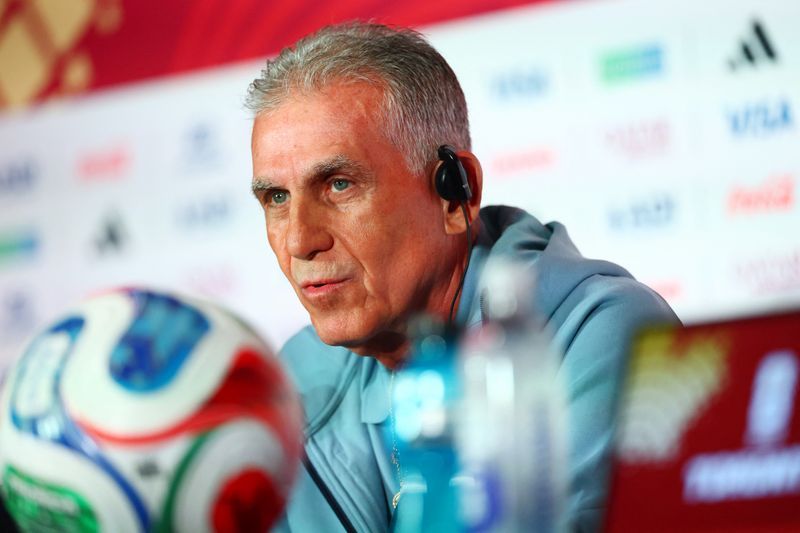
Ghana's campaign at the World Cup faces an unexpected administrative hurdle, yet coach Carlos Queiroz has moved swiftly to shield his players from distraction ahead of their Group L fixture against Panama at Toronto Stadium. Speaking to reporters in Toronto on Tuesday, the Portuguese tactician struck a measured tone, emphasizing that his preparation extends beyond the ongoing legal uncertainty surrounding midfielder Thomas Partey, whose attempted entry into Canada sparked a federal court appeal just hours before the match.
The Villarreal player has been unable to cross into Canadian territory, with authorities citing concerns related to allegations of rape and sexual assault levelled against him in Britain—accusations Partey has steadfastly denied. Rather than allow this complication to dominate the pre-match narrative, Queiroz framed the situation as a procedural matter distinct from his tactical responsibilities. His pragmatic stance reflects the reality many international coaches face when extraordinary circumstances threaten squad cohesion on tournament duty.
Queiroz's philosophy of focusing on controllable variables proved evident in his dismissal of questions surrounding Partey's predicament. By characterizing the topic as "nonsense" outside his purview, he attempted to redirect attention toward the sporting contest itself. However, such compartmentalization belies the genuine impact Partey's absence could have on Ghana's midfield balance, particularly given the midfielder's Premier League credentials and experience at this level of competition. The timing of the federal court hearing on the eve of the match created additional pressure, with no guarantee of resolution before kickoff.
Looking toward Panama specifically, Queiroz revealed a measured respect for his opponents while maintaining confidence in Ghana's capacity to compete. He characterized Panama as an exceptionally organized and disciplined unit with considerable tournament experience, qualities that demand tactical respect at a World Cup. Yet the 73-year-old stopped short of painting his team as underdogs, instead cataloguing the strengths he believes Ghana can deploy. He highlighted their experience across the squad, quality in key positions, pace in wide areas, and technical proficiency—assets he suggested would translate into effectiveness in direct contests.
The coaching veteran's assessment of Panama's weaknesses, though deliberately vague in public, suggests he has identified specific vulnerabilities his analysts have uncovered during preparation. His confidence that Ghana possesses "the solution to their strengths" indicated a structured game plan rather than reactive improvisation. This methodical approach contrasts sharply with the uncertainty hanging over Partey's participation, revealing Queiroz's attempt to establish psychological stability within his camp despite external chaos.
Ghana's broader squad composition clearly impressed the former Real Madrid coach, who emphasized the depth of talent available regardless of any individual absences. His references to speed, skill, and one-on-one prowess point toward a team comfortable operating in transitions and exploiting space in wide areas. Such attributes have historically suited African teams well at World Cups, where athleticism and direct play often prove effective against more possession-oriented opponents. Panama's reputation for tactical organization might paradoxically suit Ghana's strengths, potentially creating space for the African team to attack.
Beyond the immediate Panama contest, Queiroz also addressed the World Cup's controversial hydration break protocols, a rule change that has generated considerable debate among players and coaches worldwide. Rather than deliver a simplistic critique, he adopted a position of principled skepticism, refusing to offer immediate commentary while demanding transparency about the decision's true origins. His call for a post-tournament integrity report reflected broader concerns within football about whether institutional changes genuinely serve player welfare or primarily benefit broadcast scheduling and commercial interests.
Queiroz's suggestion that FIFA must clarify whether hydration breaks protect athlete health or market positioning reveals underlying suspicions many coaches harbor about modern competition management. The integrity report he proposed would effectively audit FIFA's governance, holding the governing body accountable for justifying rule changes through performance data rather than assumption. This thoughtful critique, delivered without inflammatory language, represents the kind of accountability pressure major competitions increasingly face from experienced professionals.
The backdrop of uncertainty surrounding Partey's status adds compelling complexity to Ghana's World Cup narrative beyond typical match analysis. A favorable court decision could provide a late morale boost and restore midfield options precisely when needed most. Conversely, an unsuccessful appeal would force Queiroz to execute his contingency planning while managing potential disappointment within the squad. Either outcome arrives with just hours to spare before action begins, adding genuine stakes to Tuesday's proceedings.
Queiroz's composure throughout this interview—his deliberate refusal to be drawn into speculation, his measured acknowledgment of the situation, his pivot toward matchday preparation—demonstrated why experienced international coaches prove invaluable during turbulent periods. By calmly insisting Ghana possesses adequate resources to compete regardless of circumstance, he attempted to establish psychological dominance before the ball was kicked. Whether this steadiness translates into victory against a Panama side fighting for qualification represents the next chapter in this intriguing World Cup subplot.
For Malaysian football followers and Southeast Asian observers more broadly, Queiroz's handling of adversity offers instruction in professional composure. His tactical philosophy—emphasizing Ghana's strengths rather than opponents' reputations—and his willingness to exploit specific weaknesses suggests a methodical approach that transcends individual talent. In a region where African football's tactical evolution increasingly influences continental football, Ghana's approach under Queiroz provides valuable observation material for coaches and analysts tracking the sport's global development.
Ultimately, the Partey situation remains outside Queiroz's circle of direct control, yet his squad's readiness and tactical preparation lie squarely within it. By maintaining this distinction publicly, the veteran coach modeled professional focus during extraordinary circumstances, setting a tone of determination that extended beyond mere rhetorical posturing. The coming hours would reveal whether his confidence was justified.