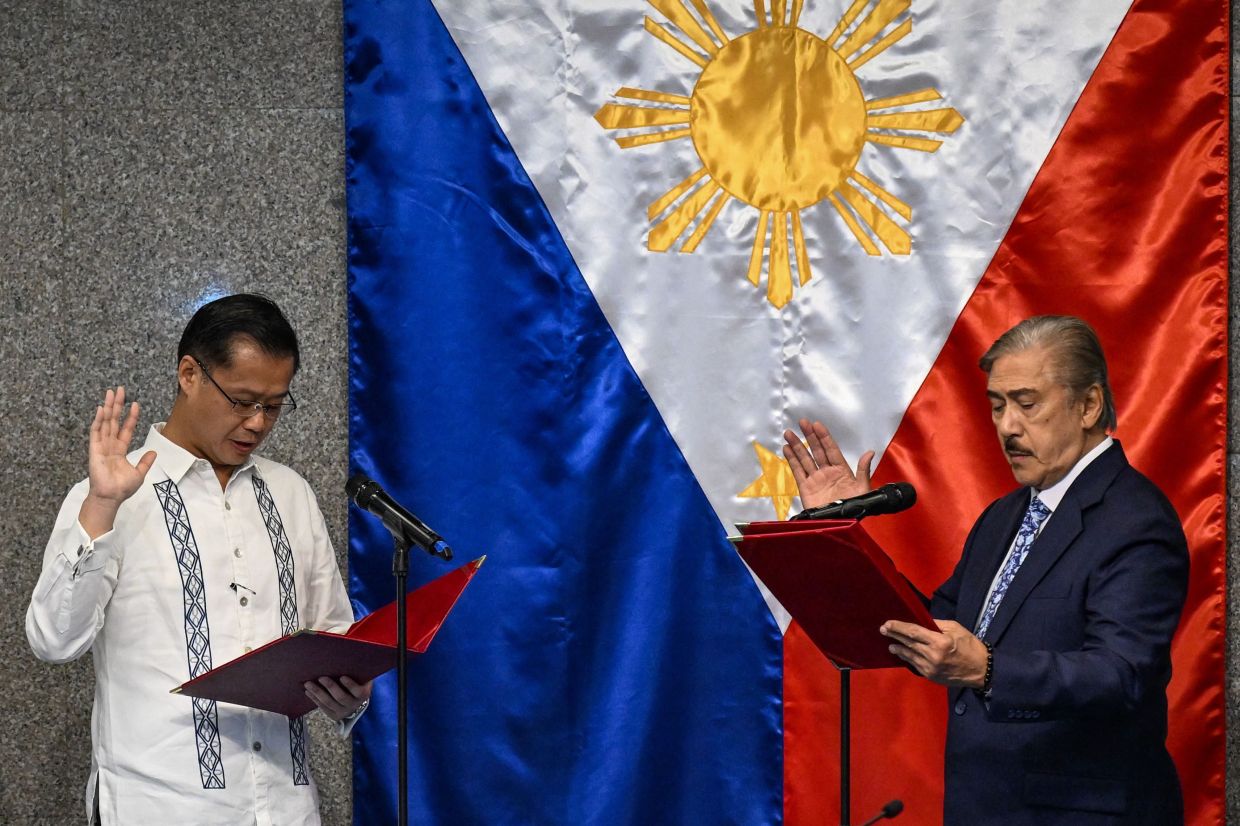
Senator Sherwin Gatchalian has been elected president of the Philippine Senate following a special session on Wednesday, 17 June, in a move that caps weeks of political manoeuvring within the chamber. The vote represented a significant shift in Senate dynamics, with 13 of the chamber's active members endorsing Gatchalian to lead the 24-seat body. The result marks an unexpected conclusion to an internal struggle for control that had threatened the institution's stability and raised questions about leadership legitimacy during a critical period for Philippine governance.
Gatchalian's ascent to the Senate presidency represents the culmination of a calculated political campaign orchestrated by a coalition of senators seeking to challenge the incumbent leadership. The Valenzuela City-born politician brought considerable experience to the role, having served previously as Mayor of Valenzuela City in the Metro Manila area and as a House Representative before joining the Senate. His prior posts in local and national government provided him with an established network and demonstrated legislative credentials that supporters cited during the campaign for the top position.
The path to Gatchalian's victory was neither straightforward nor inevitable. On 3 June, twelve senators had already moved to elect him as Senate president pro tempore, simultaneously announcing that Alan Peter Cayetano, who had assumed the presidency on 11 May, had vacated the position. However, Cayetano disputed this claim, insisting he retained the title and arguing that thirteen senators were required to conduct the constitutional business of electing or removing Senate officers. This legal interpretation became the crucial battleground between the competing factions.
The turning point came unexpectedly when Senator Joel Villanueva, a previously reliable ally of Cayetano, shifted his allegiance to Gatchalian's coalition during Wednesday's special session. Villanueva's defection effectively sealed Cayetano's fate, as it provided Gatchalian's bloc with the thirteen-senator supermajority needed to validate the election. Cayetano himself appeared to acknowledge the mathematical reality on Tuesday, signalling to observers and media that he recognised the political arithmetic had fundamentally changed following his conversation with Villanueva. This acknowledgement paved the way for an orderly transition rather than a prolonged institutional conflict.
The Senate's current operational capacity has been severely diminished by absences and legal troubles affecting its members. The chamber now operates with only 22 sitting senators, down from its full complement of 24, creating an unusually concentrated power dynamic where smaller voting blocs wield disproportionate influence. Senator Jinggoy Estrada, a prominent member with historical political prominence, surrendered to police earlier in June and subsequently faced suspension. The Sandiganbayan anti-graft court ordered Estrada's 90-day suspension from office on Tuesday in connection with graft allegations, further reducing the active membership.
The Senate's challenges extend beyond internal political disputes. Senator Ronald Dela Rosa, the former Philippine National Police chief, remains at large as a fugitive wanted by the International Criminal Court, with his whereabouts unknown. His absence removes another vote from the chamber and underscores the international dimensions of Philippine governance challenges. The combination of Estrada's suspension and Dela Rosa's fugitive status means that Gatchalian assumes leadership over a significantly weakened institution struggling with legitimacy questions stemming from the legal troubles of its members.
For Malaysian observers and Southeast Asian watchers, the Senate presidency drama illustrates the fragility of institutional checks and balances in the Philippines, even among an upper chamber traditionally regarded as more stable than the lower house. The rapid succession of three Senate presidents within a span of five weeks—Cayetano, the pro tempore arrangement with Gatchalian, and now Gatchalian's full presidency—raises concerns about institutional continuity and the ability of the legislative body to function effectively during a period when the Philippines faces significant governance challenges.
The episode also demonstrates how individual defections can fundamentally reshape legislative alignments in systems where party discipline remains weak and personal relationships drive voting behaviour. Villanueva's decision to shift sides, apparently influenced by individual calculation rather than party or ideological considerations, proved decisive in determining the Senate presidency. This pattern reflects broader characteristics of Philippine politics where coalition-building often depends on personality-driven politics rather than stable institutional structures.
Gatchalian's election comes at a consequential moment for Philippine legislative priorities. The Senate must address critical legislative agendas while contending with reduced membership, legal questions surrounding its present composition, and potential questions about the legitimacy of recent procedural decisions. The new president will need to rebuild trust among senators and restore public confidence in an institution that has recently appeared chaotic and fractious.
The stability of Gatchalian's position remains uncertain. With only thirteen senators voting in his favour and the minimum requirement standing at thirteen, his majority is razor-thin. Any further defections or absences could threaten his ability to conduct Senate business effectively. The institutional lessons from this episode suggest that the Philippine Senate may benefit from clearer procedural guidelines governing presidential succession and voting thresholds for institutional changes.
Looking forward, the Gatchalian presidency will be tested by the Senate's ability to function as an effective legislative body despite reduced membership and the presence of members facing serious legal charges. His success in consolidating support and advancing legislative programmes will largely determine whether this presidency resolves the recent turmoil or merely represents another unstable chapter in the chamber's recent history.