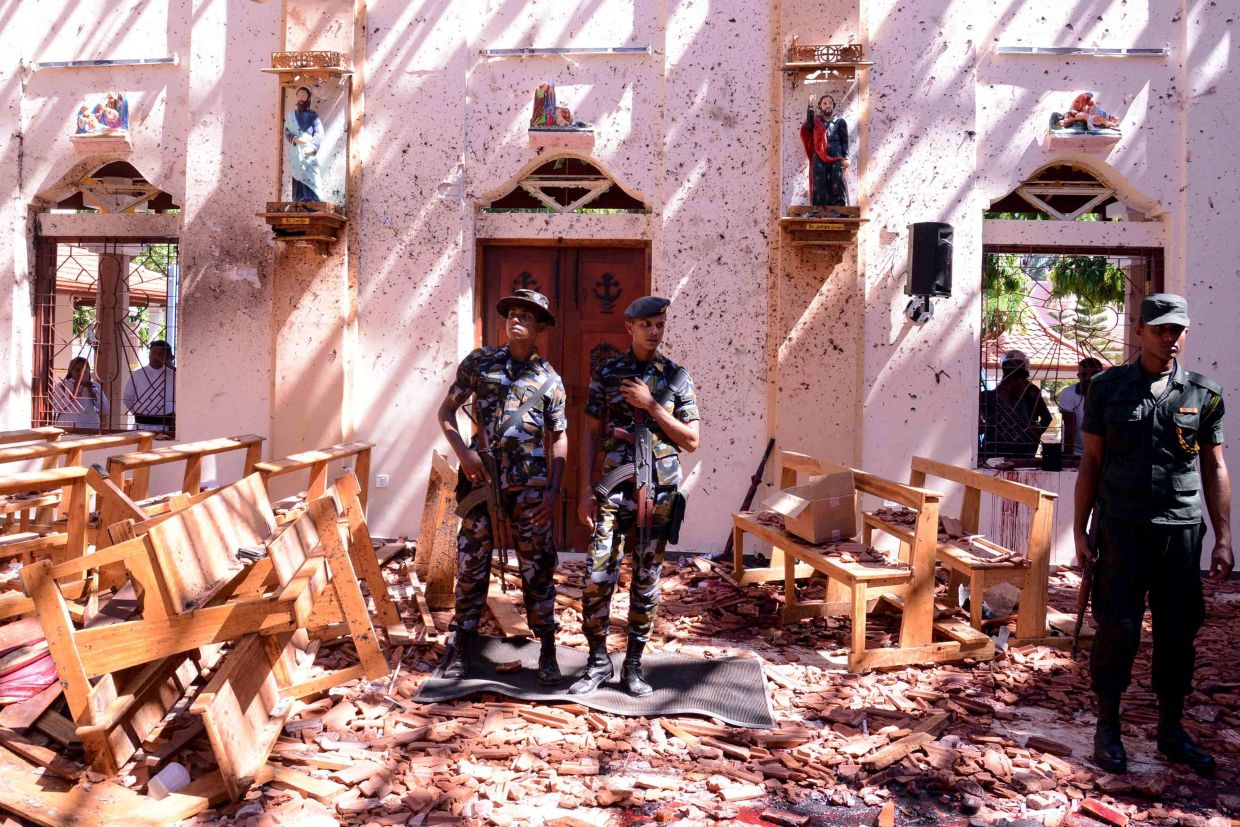
A retired major general with international credentials on combating extremism now finds himself at the centre of Sri Lanka's most explosive political scandal. Suresh Sallay, a Muslim officer who rose through the military ranks and counselled global institutions on terrorism threats, was detained under anti-terrorism legislation in February and stands accused by the government of having orchestrated the coordinated bombings that devastated Sri Lanka on April 21, 2019. The allegation marks a stunning reversal in the official account of an attack that claimed 279 lives and wounded more than 500, making it the deadliest assault on civilians in the island's modern history.
The Easter Sunday strikes targeted three luxury hotels and three churches in a series of synchronised explosions. Forty-five foreign nationals perished, including tourists from Australia, Britain, China, Denmark, the Netherlands, Japan and the United States. The immediate aftermath saw the government blame Sunni Muslim suicide bombers acting under the ideological sway of the Islamic State group. Yet within weeks, inconsistencies emerged that would eventually unravel the official narrative entirely. Indian intelligence services had provided warnings that went unheeded, whilst questions lingered over how the attackers managed to navigate security apparatus and carry out their operations undetected until the final moments.
As Sallay's legal proceedings continue towards a court hearing, he has not yet been formally charged with any criminal offence. He consistently maintains his innocence, yet remains in detention pending trial. Public Security Minister Ananda Wijepala told parliament in June that Sallay functioned as the "mastermind" who "conspired with and strategically directed Islamic extremists until they carried out the attacks." Government investigations have uncovered evidence suggesting links between the bombers and at least two separate state intelligence bodies, lending credence to the emerging theory that the Easter bombings may have been the product of an internal security operation rather than a spontaneous terrorist incident.
The revised investigative theory gaining currency in Colombo portrays the attacks as a calculated political manoeuvre designed to serve the interests of then-powerful actors within the state apparatus. Observers and analysts critical of the government suggest that this network of radicalised individuals may have been deliberately cultivated and instrumentalised to create a perceived security crisis, thereby justifying the expansion of state power and fortifying support for Buddhist nationalist movements allied with the Rajapaksa political dynasty. According to testimony presented to investigators, the alleged scheme aimed to generate sufficient chaos and instability that would position a single leader, namely Gotabaya Rajapaksa, as the indispensable figure capable of suppressing Islamist militancy.
The timeline alleged by prosecutors implicates Sallay directly. Wijepala revealed that Sallay had met with Muslim men just three weeks before the bombings to gather information about specific targets and locations. After Rajapaksa secured the 2019 presidential election on a security-focused platform promising to eradicate extremist threats, Sallay was rewarded with appointment as head of the State Intelligence Service, becoming the first uniformed military officer to occupy that position. This appointment occurred after Rajapaksa's victory, suggesting that Sallay's role in the preceding events had earned him confidence within the new administration.
Historical precedent adds troubling context to contemporary allegations. During Sri Lanka's brutal 1983-2009 civil war against Tamil separatist forces, Rajapaksa administrations openly acknowledged that the state recruited and financed jihadist operatives to gather intelligence on rebel movements and monitor Tamil civilian populations. These militant proxies ultimately served military objectives during the conflict. Yet authorities have consistently maintained that these same operatives subsequently betrayed their government handlers and independently orchestrated the Easter bombings as an autonomous operation. This claim has faced mounting scepticism, particularly given documented evidence of sustained connections between intelligence agencies and the bombers after the stated conclusion of the proxy relationship.
Britain's Channel 4 television network reported in 2023 that an intelligence source alleged the attacks had been permitted to proceed deliberately, their successful execution designed to deliver electoral advantage to Gotabaya Rajapaksa by validating his election platform of iron-fisted security responses to Islamist threats. Investigators presenting evidence to the courts have similarly theorised that the plot aimed to manufacture a security emergency that would establish Rajapaksa as the sole leader capable of managing the perceived threat, drawing implicit parallels with his celebrated military victory against Tamil insurgency a decade earlier. This constructed narrative of necessity and inevitability would have provided political cover for expansive emergency measures and consolidated his political position.
Sallay's own profile complicates the narrative of the disgruntled security operative or ideological extremist. A career professional who studied at India's prestigious National Defence College, Madras University, and Britain's University of Bradford, he represented an internationally engaged intellectual approach to security matters. He served Sri Lanka in diplomatic postings in France and Malaysia, earning respect within professional circles. In 2003, the Defence Ministry's Institute of National Security Studies records indicate he delivered a Pentagon address on suicide terrorism and its strategic impacts. A decade later, he addressed the United Nations on terrorism's growing dimensions, emphasising the particular danger posed by social media and digital platforms in accelerating radicalisation processes.
Yet Sallay's career also reveals troubling patterns of instrumentalising legal systems against political adversaries. In 2020, he orchestrated the arrest of Hejaaz Hizbullah, a Muslim human rights lawyer and opposition figure, accusing him of masterminding the Easter bombings that had occurred the previous year. Hizbullah languished in detention for 22 months before authorities released him without ever producing evidence to support the accusations. The case demonstrated how national security legislation could be weaponised against critics and political opponents. That Sallay himself now faces identical accusations under the same legislative framework suggests the machinery of detention without charge has turned on its previous operators, though the underlying systemic flaws remain unaddressed.
Sallay's personal background reflects Sri Lanka's religious and ethnic diversity in ways that complicate straightforward political narratives. A Muslim officer, he married a Buddhist woman, maintaining connections across the religious divides that structure island politics. His Catholic mother has appealed to the Pope to secure his release, underscoring his embedded position within multiple faith communities. Sri Lanka's population of 22 million comprises approximately 70 per cent Buddhists, 12 per cent Hindus, 10 per cent Sunni Muslims, and seven per cent Christians. Sallay represents the possibility of pluralistic security governance, yet his detention reflects the ascendancy of Buddhist nationalist ideology that has reshaped the state apparatus under recent administrations.
The implications for Southeast Asian security and governance extend beyond Sri Lanka's borders. The Easter bombings and their aftermath demonstrate how national security institutions can be weaponised for internal political competition, how international counter-terrorism frameworks can mask state operations, and how emergency legislation designed to address external threats becomes a tool of internal repression. If evidence substantiates the allegations against Sallay, it would expose a security establishment willing to tolerate mass casualty attacks against its own civilians to achieve political objectives. If the accusations prove unfounded, it would demonstrate how security forces can be manipulated to eliminate inconvenient figures through spurious terrorism allegations. Either scenario reveals profound institutional corruption that threatens democratic governance across the region.

