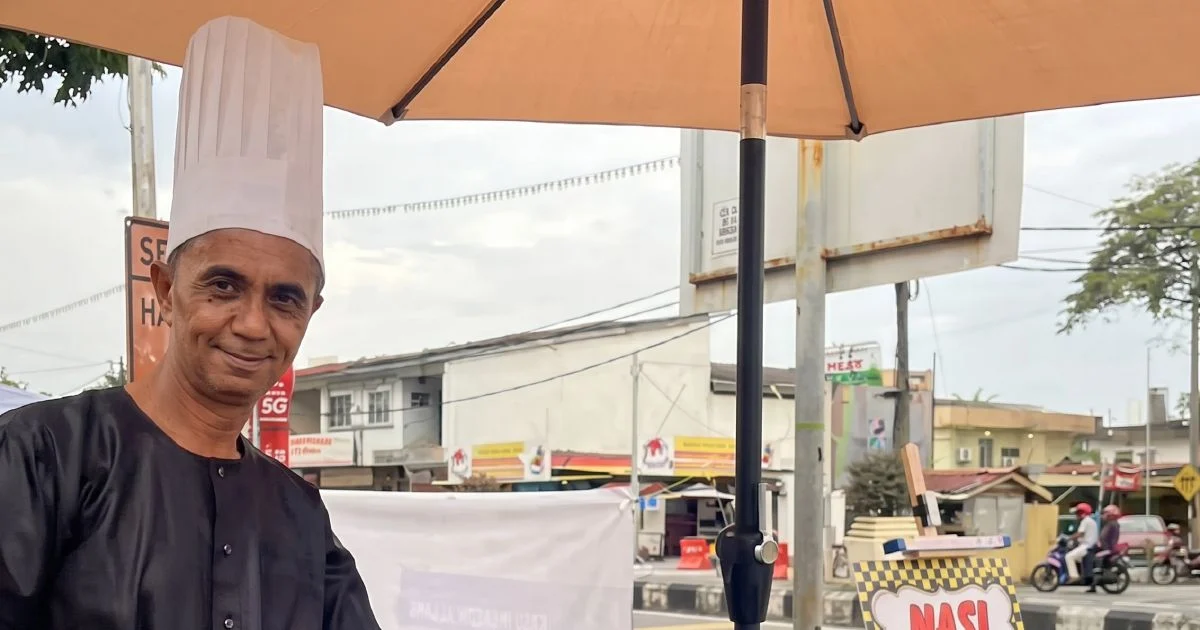
When a fire consumed his residence on Jalan Atas Paloh in Kota Baru in 2021, the vendor faced the kind of crisis that could have derailed his future indefinitely. Yet instead of retreating into despair, he channelled the energy born from necessity into creating a new enterprise that has since become a beacon of resilience for his community. His decision to launch a nasi lemak business at the modest price point of RM1 per packet has not only enabled him to rebuild but has also reflected a deeper determination to serve his neighbourhood despite the trauma of losing his home.
The fire itself represented a catastrophic loss that stripped away the vendor's material foundations and forced him to confront an uncertain path forward. In many instances, such disasters leave individuals with limited options and eroded confidence in their ability to recover. The psychological weight of losing one's dwelling compounds the practical challenges of securing shelter, managing basic expenses, and maintaining employment prospects. For this Kota Baru resident, the immediate aftermath would have presented a constellation of obstacles that could reasonably have discouraged entrepreneurial ambition.
However, the vendor's response demonstrates a phenomenon common among resilient individuals—the capacity to reframe loss as an opening rather than a closing. Rather than waiting for external assistance or governmental support to materialise fully, he proactively identified an opportunity within his immediate environment. Nasi lemak, Malaysia's beloved breakfast staple, represented familiar territory where his efforts could generate revenue without requiring substantial capital investment or complex supply chains. The product's cultural significance and universal appeal across Malaysian communities offered him a viable market with minimal startup friction.
The pricing strategy of RM1 per packet carries profound implications beyond simple economics. In a landscape where food inflation has become a genuine concern for lower-income households, this price point functions almost as a public service. Working families, students, and labourers benefit from accessing a complete, satisfying meal at a cost that does not strain their tight budgets. The vendor's willingness to accept lower margins per unit suggests that his primary motivation extends beyond profit maximisation—he appears committed to building volume and maintaining community goodwill. This approach, while lean, fosters customer loyalty and establishes his brand as one genuinely invested in accessibility rather than extraction.
Kota Baru, the capital of Kelantan, represents a state where entrepreneurial ventures often operate within tighter economic constraints compared to more developed urban centres. The region's commercial landscape features numerous informal and semi-formal traders who navigate competitive markets with limited resources. In this context, the vendor's nasi lemak operation sits within a larger ecosystem of street food entrepreneurs who collectively sustain the cultural and economic vitality of neighbourhood commerce. His success does not occur in isolation but rather as part of a broader pattern of Southeast Asian resilience where informal economies absorb and redirect displaced workers.
The operational aspects of running a RM1 nasi lemak business require meticulous cost management and consistency that many observers might underestimate. The vendor must source rice, sambal, boiled eggs, anchovies, and peanuts at wholesale rates sufficient to maintain profitability while holding the retail price constant. Variation in ingredient quality becomes critical since customers who purchase daily meals at low prices develop refined expectations about consistency and flavour. The vendor's ability to maintain these standards while recovering from catastrophic loss speaks to both his culinary skill and his understanding of his market's preferences.
The narrative of rebuilding after fire carries particular resonance in Southeast Asia, where informal settlements and wooden structures remain common features of urban landscapes. Fire risk represents an ever-present concern for individuals living in densely populated areas or substandard accommodation. The vendor's story thus transcends his personal circumstances to illustrate broader vulnerabilities within Malaysia's housing sector and the gaps in social safety nets that leave disaster survivors to fend largely for themselves. His entrepreneurial response, while admirable, also implicitly highlights the necessity for stronger preventative measures and more robust post-disaster support mechanisms.
Community recognition of the vendor's efforts appears to have translated into sustained patronage that underpins his business model's viability. When individuals within a neighbourhood witness someone rebuilding after visible hardship, their purchasing decisions often reflect a desire to contribute directly to that recovery. This informal economic solidarity strengthens social bonds while enabling small entrepreneurs to circumvent some obstacles that formal commercial channels might impose. The vendor's operation has likely become embedded within daily routines of his regular customers, creating a form of economic anchor that generates reliable demand.
The broader implications of this vendor's trajectory merit consideration for policymakers and development practitioners working across Malaysia and the wider region. Small-scale food entrepreneurs constitute the invisible backbone of urban food security and employment absorption, particularly for individuals lacking formal qualifications or capital access. Supporting their recovery following disasters—whether through subsidised input costs, temporary tax exemptions, or microfinance—could accelerate rebuilding while strengthening community resilience. The vendor's success at RM1 per packet demonstrates the potential for profitable operations at the subsistence margins of Malaysia's economy when individuals possess determination and market understanding.
Looking forward, the vendor's established business provides a foundation for potential expansion or diversification that could enhance his long-term security. Additional nasi lemak variants, complementary items like curry puffs or drinks, or service extensions such as catering for local events could gradually increase revenue without abandoning the core mission of affordability. His demonstrated ability to persist through adversity and build sustainable value from minimal resources positions him as precisely the type of informal entrepreneur whose growth would generate multiplier effects throughout Kota Baru's economy.
The transformation of catastrophe into capability, while deeply personal, carries collective significance for how communities understand resilience and recovery. This vendor's choice to rebuild through enterprise rather than surrender to despair offers a quieter counterpoint to the more celebrated success stories of technology startups or corporate recoveries. Yet his impact on daily life for hundreds of customers—providing affordable nutrition and employment opportunity—may ultimately prove more meaningful than more spectacular but geographically distant achievements. His nasi lemak packets, sold at RM1 each, represent far more than breakfast; they embody the possibility of human agency in the face of structural vulnerability.

