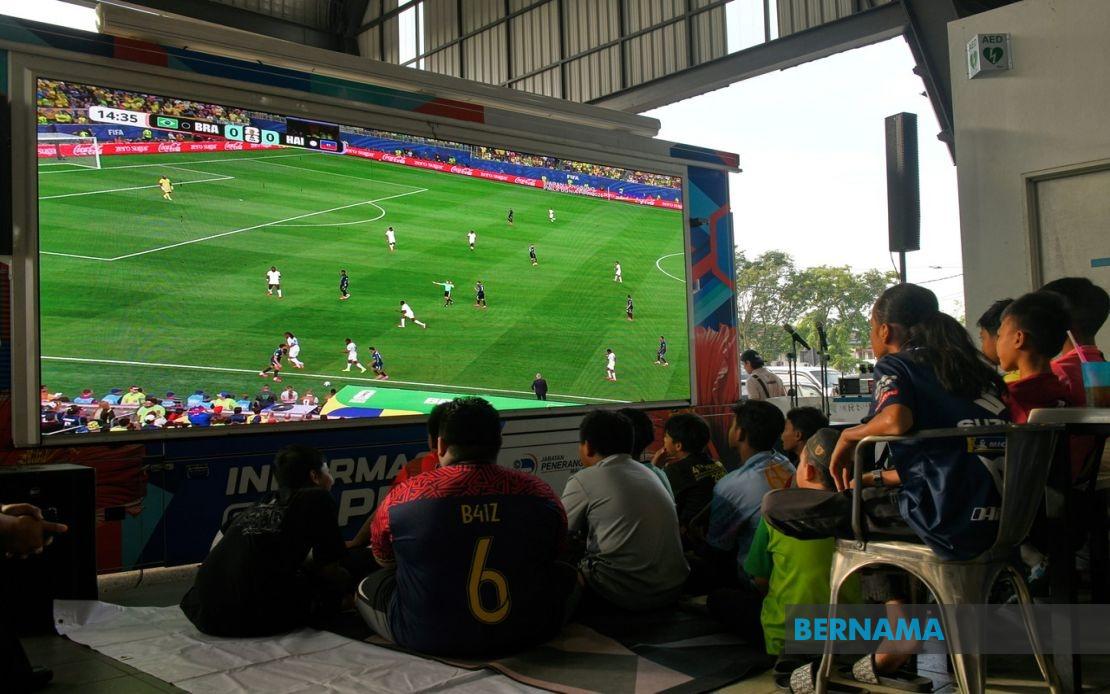
The Malaysian government's decision to provide free television access to the 2026 FIFA World Cup matches through public broadcaster Radio Televisyen Malaysia and the Unifi TV platform has generated tangible relief for small business owners and the general public struggling with rising operational costs. Communications Minister Datuk Fahmi Fadzil highlighted the initiative's positive reception while visiting Seberang Jaya Public Market in Butterworth on June 20, where he observed the community watching matches together and gathered feedback from traders about economic conditions affecting their livelihoods.
The cost savings associated with free broadcasts carry particular significance for Malaysia's food and beverage sector, where viewing rights for major sporting events traditionally represent a substantial operational expense. The Malaysian Muslim Restaurant Owners Association conveyed to Fahmi that the free-to-air arrangement was generating meaningful financial relief across the industry, enabling smaller establishments that might otherwise have foregone match screenings to offer customers an additional draw. For individual traders managing tight margins, the elimination of broadcast subscription fees represents a legitimate cost reduction in an era when every ringgit matters to business survival.
One notable observation emerged from Fahmi's interaction with market traders: a business owner shared that this marks the first occasion in over twenty years that he has been able to screen World Cup matches without incurring broadcast costs. This anecdote underscores how access to premium sporting content has historically been gated behind expensive licensing arrangements, pricing out smaller establishments and limiting viewership to affluent venues. The shift toward government-facilitated free broadcasting democratises access to global sporting spectacles that command enormous audience interest across Malaysia.
The availability of multiple viewing platforms—RTM's traditional television service, the RTMKlik streaming portal, and Unifi TV's ecosystem—creates redundancy and flexibility that amplifies the initiative's practical impact. This multi-platform approach ensures that Malaysians regardless of their preferred media consumption method can access the tournaments without financial barrier. For food court operators and neighbourhood restaurants lacking sophisticated audiovisual infrastructure, RTM's reliable terrestrial broadcast signal remains the most accessible option, while urban establishments with digital capabilities can leverage streaming alternatives.
The initiative's implications extend beyond immediate cost relief to broader economic stimulus within Malaysia's hospitality and food service sectors. When restaurants and food courts can offer World Cup viewing without additional expense, they remove a significant pricing constraint from their operations. Customers attracted by free, quality broadcasts of marquee sporting events typically purchase food and beverages while watching, effectively converting viewing occasions into revenue-generating customer visits. This indirect economic multiplier effect amplifies the value proposition of free broadcasts beyond simple cost containment to active business stimulation.
Fahmi's ground-level engagement with traders revealed the layered economic pressures currently affecting Malaysian small businesses. Beyond fixture costs, traders articulated concerns about rising input expenses traceable partly to geopolitical tensions in West Asia, which have inflated commodity prices and transportation costs globally. The accumulation of these pressures—broadcast fees, commodity price inflation, energy costs, labour expenses—creates compound challenges for margin-conscious operators. The elimination of broadcast licensing fees, while individually modest, contributes to cumulative relief within tightly budgeted operations.
The government's approach reflects a recognition that major sporting events function as public interest phenomena warranting public investment. Rather than treating World Cup broadcasting rights purely as commercial commodities to be auctioned to the highest bidder, Malaysia's authorities positioned free access as a form of cultural and social infrastructure. This philosophy aligns with how many democracies approach coverage of Olympic Games, World Cups, and other events of significant national interest, viewing universal access as preferable to subscription gatekeeping.
For Malaysian consumers broadly, the removal of broadcast fees reduces barriers to participation in global sporting culture. Viewing World Cup matches need not require expensive subscription services or premium restaurant visits; citizens can gather in public markets, neighbourhood establishments, or their homes to experience major tournaments. This democratisation of access particularly benefits lower-income households and rural areas where commercial sports bar options may be limited or prohibitively expensive.
Fahmi's engagement strategy of visiting market locations to observe conditions firsthand and solicit trader feedback demonstrates administrative attention to ground-level economic realities often obscured by high-level policy discussions. His commitment to convey trader inputs to Prime Minister Datuk Seri Anwar Ibrahim and Penang Chief Minister Chow Kon Yeow indicates these concerns are being channelled through formal government structures. The identification of West Asia-related cost pressures as a priority issue requiring ministerial and political attention suggests the government recognises that small traders face genuine economic strain beyond their control.
The minister's observation that broader government representation should increase direct engagement with traders and the general public underscores a push toward more grounded governance informed by lived experience rather than abstract policy papers. When elected representatives and senior officials regularly interact with market traders, restaurant owners, and ordinary citizens, they develop richer understanding of economic pressures and practical constraints shaping public welfare. This philosophy, if genuinely implemented across multiple ministerial portfolios and government tiers, could improve policy responsiveness and administrative effectiveness.
Looking toward the 2026 World Cup itself, the free broadcasting initiative positions Malaysia's audience participation advantageously. High viewership numbers and enthusiastic public engagement with matches strengthen Malaysia's case for future hosting considerations of regional and international sporting events, demonstrate strong grassroots sporting interest to international sports bodies, and validate the government's investment in public sports infrastructure. The tournament becomes a shared national experience accessible across class and income boundaries, potentially strengthening social cohesion around a universally engaging global phenomenon.
The sustainability and expansion of free broadcasting for major sporting events remains contingent on continued government commitment and RTM's fiscal capacity. Should the initiative prove successful and popular, there will be legitimate pressure to extend free access to other significant tournaments—the Asian Cup, regional championships, and other fixtures generating passionate viewership. Establishing free broadcast access as a policy norm rather than exceptional gesture would require sustained budgetary allocation and strategic prioritisation of public interest coverage over purely commercial considerations.

