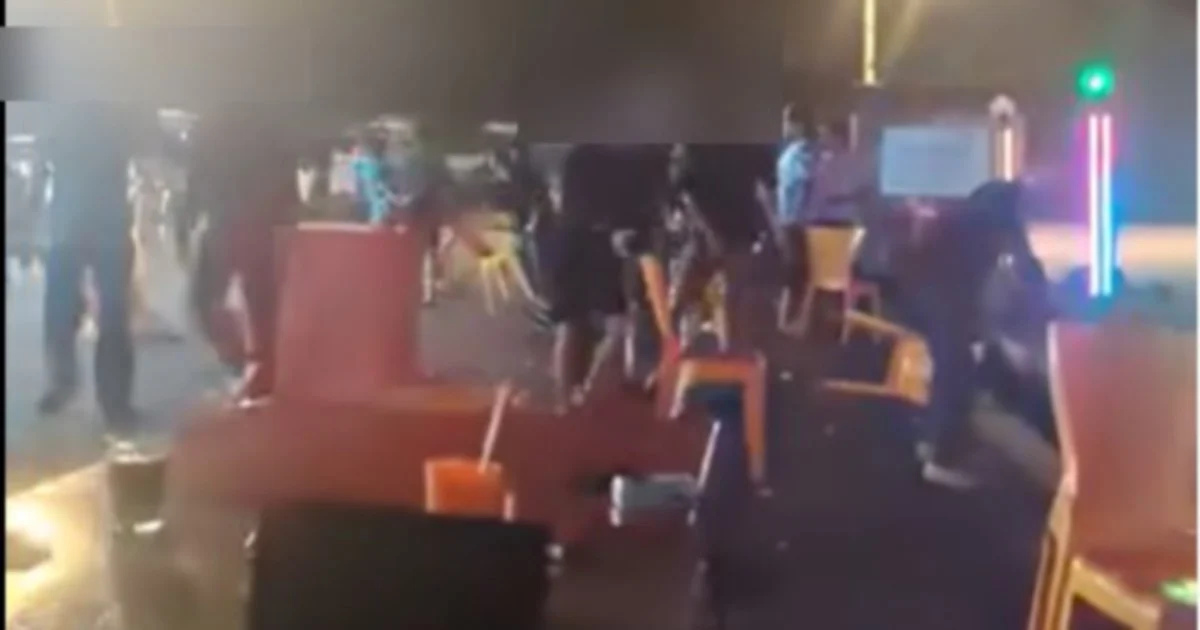
Police in Kulai have arrested four men in connection with a violent brawl that erupted at a restaurant in the Taman Manis neighbourhood, marking another addition to the list of public disturbances across Johor in recent weeks. The incident, which took place yesterday, saw the situation escalate dramatically as confrontational patrons resorted to using furniture as makeshift weapons, transforming what may have begun as a verbal dispute into a dangerous physical altercation that endangered other diners and staff at the establishment.
The swift police response and arrests underscore the state's commitment to maintaining public order in commercial establishments, particularly in areas where families and workers frequent dining venues during regular business hours. Kulai, located in the Johor district and serving as a significant residential and commercial hub, has seen various law enforcement operations aimed at curbing public violence and ensuring residents can patronise local businesses without fear of becoming caught in random confrontations.
While initial details about the trigger for the conflict remain limited, such incidents typically stem from personal disputes that spiral beyond the control of establishment staff and require police intervention. The decision to weaponise furniture suggests the altercation reached a dangerous threshold, indicating that efforts at de-escalation by bystanders or restaurant personnel proved unsuccessful. Such situations pose considerable risks not only to the parties directly involved but also to innocent patrons and workers who may sustain injuries from flying objects or be traumatised by witnessing violence.
For restaurant operators across Malaysia, incidents of this nature present ongoing challenges regarding security and customer safety. Many establishments in urban and semi-urban areas have begun implementing conflict prevention measures, including training staff in de-escalation techniques and installing surveillance systems to record incidents. The responsibility shared between business owners, authorities, and the public extends to creating environments where disputes are addressed through dialogue rather than physical confrontation.
The Kulai police department's ability to identify and apprehend four individuals relatively quickly suggests effective use of eyewitness accounts and possibly closed-circuit television footage from the venue. This rapid law enforcement action sends a message that violence in public spaces carries immediate consequences, potentially serving as a deterrent to other would-be perpetrators. The documentation of such incidents also contributes to crime statistics that guide police strategy in managing safety across different neighbourhoods.
In the broader context of Johor's public safety landscape, restaurant and food court altercations represent a category of crime that intersects with social behaviour, alcohol consumption in some cases, and the crowded conditions of urban dining spaces. Previous incidents across the state have highlighted how quickly situations can escalate when multiple individuals become involved, and how the presence of spectators—some recording on mobile phones—can further inflame tensions rather than defuse them.
The four detained individuals now face investigations that will determine the specific charges to be brought against them, whether assault, affray, or related offences. The police will need to establish the sequence of events, identify who initiated the violence, and determine whether weapons other than chairs were involved. Statements from eyewitnesses, staff members, and any available video evidence will be crucial in building a case for prosecution.
For Malaysian communities accustomed to relatively safe dining experiences in public establishments, incidents involving chairs being used as weapons represent a significant breach of the social contract that typically governs behaviour in commercial spaces. Such conduct threatens not only the immediate safety of those present but also undermines public confidence in the ability to conduct daily activities without exposure to sudden violence. Restaurants serve important social functions as gathering places for families, friends, and colleagues, and maintaining their safety is paramount.
The incident also highlights the importance of swift and proportionate police action in addressing public disorder. By moving quickly to apprehend suspects, authorities demonstrate that such behaviour will not be tolerated and that victims have recourse through the justice system. This approach aims to prevent the normalisation of violence in public spaces, where familiarity with disorder might otherwise erode community standards.
Moving forward, both law enforcement and community organisations may need to explore preventive strategies that address root causes of such altercations. Mediation programmes, improved lighting and security in commercial areas, and community awareness campaigns about the legal and personal consequences of public violence could complement police enforcement efforts. The incident in Kulai serves as a reminder that maintaining social cohesion in shared public spaces requires commitment from multiple stakeholders, including citizens who choose to resolve disputes peacefully rather than through physical confrontation.

