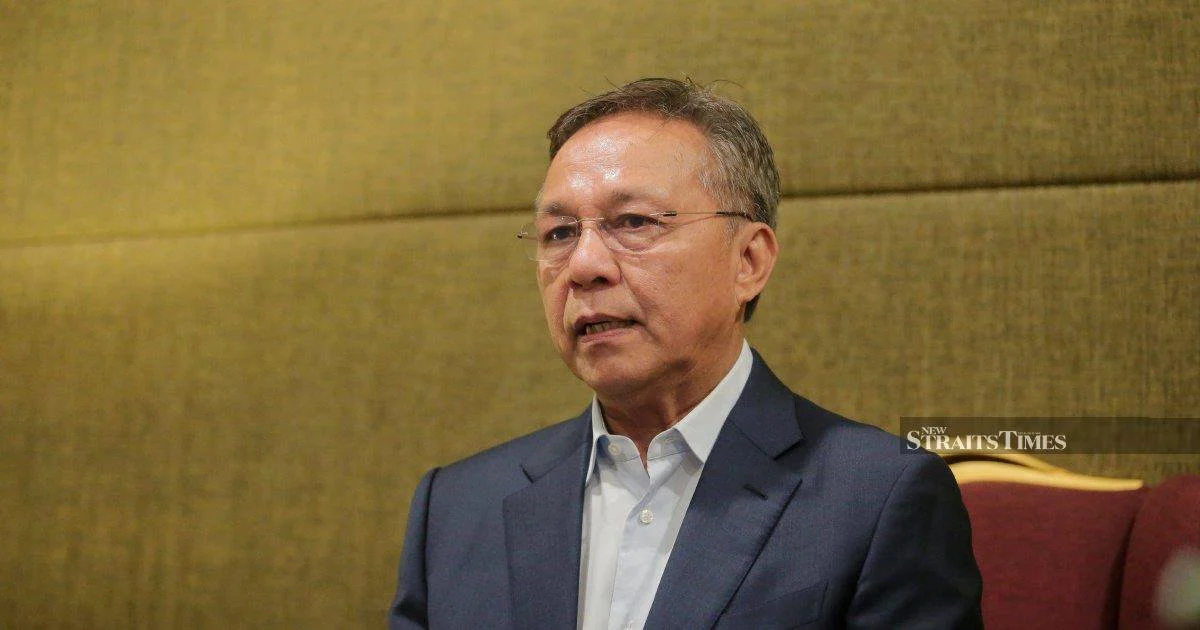
The removal of Datuk Seri Hasni Mohammad from Johor Barisan Nasional's state election lineup marks a significant turning point in the political career of one of the peninsular's most experienced administrators. The former menteri besar's exclusion from the slate has triggered widespread conjecture about his next political move, with observers widely anticipating he may seek a parliamentary seat in the forthcoming general election rather than contest at the state level.
Hashni's departure from the state candidate list comes at a pivotal moment for Johor politics, where the ruling coalition is recalibrating its approach to several high-profile positions. His previous tenure as menteri besar had established him as a heavyweight within the state's Umno machinery, commanding considerable influence within party structures and government administration. The decision to exclude him from the current state iteration suggests internal reassessment of leadership roles and electoral strategy within the coalition's upper echelons.
The speculation surrounding Hasni's political trajectory reflects broader patterns within Malaysian politics, where seasoned state-level figures frequently transition to the federal sphere as their careers evolve. Parliamentary representation has increasingly become the natural progression for politicians of his seniority and experience, particularly those seeking continued relevance and expanded influence in national policy-making. His experience managing Johor's considerable economic and administrative complexities would position him as a credible parliamentary candidate.
For Johor's political establishment, Hasni's removal from the state slate represents more than a personnel adjustment—it signals the coalition's confidence in presenting fresh faces to voters while leveraging experienced figures in federal electoral contests. This bifurcation of resources, deploying established stalwarts at the parliamentary level whilst promoting newer leadership at state level, has become standard practice across Malaysia's major political coalitions. The strategy acknowledges demographic shifts and voter preferences for both continuity and rejuvenation simultaneously.
The timing of Hasni's exclusion carries particular significance given the unpredictable nature of Malaysia's electoral calendar. With the next general election potentially occurring within the coming years, federal coalitions are actively positioning candidates who can defend urban and semi-urban constituencies where parliamentary contests are increasingly competitive. Hasni's administrative background and established political network make him potentially valuable in these contested battlegrounds, particularly in constituencies where technical competence and governance experience matter to voters.
Within Umno's internal structure, the move reflects ongoing negotiations between different party factions regarding seat allocation and candidate selection. Johor remains a critical battleground for national coalition building, and decisions about which personalities compete at which levels inevitably involve horse-trading between federal and state leadership. Hasni's repositioning may represent compromise between various stakeholder interests within the broader coalition framework.
For regional observers, Hasni's trajectory illustrates how Malaysia's constitutional framework allows prominent figures to move fluidly between state and federal arenas, creating distinct career paths within the same overarching political structure. This flexibility has produced some of the nation's most experienced administrators, individuals capable of performing competently across multiple governance levels. Hasni's potential parliamentary move would align him with this established pattern of vertical political mobility.
The exclusion also raises questions about Johor Barisan Nasional's successor planning and rejuvenation initiatives. By stepping aside from state contests, whether voluntarily or through selection processes, Hasni creates space for emerging leadership to contest these seats. This generational transition, while potentially unsettling for experienced politicians, has become essential as electoral competition intensifies and voter expectations shift toward fresh alternatives.
Analysts note that Hasni's political capital—accumulated through years of administrative experience, networks across government and business communities, and his established reputation—remains valuable to Barisan Nasional at the federal level. Rather than effectively sidelining him through exclusion, the coalition appears to be repositioning an asset toward a competitive arena where his particular strengths address genuine coalition vulnerabilities. Parliamentary contests, especially in keenly contested constituencies, increasingly demand the kind of administrative heft and political experience Hasni possesses.
The broader implications for Johor politics extend beyond individual personalities to encompass strategic coalition realignment ahead of what promises to be highly competitive electoral contests. Whether at state or federal level, Barisan Nasional recognises that maintaining power requires sophisticated candidate deployment, ensuring that experienced figures compete where they can maximise coalition chances whilst enabling new faces to build independent constituencies at state levels. Hasni's repositioning exemplifies this chess-like approach to electoral politics in contemporary Malaysia.

