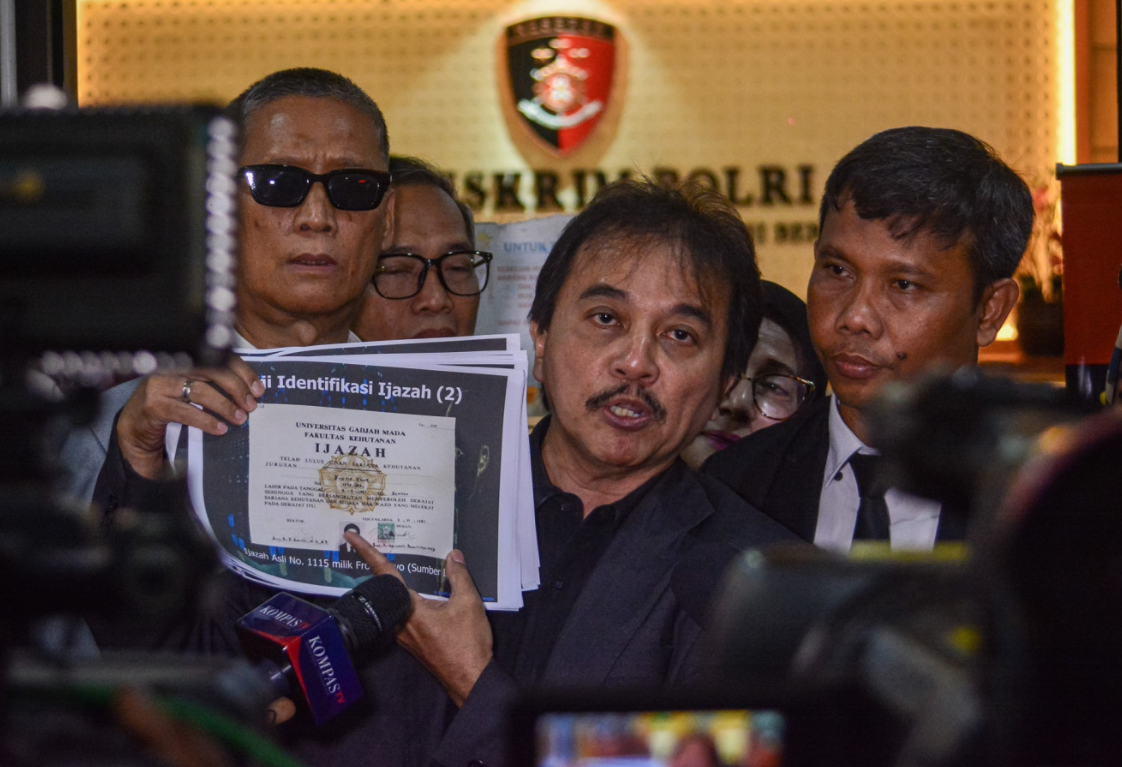
The Jakarta Police have taken a significant step in a long-simmering dispute by detaining former youth and sports minister Roy Suryo and health activist Tifauzia 'Tifa' Tyassuma over defamation charges stemming from their public questioning of former president Joko 'Jokowi' Widodo's university diploma. Both suspects were apprehended at their homes on Friday, June 19, according to Roy's legal representative Ahmad Khozinudin, marking a notable intensification of a controversy that has periodically dominated Indonesian political discourse since 2019.
The detentions represent a procedural escalation rather than a final conviction, according to the Jakarta Police's General Crimes Directorate (Ditreskrimum). The authority explained that the arrests were undertaken as standard protocol ahead of transferring the investigation file to the Jakarta Prosecutor's Office for the subsequent phase of the case. Investigation director Sr Comr Iman Imanuddin stated at a press conference that this measure was designed to prevent administrative delays in the criminal justice process and to complete essential procedural requirements including medical examinations and evidence verification.
Beyond defamation allegations, both Roy and Tifa face accusations of document manipulation—specifically, they are suspected of falsifying electronic records to substantiate their claims regarding the diploma's authenticity. The charges fall under Indonesia's Electronic Information and Transactions (ITE) Law, a statute frequently deployed in defamation cases and carrying a potential sentence of up to six years imprisonment. This dual accusation demonstrates the breadth of the investigation against the two suspects.
The controversy itself stretches back to 2019, when questions about the legitimacy of Jokowi's academic credentials first gained traction through social media channels. What began as online speculation evolved into a multifaceted legal battle involving civil proceedings initiated in 2022 and subsequent investigations and court filings conducted throughout 2025. The trajectory reveals how political disputes in Indonesia can persist across years and mutate into complex legal entanglements affecting multiple parties.
A crucial turning point occurred in May 2025 when Indonesia's National Police issued a formal declaration affirming the authenticity of Jokowi's diploma and consequently closed their earlier investigation into forgery allegations. This pronouncement might have been expected to resolve the matter, yet critics including Roy Suryo continued raising objections. During a case review conducted in July 2025, Roy and others reiterated their skepticism regarding the police findings, demonstrating the intractability of the disagreement despite official institutional endorsement.
The legal response to these continued assertions has been swift and formidable. Roy and Tifa's legal team, led by Refly Harun, has characterised the detention as excessive and procedurally questionable. Harun argued that since the case transfer to prosecutors was scheduled for Monday, holding his clients in custody during the intervening period served no legitimate investigative purpose and constituted an overextension of police authority. Additionally, Harun emphasised that Roy and Tifa had consistently complied with all legal summonses and reporting obligations, suggesting that detention was neither necessary nor justified.
The investigation has involved a broader cast of characters than merely Roy and Tifa. The police previously identified six additional individuals as suspects in the defamation matter under ITE provisions. However, in a demonstration of the flexibility possible within the Indonesian legal system, charges were subsequently withdrawn against three of these individuals—Eggi Sudjana, Damai Hari Lubis, and Rismon Sianipar—following mediation efforts between the parties.
For Malaysian and broader Southeast Asian observers, this case illustrates how disputes over political credentials and institutional legitimacy can generate protracted legal consequences within Indonesia's democratic framework. The tension between free speech protections and defamation law enforcement remains a persistent challenge in Indonesian jurisprudence, particularly when criticism targets high-profile political figures. The utilisation of the ITE Law in this context reflects a trend whereby digital-age legislation is employed to address political controversy, a pattern with implications across the region.
Roy Suryo's prominence as a former cabinet minister under Susilo Bambang Yudhoyono adds significant weight to the case. His participation in questioning the diploma suggests that institutional insiders, not merely fringe critics, harbour substantive concerns about the matter. This dimension complicates any simple narrative portraying the allegations as baseless or motivated purely by partisan hostility, even as the National Police's investigation concluded otherwise.
The detention of Roy and Tifa represents a decisive governmental response to sustained criticism, one that may either vindicate the diploma's authenticity through legal proceedings or alternatively generate perceptions of institutional overreach if courts ultimately find the case lacks prosecutorial merit. The coming months will reveal whether Indonesian prosecutors pursue convictions vigorously or whether the trajectory mirrors the earlier mediation that saw charges dropped against three suspects.
This escalation also underscores the precarious position of public figures engaging in political critique in Indonesia. The invocation of defamation and document manipulation charges, particularly under the expansive ITE Law, creates substantial legal jeopardy for those willing to challenge official narratives. The cases' outcome may therefore establish important precedent for the permissible scope of criticism directed at former and current political leadership in Indonesia's evolving democracy.

