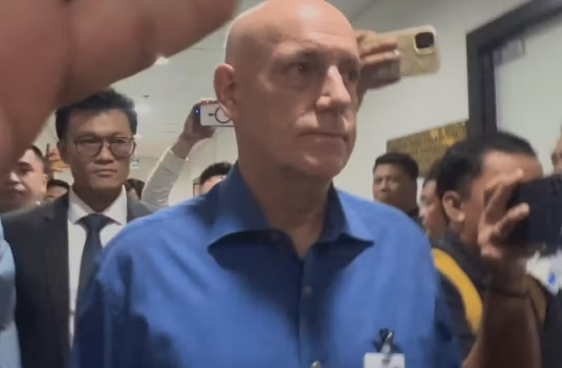
Tab Baldwin, the former head coach of Ateneo de Manila University's men's basketball team, made a long-awaited appearance at the National Bureau of Investigation's Homicide Division on Tuesday afternoon, arriving with legal representation to answer questions about the deaths of two student-athletes. The coach arrived at approximately 1:45pm accompanied by his lawyer, Karl David, for what marked his first in-person engagement with investigators after a series of missed appointments that had drawn scrutiny from both law enforcement agencies involved in the case.
The drowning incident that triggered the investigation occurred during a team activity in Dipaculao, Aurora earlier in June, claiming the lives of student-athletes Rene Baterbonia and Divine Adili. The tragic event has prompted a parallel investigation by two separate law enforcement bodies—the National Bureau of Investigation and the Philippine National Police-Criminal Investigation and Detection Group—each pursuing independent lines of inquiry into what occurred during the team outing.
Baldwin's appearance came after he failed to show up for questioning on June 16, with his legal team submitting a statement to investigators indicating that the coach was "not in good condition" at that time. The following scheduled appearance on June 19 was also missed, though Baldwin instead presented himself before the PNP-CIDG unit on the same day, creating a situation where investigators from different agencies were receiving his account of events at different times.
NBI Director Melvin Matibag confirmed that a key aspect of Tuesday's interrogation would involve cross-referencing Baldwin's statements provided to the NBI with the testimony he had previously delivered to the PNP-CIDG on Friday of the previous week. This comparative analysis forms an important investigative technique to establish consistency in the coach's recollection of events and to identify any discrepancies that might warrant further scrutiny.
The case has generated considerable attention within Philippine sports circles and university communities, given the high-profile nature of Ateneo de Manila's basketball programme and the tragic circumstances of the deaths. Student-athletes drowning during what was intended to be a team-building or conditioning activity raises serious questions about supervision protocols, safety measures, and the duty of care owed by coaches and institutional officials to their charges.
For Malaysian readers, this case carries resonance with similar concerns about athlete welfare and institutional responsibility that exist across Southeast Asian universities and sports programmes. The involvement of multiple investigative agencies reflects Philippine authorities' commitment to ensuring thorough examination of circumstances surrounding the deaths, though such parallel investigations can sometimes complicate rather than streamline the process.
The timing of Baldwin's appearance and the apparent health issues he cited earlier have not been publicly detailed, leaving some questions about the specific circumstances that prevented his earlier attendance. His legal counsel's decision to arrange appearances before both the NBI and the police unit suggests a strategy of engagement with authorities, though the staggered nature of these appearances has meant that investigators have not received synchronized accounts of his version of events.
The investigation's scope appears to extend beyond merely establishing the facts of how the two students came to drown, encompassing broader questions about the adequacy of safety protocols during team activities, the qualifications and oversight of coaching staff, and whether institutional procedures met professional standards. These questions are particularly relevant in the Philippine context, where university athletics have experienced periodic concerns about oversight and safety culture.
NBI Director Matibag's statement that investigators aimed to complete their examination of the case during the week of Baldwin's appearance suggests that the bureau anticipated reaching preliminary conclusions relatively swiftly. However, investigative timelines in cases involving institutional accountability and multiple fatalities often extend beyond initial projections as new information emerges or additional witnesses come forward.
The involvement of legal counsel throughout Baldwin's interactions with investigators indicates that both he and his lawyers are treating this matter with appropriate seriousness, recognizing the gravity of being questioned in connection with two deaths under potentially suspicious circumstances. The decision to appear personally, after the earlier absences, may reflect either a change in health status or a strategic reassessment by his legal team regarding the advisability of continued non-cooperation with authorities.
For Ateneo de Manila University as an institution, the investigation presents significant reputational and operational challenges. The university will likely face external scrutiny regarding its athlete safety protocols, supervision standards, and the vetting of coaching staff. These institutional questions extend beyond Baldwin's individual culpability and touch on systemic issues within the athletic department and broader university governance.
The simultaneous investigation by the NBI and PNP-CIDG creates a complex investigative landscape that requires careful coordination to avoid duplicative effort or conflicting conclusions. Philippine authorities have experience managing such parallel inquiries, but the effectiveness depends heavily on information-sharing protocols and whether both agencies work toward compatible findings or inadvertently create jurisdictional complications.
As the investigation progresses toward what authorities hope will be timely conclusions, Baldwin's statements and the comparative analysis of his accounts to different agencies will likely form a central pillar of the investigative record. The broader implications for athlete safety standards and institutional accountability in Philippine university sports will extend well beyond this individual case.

