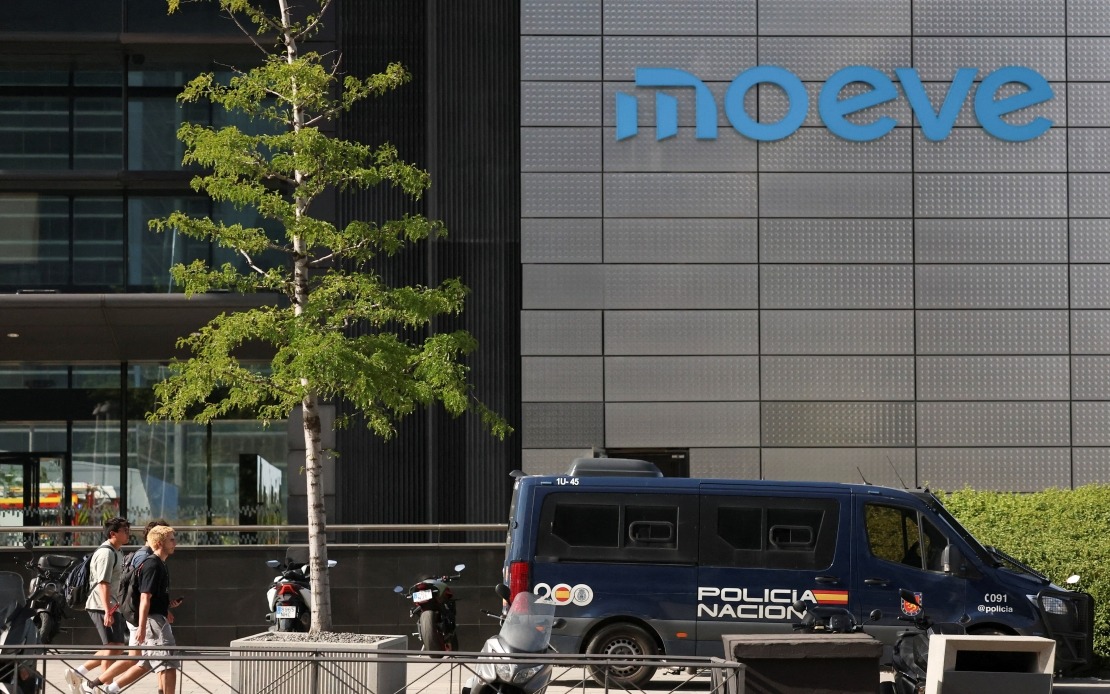
A significant fire erupted at Torre Moeve in central Madrid on Tuesday afternoon, triggering the evacuation of Spain's second-tallest skyscraper and drawing emergency response teams across the city. The incident began around 5.00 pm local time when an explosion occurred within the building, according to reports from Spain's National Police cited by national broadcaster RTVE. Thick plumes of smoke billowed from the structure, creating a visible spectacle across Madrid's skyline as the blaze intensified.
The Spanish government delegation in Madrid identified the 25th floor as the origin point of the fire, a level dedicated to technical and mechanical systems that support the tower's operations. Such floors typically house critical infrastructure including electrical systems, cooling units, and telecommunications equipment—areas where fires can spread rapidly if not contained quickly. The location proved consequential for both evacuation procedures and firefighting strategy, as crews needed to isolate the technical spaces while preventing the blaze from descending into occupied office areas below.
Emergency protocols functioned effectively, with Torre Moeve's management initiating full building evacuation as a precautionary measure immediately following the explosion. This rapid response prevented potential casualties despite the dramatic nature of the incident. The Madrid City Council's firefighting units mobilized quickly and declared the fire extinguished after focused suppression efforts, subsequently conducting thorough interior inspections to ensure no secondary fires or structural damage remained unaddressed.
The human toll proved remarkably minimal given the scale and visibility of the incident. Two workers exposed to smoke within the building received treatment for mild inhalation effects, while a bystander outside suffered an anxiety attack triggered by witnessing the emergency. All three individuals were evaluated and discharged at the scene without requiring hospital admission, indicating that exposure levels remained manageable and that the building's evacuation procedures protected occupants effectively.
This incident highlights both the resilience of modern high-rise safety infrastructure and the ongoing risks associated with technical systems in tall buildings. Torre Moeve, as a premier Madrid landmark, incorporates advanced fire suppression and detection systems standard in contemporary European office towers. The rapid containment and absence of serious injuries reflect how well-designed protocols and trained emergency response teams can mitigate potentially catastrophic situations in densely occupied urban structures.
For regional observers in Southeast Asia, the Torre Moeve incident offers instructive lessons regarding building safety standards. As Malaysian and regional cities develop increasingly tall commercial and residential structures, incidents like this underscore the critical importance of rigorous fire safety certification, regular maintenance of technical systems, and comprehensive evacuation planning. Cities like Kuala Lumpur, Singapore, and Bangkok have seen rapid growth in supertall buildings, making the establishment of world-class safety protocols essential.
The explosion's origin remains under investigation by Spanish authorities, though preliminary indications point toward technical systems on the 25th floor. Understanding the precise cause will inform recommendations for building operators and safety regulators across Europe and beyond. Whether the incident resulted from electrical failure, mechanical malfunction, or maintenance-related issues will shape how similar facilities manage their technical infrastructure.
Torre Moeve's prominence in Madrid's skyline made the visible smoke from the fire a matter of immediate public concern, despite authorities' swift containment. The building's status as a recognizable architectural landmark meant that residents throughout the city could observe the incident, potentially causing wider anxiety than a comparable fire in a less visible structure might generate. Social media and immediate news reporting amplified public awareness, creating a need for clear official communication regarding safety status.
The incident underscores that even in cities with mature building safety cultures and well-resourced emergency services, fires in tall buildings remain serious events requiring immediate and coordinated responses. Spain's combination of experienced firefighting units, established building codes, and professional emergency protocols enabled a controlled resolution. Similar capabilities in Southeast Asian cities continue developing as the region's real estate sectors mature and safety standards align increasingly with international benchmarks.
As investigations proceed, the broader building management community will monitor findings regarding the Torre Moeve fire's causes and response effectiveness. Such incidents, while rare in well-maintained modern structures, generate valuable data for refining evacuation procedures, improving detection systems, and enhancing maintenance protocols across comparable facilities. For Malaysian property developers and facility managers overseeing high-rise complexes, comparative analysis of incidents like this provides practical insights into risk management and emergency preparedness.

