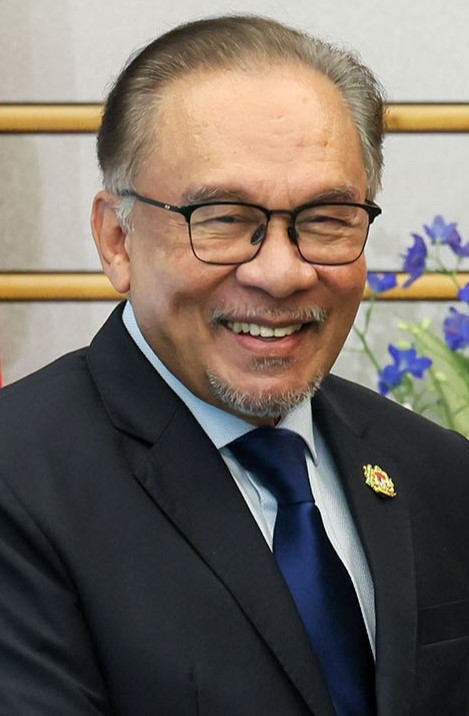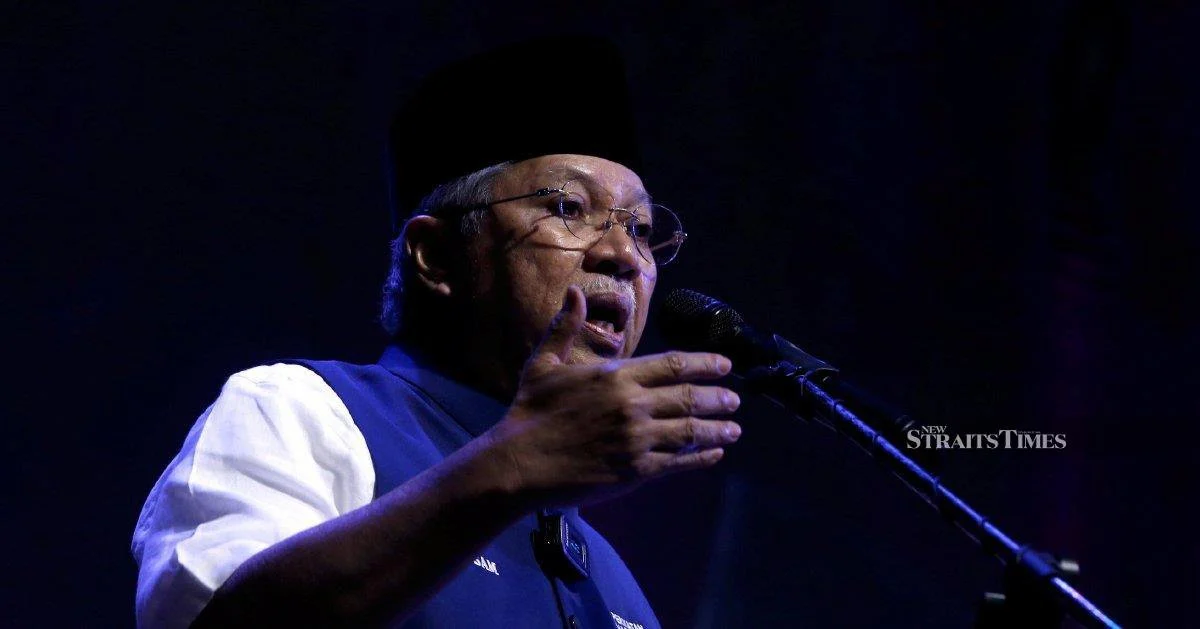
Finance Minister Annuar Musa has called upon Bersatu to exercise restraint and refrain from issuing premature statements regarding recent developments within the Perikatan Nasional coalition, as strains continue to test the partnership between the bloc's member parties.
The appeal underscores growing concerns about the stability of PN, which has served as a pivotal force in Malaysian politics following the 2022 general election. Bersatu, under the leadership of former Prime Minister Mahathir Mohamad, remains one of the coalition's largest and most influential components, wielding considerable influence over the direction of the alliance. Tensions within the bloc have periodically erupted into public disputes, risking damage to the coalition's electoral prospects and governing capacity should disagreements escalate unchecked.
Annuar's intervention reflects a broader push among senior coalition figures to manage disputes through back-channel discussions rather than public confrontation. This approach has become increasingly necessary as personality clashes, policy disagreements, and competing political ambitions between PN's constituent parties—particularly Bersatu, PAS, and Bersatu's breakaway factions—have created a volatile political environment. The coalition's ability to maintain unity remains crucial not only for its own survival but also for shaping Malaysia's political trajectory in the lead-up to the next general election.
For Bersatu specifically, internal pressures have mounted following defections and factional divisions that have weakened the party's grip on its traditional support base. The party's decision-making process has become more fraught as factions compete for control of key ministerial posts and parliamentary seats. Calls for calm from figures like Annuar suggest that senior leaders recognise the danger posed by uncontrolled messaging that could further alienate either party members or the broader coalition membership.
The Perikatan Nasional coalition was formed to consolidate the political strength of PAS and other non-Umno Malay-Muslim parties, positioning itself as an alternative to the Barisan Nasional-Pakatan Harapan duopoly that had dominated Malaysian politics. However, the coalition's heterogeneous membership—spanning Islamist, nationalist, and reformist ideologies—has consistently struggled to maintain ideological coherence. Policy divisions over issues ranging from religious governance to economic management have repeatedly threatened to fracture the alliance at critical moments.
Recent developments within PN have been particularly sensitive given broader challenges facing the coalition at the grassroots level. Public infighting risks signalling weakness to voters and providing ammunition to opposition parties seeking to highlight divisions within government ranks. Additionally, internal disputes can trigger realignments among coalition members as smaller parties calculate whether their interests are better served within PN or through alternative political arrangements. Such calculations have historically proven destabilising, with defections and party-switching creating cascading political upheaval.
Annuar's position as Finance Minister places him in a unique position to advocate for coalition stability, given the government's dependency on PN's parliamentary support to maintain its legislative majority. His call for restraint carries implicit weight, suggesting that senior government figures view current tensions as sufficiently serious to warrant high-level intervention. This also indicates that disputes are unlikely to be resolved quickly without deliberate coordination among party leadership.
For Malaysian observers, the coalition's internal management carries direct implications for policy continuity and economic governance. Persistent political instability can disrupt long-term policy initiatives, complicate budget implementation, and create uncertainty among investors and the business community. The government's ability to execute programmes ranging from infrastructure development to fiscal reform depends significantly on coalition stability and the predictability of political decision-making processes.
Bersatu's role in these dynamics remains central, given the party's historical significance and current parliamentary representation. Any decision by Bersatu to escalate tensions—whether through public criticism of coalition partners or threats to withdraw from specific policy initiatives—could precipitate cascading effects throughout PN's structures. Conversely, Bersatu's willingness to exercise restraint and engage in closed-door negotiations could provide the foundation for managed dispute resolution.
The broader context of these tensions extends to question marks surrounding PN's medium-term viability. Political observers have noted that coalition arrangements built primarily on shared opposition to specific rival coalitions often lack the deep ideological or institutional bonds necessary to sustain themselves through extended periods of governance. PN's members have largely avoided major policy clashes thus far, but the coalition's ability to weather stronger disagreements remains unproven. Leadership transitions, changes in party compositions through defections, or shifts in electoral calculations could all trigger more severe instability.
Annuar's appeal for calm also reflects awareness among government leaders that public management of coalition disputes has become increasingly difficult in the age of social media and instantaneous political commentary. A single ill-considered statement can trigger reactions that spiral beyond control, transforming manageable disagreements into full-scale political crises. This recognition has prompted efforts among senior figures to implement stronger message discipline across coalition members.
Looking ahead, the sustainability of PN appears contingent upon the coalition's ability to develop more robust internal mechanisms for managing disputes. Informal appeals for restraint may provide temporary relief, but longer-term stability likely requires institutional reforms that clarify decision-making processes, establish protocols for resolving disagreements, and create clearer frameworks for power-sharing among coalition members. Whether PN's leadership will prioritise such reforms remains an open question that could shape Malaysian politics for years to come.