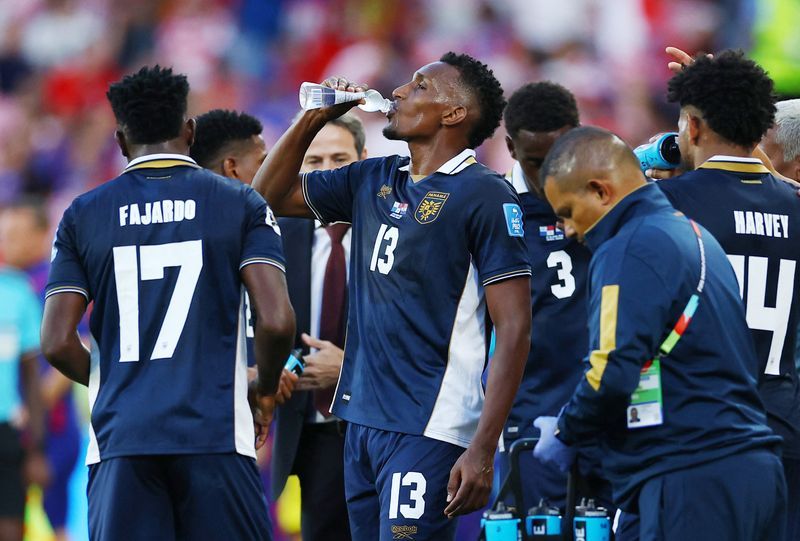
FIFA president Gianni Infantino has pushed back forcefully against mounting criticism of the mandatory hydration breaks now embedded in World Cup matches, framing the controversial measure as a safeguard for player welfare rather than a ploy to extract additional advertising revenue from broadcasters. The introduction of these three-minute stoppages in the 22nd and 67th minutes of every match has become one of the tournament's most divisive talking points since the opening fixtures, drawing objections from multiple national team coaches and sparking viewer frustration over the disruption to match flow and the commercial opportunities the breaks create.
The practical justification for the hydration breaks centres on the extreme environmental conditions present across North American venues, where peak temperatures can pose genuine health risks to athletes performing at the highest levels of physical exertion. However, the decision has inadvertently created a secondary layer of commercial value by opening new advertising windows that broadcasters have eagerly exploited, intensifying perceptions that FIFA's primary motivation lies in generating additional revenue streams rather than genuinely prioritising player safety. Infantino's explicit denial of any financial motive—stating that "there is no additional revenue for FIFA, as all commercial agreements were signed well in advance"—appears designed to address this credibility gap, though the assertion has done little to quiet the controversy.
Beyond the commercial dimension, the hydration breaks have fundamentally altered tactical dynamics on the pitch in ways that fundamentally reshape how matches develop. Coaching staff now have designated moments to deliver strategic instructions and make adjustments without consuming their allocation of substitutions, a practice that several elite managers have condemned as eroding the essential character of football. England's Thomas Tuchel articulated this concern most sharply, arguing that the interruptions transform "the identity of the football match" itself, while Uruguay's Marcelo Bielsa suggested that fragmenting matches into shorter segments strips away what he considers the sport's defining characteristic—the continuous nature of tactical and physical challenge.
The rule's reception has proven strikingly uneven among football's hierarchy. Spain's Luis de la Fuente and Netherlands captain Virgil van Dijk have acknowledged the safety rationale behind the breaks when genuine heat stress presents a real threat, yet both have questioned whether the measure should apply universally across all venues and weather conditions, particularly in cooler climates or at covered stadiums where temperature danger does not exist. This nuanced position reflects a broader consensus that while player protection deserves serious consideration, the one-size-fits-all implementation may represent regulatory overreach.
Infantino's defence of the breaks rests on several interconnected arguments about equity and player recovery. He emphasised that the tournament's compressed schedule—39 days encompassing potentially eight matches for competing teams—creates cumulative physical strain that warrants deliberate recovery opportunities. More significantly, he highlighted FIFA's commitment to ensuring competitive fairness by guaranteeing identical conditions across all matches, arguing that allowing tactical adjustments only in matches played in extreme heat while denying them in cooler conditions would create unacceptable competitive imbalances. This reasoning appeals to foundational sporting principles about equal opportunity, even if it requires imposing universally what may only be necessary in specific circumstances.
The hydration break controversy reflects a broader tension within modern football between evolving understandings of player welfare and traditional conceptions of how the game should flow. Climate change and increasingly ambitious tournament scheduling in challenging environments have forced football's governing bodies to grapple with questions that previous generations never confronted. Yet implementing protective measures often generates unintended consequences that reshape the sport's fundamental characteristics in ways stakeholders did not anticipate or desire.
For Southeast Asian football observers and administrators, the debate carries particular resonance. Many nations in the region regularly host matches in intense heat and humidity comparable to North American World Cup conditions, and clubs and federations will likely monitor how this precedent develops. If the hydration breaks become permanently embedded in FIFA regulations despite continued resistance from coaches and broadcasters alike, Southeast Asian competitions may face pressure to adopt similar measures, regardless of whether local contexts genuinely require them. Conversely, if the breaks are abandoned after the current tournament, the decision will signal that commercial considerations ultimately trumped welfare arguments.
Infantino's insistence that match intensity has not diminished under the new protocol suggests that the breaks do not fundamentally undermine competitive quality, even if they alter tactical rhythm. Players have reportedly maintained high performance levels throughout matches despite the interruptions, implying that the breaks serve their stated purpose without degrading the sporting spectacle. Yet this technical observation fails to address the deeper concern about whether football matches should be subdivided in ways that expand coaching influence beyond traditional parameters.
The hydration break debate ultimately exposes the complexity of managing elite sport at the intersection of player health, competitive integrity, commercial viability, and traditional sporting values. Infantino's defence demonstrates FIFA's awareness that appearing to prioritise profit over welfare would constitute a serious reputational threat, yet the argument's reliance on equity and player recovery rather than addressing the commercial dimension directly suggests the organisation recognises the legitimacy of viewer frustration. As the World Cup progresses, the practical effects of these breaks—both on player performance and on the match experience—will likely continue shaping debate about whether this particular solution represents appropriate regulation or regulatory overreach.

