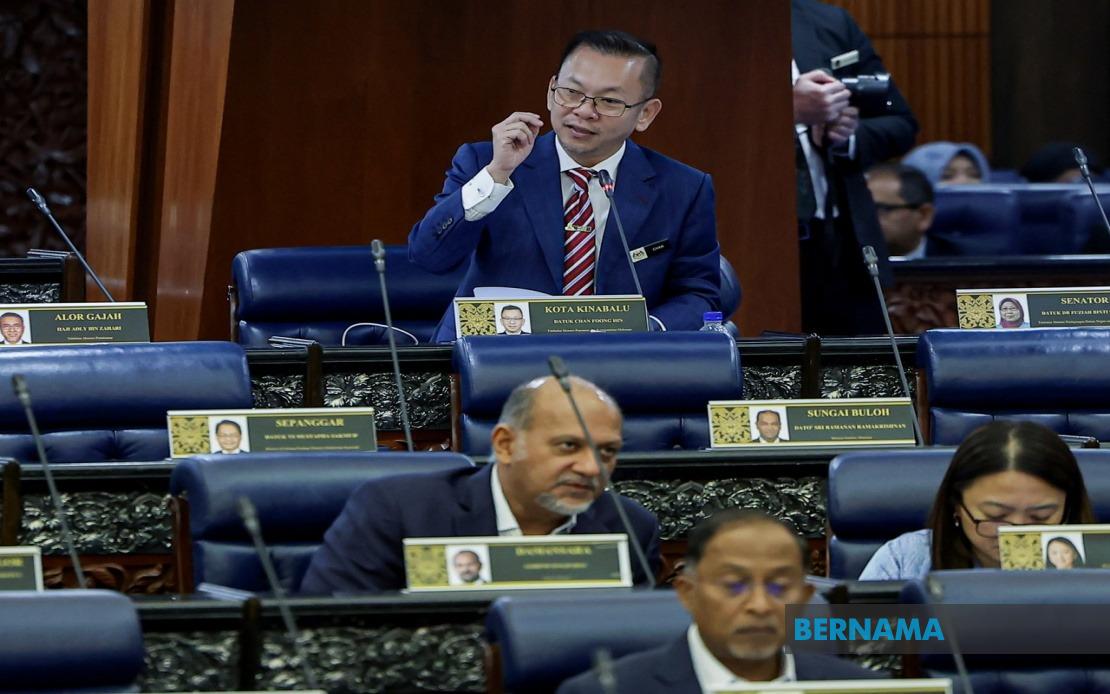
Malaysia is moving swiftly toward establishing comprehensive legislative controls over its fertiliser sector, with the Ministry of Agriculture and Food Security now in the closing stages of drafting what will become the nation's first dedicated bill governing this critical agricultural input. Deputy Agriculture and Food Security Minister Datuk Chan Foong Hin informed parliament this week that the legislative framework has reached between 70 and 80 per cent completion, signalling that lawmakers could expect the measure to arrive for full parliamentary consideration within the foreseeable future. The development represents a significant policy shift for Southeast Asia's third-largest economy, which has historically relied on market-driven approaches to fertiliser supply and pricing.
The impetus for this legislation stems from mounting practical difficulties faced by farmers across Malaysia's agricultural sectors. Concerns raised by parliamentarian Cha Kee Chin, representing the Rasah constituency, highlighted recurring complaints that domestic fertiliser supplies often prove unsuitable or inadequate during periods of global economic instability or geopolitical tension. These grievances underscore a structural vulnerability in Malaysia's agricultural supply chain that has become increasingly apparent as international crises ripple through commodity markets and disrupt established trading patterns. Farmers have repeatedly found themselves unable to access quality products at predictable prices when global conditions deteriorate, a problem that directly threatens domestic food security and agricultural productivity.
The proposed legislation will establish multiple regulatory mechanisms across the fertiliser value chain. Quality standards will form a cornerstone of the new framework, ensuring that imported and domestically produced fertilisers meet rigorous specifications before reaching agricultural users. Distribution controls represent another critical component, as the government seeks to prevent manipulation and hoarding within the supply network. By creating oversight mechanisms for how fertilisers move from importers through wholesalers to retail channels and ultimately to farms, policymakers hope to stabilise prices and ensure equitable access regardless of global market turbulence. Datuk Chan emphasised that these protections serve the broader agricultural industry rather than imposing burdensome restrictions, framing the legislation as essential protection against exploitation within the distribution chain.
The urgency surrounding this legislative initiative has intensified due to recent geopolitical developments that have exposed Malaysia's dependency on stable global supply chains. The conflict in West Asia has triggered cascading economic shocks throughout international markets, with crude oil prices rising substantially and creating multiplier effects across the economy. Fertiliser costs have surged accordingly, as production processes consume significant energy inputs and transport expenses have climbed due to elevated fuel prices. Pesticide costs have similarly escalated, compounding pressures on agricultural production budgets. These inflationary forces threaten to squeeze farmer profitability and potentially reduce cultivation areas as producers make difficult economic calculations about viable crops and planting decisions.
Government responses to date have focused on short-term relief measures designed to cushion the impact on Malaysia's agricultural community. The ministry has implemented temporary exemptions from sales tax on fertilisers, reducing immediate costs for farming operations. Enhanced assistance allocations have been directed toward padi farmers specifically, recognising the particular importance of rice cultivation for national food security and rural livelihoods. These emergency measures provide breathing room but cannot address structural vulnerabilities in the agricultural input supply chain, which explains why legislative solutions assume such importance in the government's strategic planning.
Looking beyond immediate crisis management, the Ministry of Agriculture and Food Security has outlined an ambitious agenda to comprehensively strengthen the agro-food ecosystem. Beyond the fertiliser legislation, this agenda encompasses broader institutional development including emergency stockpile storage facilities that would allow Malaysia to maintain reserves of critical agricultural inputs. Such strategic reserves could stabilise markets during supply disruptions and provide farmers with certainty during periods of elevated global volatility. This forward-looking approach reflects recognition that Malaysia's agricultural sector cannot remain perpetually vulnerable to external shocks that lie beyond domestic control, requiring instead proactive investment in infrastructure and regulatory capacity.
The legislative approach also signals shifting attitudes toward market regulation within Malaysia's agricultural policy establishment. Historically, the country maintained relatively hands-off approaches to input markets, allowing prices to fluctuate according to global commodity dynamics. The new fertiliser bill represents acknowledgment that certain market failures and coordination problems warrant government intervention to protect food security and farm incomes. This philosophical shift aligns with similar trends across Southeast Asia, where governments increasingly recognise that agricultural sustainability requires balancing market efficiency with protective mechanisms ensuring farmer viability and supply chain resilience.
Parliamentary support appears likely, though Datuk Chan's explicit appeal for backing from all Members of Parliament hints at potential resistance. Agricultural constituencies spanning multiple political parties share interests in stable fertiliser supplies and reasonable input costs, creating cross-partisan political incentives to support the measure. However, some opposition voices may emerge from business interests benefiting from current distribution arrangements or from ideological perspectives sceptical of regulatory approaches. The minister's advance advocacy suggests government strategists recognise the importance of securing broad consensus rather than relying on narrow parliamentary majorities for legislation affecting such a fundamental economic sector.
For Malaysian farmers and agricultural enterprises, the fertiliser bill's eventual passage promises meaningful improvements to operational certainty and cost predictability. Quality standards will eliminate concerns about purchasing unsuitable products that waste investment and reduce yields. Distribution controls should reduce opportunities for artificial scarcity and price manipulation. Supply stability mechanisms create confidence that future global crises need not translate into immediate agricultural input shortages. These provisions address genuine pain points that have frustrated farming communities across Malaysia's diverse agricultural regions, from smallholder rice farmers in the peninsular heartland to estate producers and vegetable growers supplying urban centres.
The broader regional implications merit consideration as well, as Malaysia's experience developing fertiliser regulation offers potential lessons for neighbouring Southeast Asian economies facing similar supply chain vulnerabilities. Indonesia, Thailand, Vietnam, and the Philippines all maintain substantial agricultural sectors dependent on stable fertiliser supplies, and several have experienced similar disruptions during recent global crises. Malaysia's legislative approach to establishing quality standards and distribution controls could serve as a policy template for regional peers seeking to enhance agricultural supply chain resilience. Coordination mechanisms between Southeast Asian governments might eventually emerge, creating regional-scale buffer systems against global commodity market volatility.
The timeline for parliamentary consideration remains unspecified, though the 70-80 per cent completion estimate suggests legislators could anticipate tabling within months rather than years. Once introduced, the bill will enter the parliamentary legislative process, where committee examination and floor debate will refine the specific regulatory mechanisms and enforcement provisions. This deliberative phase presents an opportunity for stakeholder input from farming organisations, input suppliers, agricultural economists, and other interests affecting or affected by the new regulatory framework. The government's explicit advance call for parliamentary support suggests confidence in the measure's merits but also recognition that securing consensus requires time and thoughtful engagement with legitimate concerns from various constituencies.

