The Federal Government's decision to raise the interim Special Grant allocation to Sabah to RM1.5 billion represents a tangible commitment to honouring the constitutional arrangements that bind the state within the Malaysian federation, according to Gabungan Rakyat Sabah secretary-general Datuk Armizan Mohd Ali. The increase from the previous RM600 million ceiling, announced by Prime Minister Datuk Seri Anwar Ibrahim on May 31, signals recognition of longstanding financial grievances that have complicated centre-state relations since the formation of Malaysia in 1963.
For Sabah, this development carries considerable weight beyond mere budgetary adjustments. The state has for decades pursued claims to a 40 per cent revenue share as stipulated in Articles 112C and 112D of the Federal Constitution, a provision rooted in the Malaysia Agreement 1963 that formalized Sabah's entry into the federation. The special grant mechanism was designed to compensate the state for surrendering control over certain revenue sources while joining the broader Malaysian structure. However, the actual disbursements have consistently fallen short of constitutional entitlements, creating a persistent point of contention between state and federal authorities.
Armizan, who also serves as Domestic Trade and Cost of Living Minister, framed the enhanced allocation as validation of GRS's sustained advocacy on behalf of Sabahan interests. He emphasized that although legal proceedings regarding the full 40 per cent entitlement remain in progress, the interim increase demonstrates governmental receptiveness to constitutional obligations that have lingered unresolved. This positioning allows GRS to claim credit for pressing federal leadership while maintaining negotiating space for further gains as courts eventually rule on the underlying disputes.
The Prime Minister's November 2025 parliamentary address, in which he explicitly acknowledged Sabah's constitutional claim to the full 40 per cent special grant, provides political cover for Armizan's interpretation. That public commitment, delivered within the Dewan Rakyat, carries symbolic significance beyond administrative adjustments, essentially pledging that the MADANI Government recognizes Sabah's legal standing in this matter. Such recognition matters tremendously for a state where political loyalty frequently hinges on demonstrating tangible federal responsiveness to regional demands.
Despite apparent progress, GRS maintains that legislative formalization remains incomplete. The party continues insisting that the revised grant amount must be formally gazetted during the current calendar year, transforming the interim arrangement into permanent statutory entitlement. This distinction matters considerably: gazettement would lock the amount into law, preventing future administrations from reverting to lower allocations or conditioning future distributions on political considerations. Without such permanence, the RM1.5 billion increase could theoretically be recalibrated or withdrawn under different federal leadership.
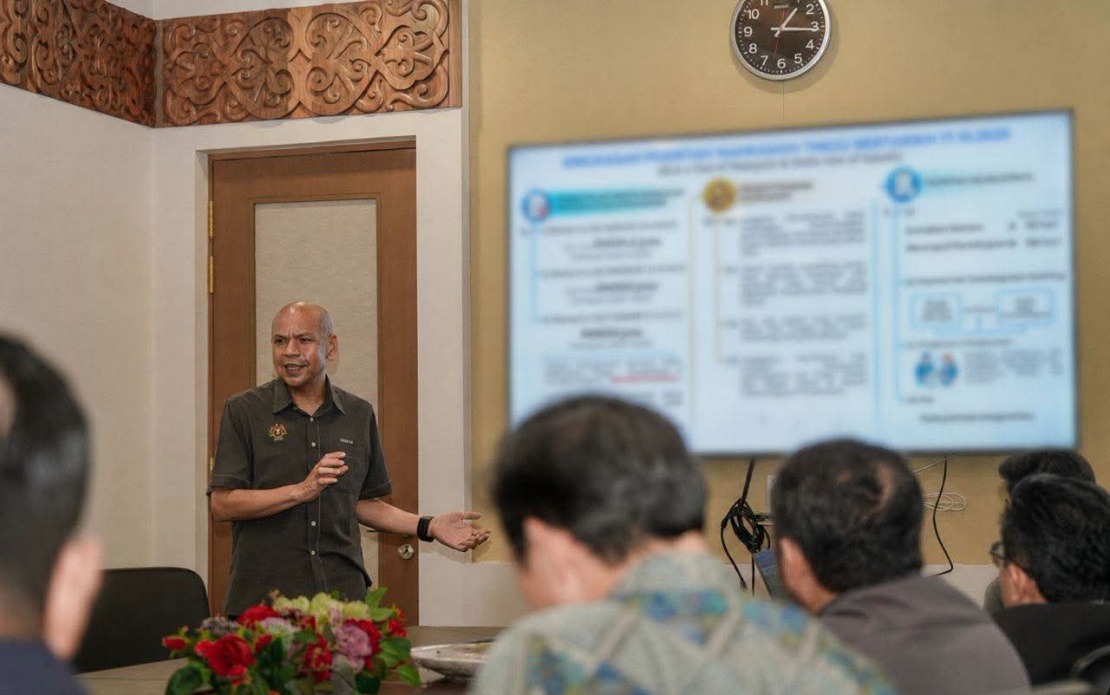
Armizan recently convened meetings with Sabah's federal parliamentarians to coordinate strategy around implementing the 40 per cent entitlement. These consultations suggest GRS intends deploying its parliamentary representation as leverage, maintaining pressure on the federal government through the legislative process. The coalition's strength within Sabah's delegation to Parliament provides meaningful negotiating power, particularly given the often-tight margins in federal parliamentary arithmetic where regional blocs exercise outsized influence.
The broader context involves historical grievances about Sabah's economic marginalization within Malaysia. The state contributed substantially to federal revenue through petroleum and timber exports yet consistently received minimal developmental investment relative to contributions. Infrastructure deficits, educational disparities, and limited industrial development have created widespread perceptions that Kuala Lumpur extracted resources while neglecting regional advancement. The special grant debate therefore represents more than abstract constitutional interpretation; it symbolizes whether Sabah receives equitable treatment within the federation.
For Malaysian federalism more broadly, this negotiation carries instructive implications. Sabah and Sarawak entered Malaysia as negotiated partners possessing specific constitutional protections, distinguishing their status from peninsular states incorporated through absorption. Honouring these arrangements demonstrates commitment to the contract underlying Malaysian unity, particularly vital given periodic separatist sentiments that resurface whenever the federal government appears dismissive of regional rights. Conversely, treating constitutional entitlements as indefinitely negotiable undermines confidence in federalist bargains.
The RM1.5 billion allocation, while substantial, remains below the constitutional 40 per cent calculation based on actual federal revenue. Computing the precise percentage figure requires accounting methodologies that federal and state authorities have disputed, with each side presenting calculations favouring its negotiating position. Full implementation likely requires resolving these technical disagreements, perhaps through judicial determination or negotiated formula that both parties accept as constitutionally compliant.
GRS's insistence on gazettement within 2025 reflects awareness that political momentum for constitutional reform frequently dissipates unless formalized promptly. Interim arrangements, however generous initially, tend toward being superseded or forgotten without legislative entrenchment. By pressing for statutory formalization now, GRS seeks to convert temporary goodwill into permanent constitutional adjustment that survives future political transitions.
Sabah's political landscape has shifted considerably in recent years, with GRS consolidating dominance after the 2020 state election. This strengthened position at state level translates into enhanced federal bargaining capacity, particularly when state grievances command majority parliamentary support. The special grant increase reflects this calibrated power dynamic: federal leadership recognizing GRS's regional strength while incrementally addressing constitutional obligations that remain politically sustainable to acknowledge.
Looking forward, the question remains whether the interim allocation represents a genuine trajectory toward full constitutional compliance or a holding position allowing federal leadership to defer more comprehensive settlement. GRS's determination to achieve gazettement this year will test the sincerity of federal commitments. Should the government fail to formalize the arrangement through statutory processes, scepticism about genuine federal commitment would resurface, potentially destabilizing centre-state relations that the grant increase ostensibly repaired.