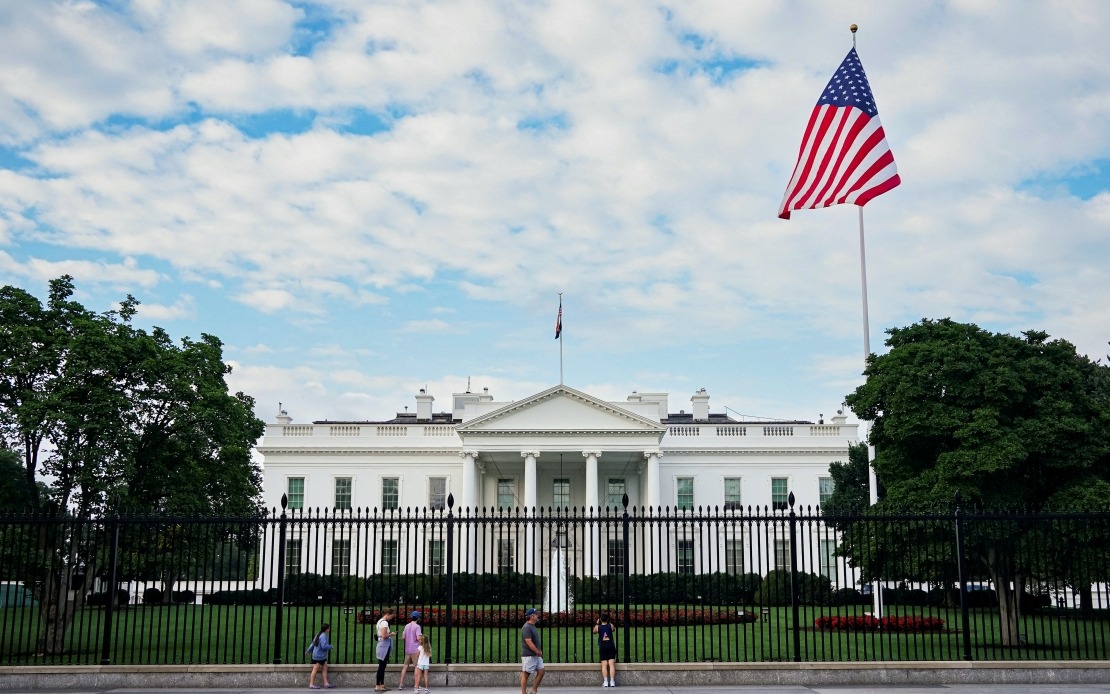
The Federal Bureau of Investigation announced on Tuesday that it had successfully disrupted what officials describe as a coordinated attack scheme directed at the UFC America 250 event hosted at the White House on Sunday. The event celebrated President Donald Trump's 80th birthday alongside the nation's 250th anniversary. FBI Director Kash Patel disclosed the operation through social media, noting that the bureau and law enforcement partners detected the potential threat on June 10, several days before the scheduled gathering.
According to Patel's statement, multiple individuals have been apprehended in connection with the alleged conspiracy. Officials quoted by Fox News elaborated on the specifics of the purported plan, which reportedly involved deploying explosive-laden drones to strike structures in proximity to the event venue. The strategic objective appeared to be triggering a large-scale evacuation that would redirect crowds towards a pre-positioned sniper team positioned to inflict casualties on the displaced attendees. This multi-layered approach suggests a level of coordination and sophistication that alarmed security officials.
The scope of the investigation extends considerably beyond the five individuals already detained. Law enforcement authorities have identified approximately 23 people as participants in what they characterize as a broader network of potential plotters. Intelligence suggests that the operation contained multiple phases, with allegations of a planned second wave that would have attempted to breach the White House perimeter directly. This suggests the operation was envisioned as a sustained assault rather than a single incident, underscoring concerns about the intensity of the alleged threat.
The UFC event itself represented an extraordinary security undertaking, being held on the South Lawn of the White House with approximately 4,000 spectators in attendance. The venue choice and the high-profile nature of the gathering clearly elevated both its symbolic significance and its security challenges. This marks one of the most unconventional events ever hosted at the presidential residence, bringing the spectacle and controlled chaos of cage fighting to the nation's most guarded grounds.
The event did not proceed without legal obstacles. Two Virginia residents filed suit challenging the lawfulness of holding the UFC competition at the White House, questioning whether such use of the presidential grounds aligned with federal regulations and traditions. However, on Friday, a federal judge sitting in the US District Court for the District of Columbia rejected the motion to block the event, enabling organisers to proceed with their preparations despite the legal challenge.
The foiled plot is emblematic of a troubling national trend. Political violence has demonstrated a marked uptick across the United States in recent months, raising concerns among security officials about the broader climate of extremism and political tension. The White House itself has become a focal point for such threats, reflecting the intensity of current political divisions and the vulnerabilities that accompany high-profile gatherings in contested environments.
Just two months earlier, in April, another security breach had occurred at the White House Correspondents' Dinner, another major event held in proximity to the presidential residence. An armed individual carrying firearms and knives managed to penetrate a security checkpoint before being apprehended. That individual was subsequently charged with attempted assassination of the president. The recurring nature of such incidents suggests that despite sophisticated security protocols, determined actors continue to identify vulnerabilities in the protective perimeter surrounding the president and associated events.
For Malaysian and regional observers, these developments underscore the security challenges faced by democratic governments hosting major public events, particularly those with heightened symbolic or political significance. The sophistication of the alleged plot, involving drones and coordinated teams, reflects how evolving technology has expanded the tactical options available to those intent on causing harm. Regional security services throughout Southeast Asia have increasingly focused on understanding transnational security threats and emerging tactics that might be adapted to their own contexts.
The coordination between multiple federal law enforcement agencies in detecting and disrupting the alleged plot demonstrates institutional capacity even as it reveals ongoing vulnerabilities. The detection occurred several days before the event, suggesting that intelligence gathering and threat analysis succeeded in this instance, though the identification of 23 individuals suggests a network that perhaps could have warranted even earlier intervention. The investigation will likely provide law enforcement with valuable intelligence about how such conspiracies develop, communicate, and coordinate operations in the contemporary environment.
The broader implications extend to questions about how governments balance openness and public access with security imperatives. The White House has historically served as a symbol of American democracy precisely because of its relative accessibility compared to executive mansions in many other nations. Yet the recurrence of serious threats suggests that maintaining this openness while protecting the president and major public events represents an increasingly difficult challenge that requires constant adaptation of security protocols.