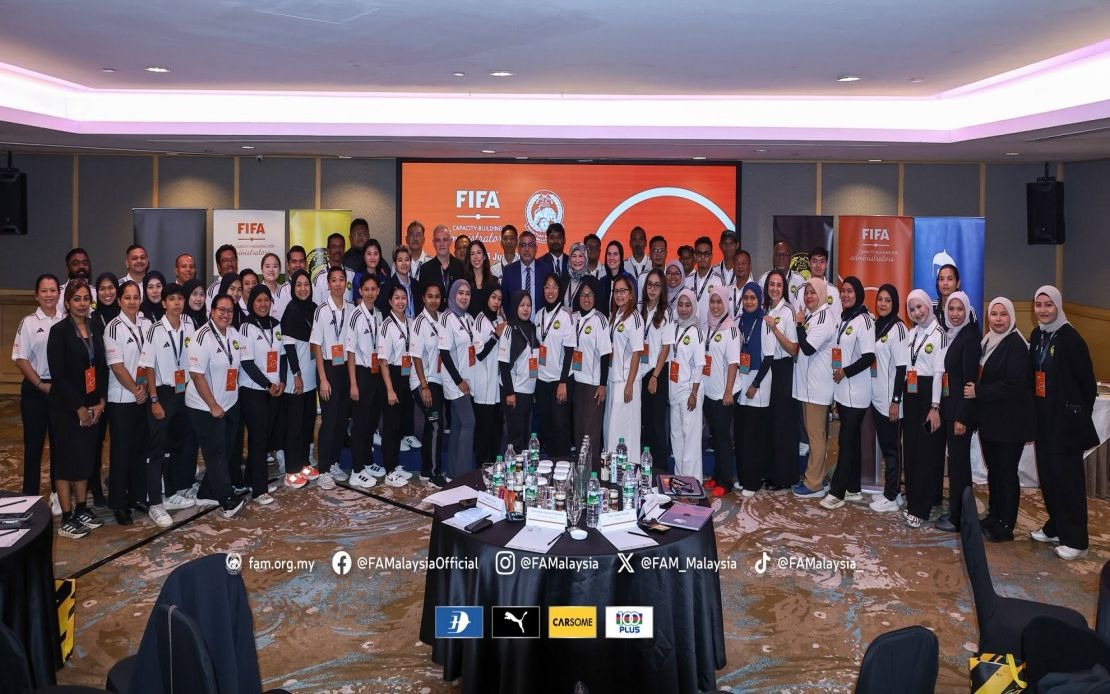
The Football Association of Malaysia has launched a comprehensive FIFA-backed training initiative designed to elevate professional standards in women's football administration and team management. The FIFA Capacity-Building For Administrators 2026 programme, which commenced on June 23, represents a deliberate strategic shift within Malaysian football towards recognising that sustainable development of the women's game requires far more than technical coaching excellence on the pitch. By investing in administrative capacity, FAM is acknowledging the reality that competitive success at international level depends equally on institutional strength and professional governance off the field.
The four-day training course brings together two FIFA Women's Football Development Experts, Safia Abdeldayem and Pema Choden Tshering, to deliver specialised instruction to Malaysian administrators. Their curriculum spans multiple interconnected competency areas essential for contemporary sports management. Participants engage with modules addressing women's leadership development, the structural frameworks governing women's competitions, the legal and ethical dimensions of player and club rights protection, and the strategic planning methodologies that transform aspirational goals into actionable institutional development pathways. This breadth of content ensures that administrators leave the programme equipped not merely with isolated technical knowledge but with an integrated understanding of how these elements reinforce one another.
Women's Leadership content holds particular significance for Malaysian football's trajectory. The module specifically addresses the systemic barriers that have historically limited female representation in decision-making positions across Asian football. By training current and emerging administrators in leadership principles tailored to women's football contexts, FAM creates pathways for talent development that extend beyond players into the coaching, management, and governance structures that shape the sport's future. This vertical integration of opportunity is crucial for building a sustainable competitive advantage.
The Competition Management module acknowledges that women's football in Malaysia operates within increasingly complex tournament ecosystems. Understanding how competitions are structured, how fixtures are scheduled, and how competition integrity is maintained becomes particularly important as women's football attracts greater media attention and sponsorship investment. Malaysian administrators trained in these frameworks can better navigate interactions with regional bodies like the Asian Football Confederation and FIFA itself, positioning Malaysian clubs and the national team for success in increasingly competitive regional tournaments.
Player and Club Rights instruction addresses legal and welfare dimensions that have assumed heightened importance globally. Training administrators on contractual protections, dispute resolution mechanisms, and the safeguarding frameworks that protect players ensures Malaysian football meets international standards. This is especially critical as women's football begins attracting enhanced investment and international player movements. Administrators with solid grounding in these areas can prevent institutional embarrassments and legal complications that might undermine the sport's professionalisation.
Strategic Planning modules equip participants with frameworks for translating institutional objectives into sustainable operational realities. Rather than ad-hoc decision-making based on immediate pressures, trained administrators can develop multi-year plans addressing player development pathways, facility requirements, financial sustainability, and competitive objectives. This planning discipline distinguishes professionally managed football operations from organisations that react to circumstances rather than shape them.
The programme's collaborative structure involving FAM, FIFA, and the Asian Football Confederation reflects an increasingly networked approach to football development in Asia. Malaysian administrators benefit not only from FIFA's global expertise but from exposure to AFC standards and regional peer experiences. This cross-pollination of best practices accelerates institutional learning curves and positions Malaysian football within broader regional development initiatives. As Southeast Asian women's football becomes increasingly competitive, with countries like Thailand and Vietnam making strategic investments, Malaysian institutional capacity becomes a competitive necessity.
Attendance by senior FAM officials including secretary-general Datuk Noor Azman Rahman and women's football technical director Soleen Al-Zoubi signals organisational commitment to the initiative's success. The participation of Datuk Suraya Yaacob, who holds positions on both FIFA's Women's National Team Competitions Committee and the AFC's Women's Football Committee, provides participants access to expertise grounded in regional and global governance structures. These leadership figures serve as institutional guarantors that training outcomes will translate into policy and resource decisions within FAM.
FAM's institutional statement emphasises that women's football development has historically concentrated disproportionately on technical on-field elements while neglecting off-field support structures. This acknowledgment represents valuable self-awareness within Malaysian sports administration. The women's game's growth depends not only on coaching quality or player talent identification but on professional management systems, transparent governance, sound financial administration, and effective competition management. By prioritising these administrative competencies, FAM recognises that the bottleneck limiting Malaysian women's football's ascent is increasingly institutional rather than purely technical.
The programme's emphasis on creating a larger cohort of skilled administrators and women leaders addresses a critical numbers problem within Malaysian football. Sustainable excellence requires deep benches of trained personnel capable of staffing multiple clubs, regional competitions, and national structures. A one-off training course cannot solve decades of underinvestment, but it represents a methodical beginning to professionalising an ecosystem that has traditionally operated with volunteer or minimally qualified administration. As participation rates expand and elite competitions become more demanding, the ratio of trained administrators to clubs and teams must improve.
Placing this initiative within FIFA's global women's football development strategy positions Malaysian football as an intentional participant in worldwide professionalisation trends. FIFA's investment in developing non-European and non-traditional football nations reflects commercial and reputational interests in creating competitive depth across international competitions. Malaysian administrators trained through FIFA programmes become stakeholders in this global system, with incentives and capabilities to implement global best practices. This alignment with international development trajectories increases the probability that Malaysian investments in women's football generate competitive returns.
For Malaysian readers, the strategic importance of this programme extends beyond women's football itself. The administrative competencies being developed—strategic planning, rights protection, competition management, inclusive leadership—represent transferable expertise applicable across sports and organisational contexts. Players, coaches, and administrators who experience world-class training in governance and management become resources that elevate standards across Malaysian sport more broadly. The women's football sector serves as an institutional development laboratory where approaches can be tested and refined before broader application.
The programme ultimately reflects FAM's recognition that Malaysian women's football cannot progress significantly through talent alone. Without corresponding investments in administrative capacity, professional infrastructure, and governance quality, even talented players and coaches operate within institutional constraints that prevent achievement of competitive potential. By systematically building administrative expertise through partnerships with global authorities, FAM creates the preconditions for sustained competitive improvement and sustainable women's football development within Malaysia.

