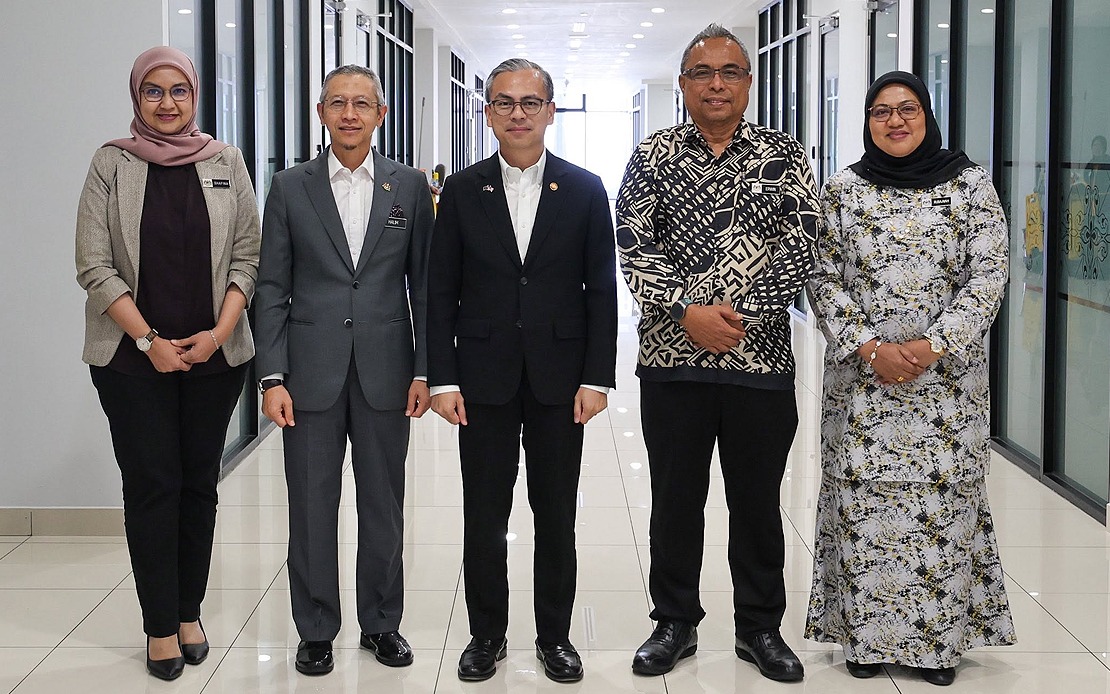
The Malaysian Communications Ministry has marked a significant transition in its information services apparatus, with the formal appointment of fresh leadership to the Information Department (JaPen) announced on June 22. Communications Minister Datuk Fahmi Fadzil formally congratulated Erwin Khairul Ahmad on assuming the role of director-general, alongside welcoming Wan Saidatul Shafina Mohd Amin to the newly configured position of deputy director-general responsible for digital content operations.
The dual appointment reflects deliberate structural adjustments within the department, particularly the elevation and specialisation of the digital content portfolio into a dedicated deputy director-general position. This move underscores the government's recognition that information dissemination in the modern era increasingly demands dedicated expertise in digital platforms, social media engagement, and online content curation. The creation of this specialized role signals a commitment to ensuring that official government messaging reaches citizens through the channels where they actively consume news and information.
In his remarks following the formal announcements, Fahmi emphasised the importance of continuity and institutional values. He called upon the incoming leadership to maintain high standards of dedication and wisdom in their operational approach, stressing that these qualities would be essential for strengthening the department's mandate as an effective conduit for government information to the public. The minister's language suggested expectations of seamless transition rather than dramatic institutional overhaul, indicating confidence in the department's ongoing trajectory under new management.
The timing and emphasis on digital content leadership carries particular significance for Malaysia's information ecosystem. As digital platforms become increasingly fragmented and polarised, particularly in the context of misinformation and competing narratives around domestic politics, the government appears keen to ensure its communications infrastructure can respond nimbly and effectively. The explicit focus on digital content as a deputy director-general priority reflects lessons learned from recent electoral cycles and public discourse challenges across Southeast Asia, where governments have struggled to match the speed and sophistication of digital-native actors.
Fahmi also extended formal acknowledgement to the outgoing director-general, Julina Johan, recognising her tenure with expressions of appreciation for her service, dedication, and substantive contributions to the department's development. This gesture maintains important institutional morale and reflects standard practice in Malaysia's civil service transitions, where public recognition of predecessor accomplishments helps preserve organisational continuity and demonstrates respect for institutional history. Such transitions, while routine in the civil service calendar, often carry implications for policy directions and strategic priorities.
The formal appointment process itself followed established public service protocols, with the Public Service Department (JPA) releasing official notification of the postings. Tan Sri Wan Ahmad Dahlan Abdul Aziz, the Public Service director-general, personally presented the letters of appointment, underscoring the significance attached to these positions within the broader administrative hierarchy. This level of ceremonial formality reflects the importance of the Information Department within Malaysia's governance structure, where messaging and public communication carry particular weight in a multi-ethnic, multi-religious democracy.
The Information Department occupies a strategic position in Malaysia's administrative landscape, serving as the primary vehicle for official government communication across numerous policy domains. Its effectiveness directly influences public perception of government initiatives, policy announcements, and institutional credibility. The appointment of new leadership therefore extends beyond routine personnel matters to encompass implications for how the government will frame and communicate its agenda during a critical period for Malaysian politics and economic development.
The shift in emphasis toward dedicated digital content leadership also reflects broader regional trends within ASEAN governments, many of which have struggled to maintain effective communication strategies as information consumption patterns have fundamentally shifted. Thailand, Indonesia, and Singapore have all undertaken similar institutional reorganisations aimed at enhancing digital communications capacity. For Malaysia, this appointment suggests alignment with regional best practices in acknowledging that 21st-century governance demands specialised attention to digital platforms alongside traditional media engagement.
Looking forward, the restructuring carries implications for how government agencies coordinate their communication strategies. The elevation of digital content to deputy director-general status potentially enhances the profile and resources allocated to online engagement, while also creating clearer accountability lines for this increasingly critical function. This may encourage greater interdepartmental collaboration on digital messaging consistency, an area where Malaysian government agencies have faced occasional criticism for fragmented or contradictory communications.
The appointments also coincide with Malaysia's broader digital economy initiatives and the government's commitments under various international frameworks regarding digital governance and e-services. The enhanced focus on digital content capacity building within JaPen suggests recognition that these commitments require not merely technical infrastructure but sophisticated, well-resourced communications operations capable of reaching diverse audiences through multiple digital channels. The Information Department's capacity in this area thus becomes relevant to Malaysia's positioning within regional digital economy competitions and international digital governance frameworks.

