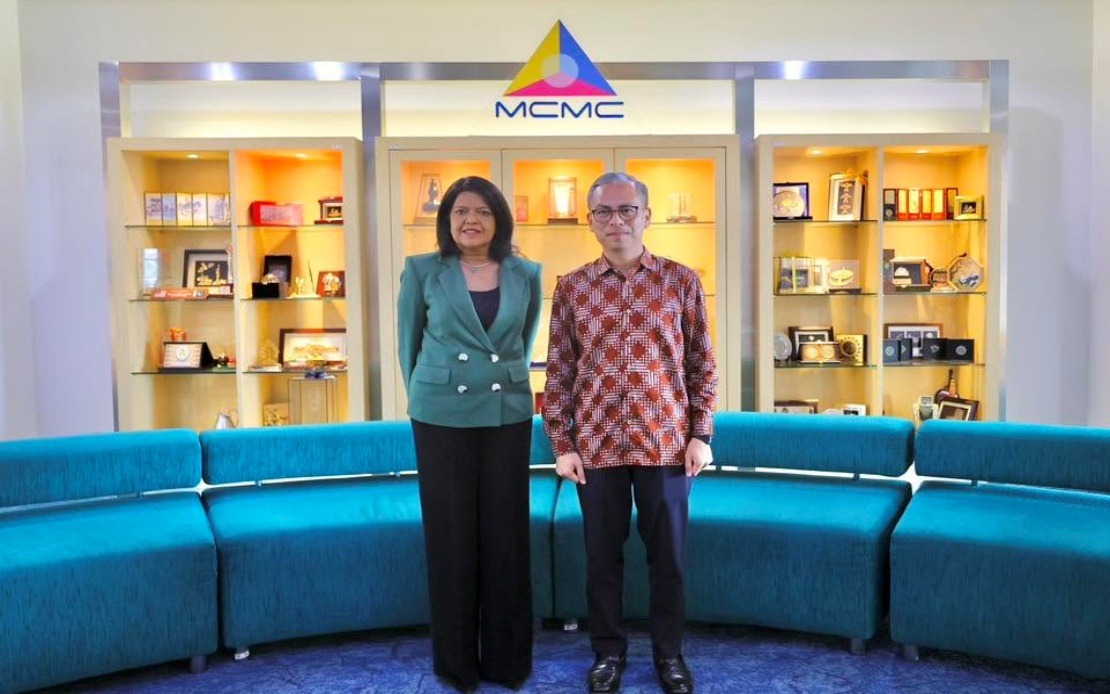
The appointment of Tan Sri Nallini Pathmanathan as chairman of the Malaysian Media Council has received formal endorsement from Communications Minister Datuk Fahmi Fadzil, who took to social media to voice his backing for the former Federal Court judge. The announcement marks a pivotal moment for the council, an independent regulatory body tasked with maintaining professional standards across Malaysia's media landscape and ensuring public trust in news dissemination.
Fahmi's public statement underscores the government's commitment to supporting the MMC as it operates under the framework established by the Malaysian Media Council Act 2025. His message highlights three central pillars that the minister believes should define Nallini's tenure: the protection of responsible media freedom, the strengthening of journalistic ethics, and the cultivation of a sustainable and trustworthy media industry. These priorities reflect broader concerns about balancing press liberty with accountability in an era when misinformation and sensationalism pose genuine threats to public discourse.
The selection of Nallini, whose judicial background brings decades of legal expertise and institutional experience, signals the council's intent to operate with heightened credibility and independence. Her previous role on Malaysia's highest court positions her to navigate complex questions about media regulation with a sophisticated understanding of constitutional principles and the boundaries between appropriate oversight and censorship. This pedigree matters considerably in a regional context where media freedom rankings have become increasingly scrutinised by international observers and civil society organisations.
The board's unanimous endorsement during its May 26 meeting reflects consensus among MMC members about Nallini's suitability for the role. This unanimity is noteworthy given the potentially contentious nature of media regulation, where different stakeholders—journalists, publishers, civil rights advocates, and government representatives—often hold divergent views on where lines should be drawn. A unanimous appointment suggests either strong confidence in her leadership qualities or a carefully calibrated selection process designed to command broad support.
The Malaysian Media Council operates in a unique position within Southeast Asia's regulatory ecosystem. Unlike government agencies, the MMC functions as an industry self-regulatory body, meaning its authority derives from the media organisations themselves rather than state apparatus. This structural arrangement theoretically allows for less politicised decision-making but also places significant responsibility on council members to maintain public faith in their impartiality. Nallini's judicial background may help assure stakeholders that the council will apply consistent, evidence-based reasoning to complaints and enforcement decisions.
For Malaysia's media sector, the significance of this appointment extends beyond ceremonial recognition. The council's effectiveness directly influences how news organisations approach editorial standards, complaints handling, and adherence to codes of practice. A well-regarded chairman can elevate the council's standing, making its rulings more binding in practice even when not legally enforceable, while strengthening industry self-discipline and reducing pressure for more stringent government-imposed regulation. Conversely, weak leadership or perceived bias can undermine the institution's legitimacy and invite calls for formal legislative controls.
The timing of Nallini's appointment, in the context of a newly enacted media council act, indicates that Malaysia's regulatory framework for journalism is undergoing evolution. The 2025 legislation presumably establishes updated protocols and powers for the self-regulatory body, potentially granting it expanded jurisdiction or enforcement mechanisms compared to previous iterations. Nallini's leadership will help shape how these new provisions are interpreted and applied in practice, affecting everything from coverage of sensitive political topics to the handling of complaints from diverse quarters.
From a regional perspective, Malaysia's approach to media self-regulation carries relevance for neighbouring countries grappling with similar tensions between press freedom and responsible journalism. Thailand, Indonesia, and the Philippines have all experimented with various regulatory models, and developments in the Malaysian system may influence discussions in those jurisdictions about optimal approaches to maintaining professional standards without heavy-handed state intervention. Nallini's appointment, therefore, has modest but real implications for media governance conversations across Southeast Asia.
The minister's emphasis on sustaining both media freedom and public trust addresses a genuine paradox in contemporary journalism. Excessive regulation risks suppressing legitimate reporting and critical commentary, yet unrestrained sensationalism and misinformation erode confidence in news institutions themselves. The council, under Nallini's stewardship, will need to calibrate its approach to thread this needle, supporting ethical journalism while avoiding the trap of censorship by another name. Her judicial experience suggests familiarity with such nuanced reasoning, though the practical challenges of applying such principles in a fast-moving media environment remain considerable.
Looking forward, the effectiveness of Nallini's leadership will likely be measured against several benchmarks: whether the council's decisions are perceived as fair and principled across the political spectrum, whether the body successfully addresses emerging challenges like digital misinformation and deepfakes, and whether its interventions strengthen rather than weaken public confidence in Malaysian media. The former judge inherits an institution with considerable potential for influence but also facing scepticism from multiple quarters. Her success in navigating these expectations will significantly shape Malaysia's media landscape for years to come.