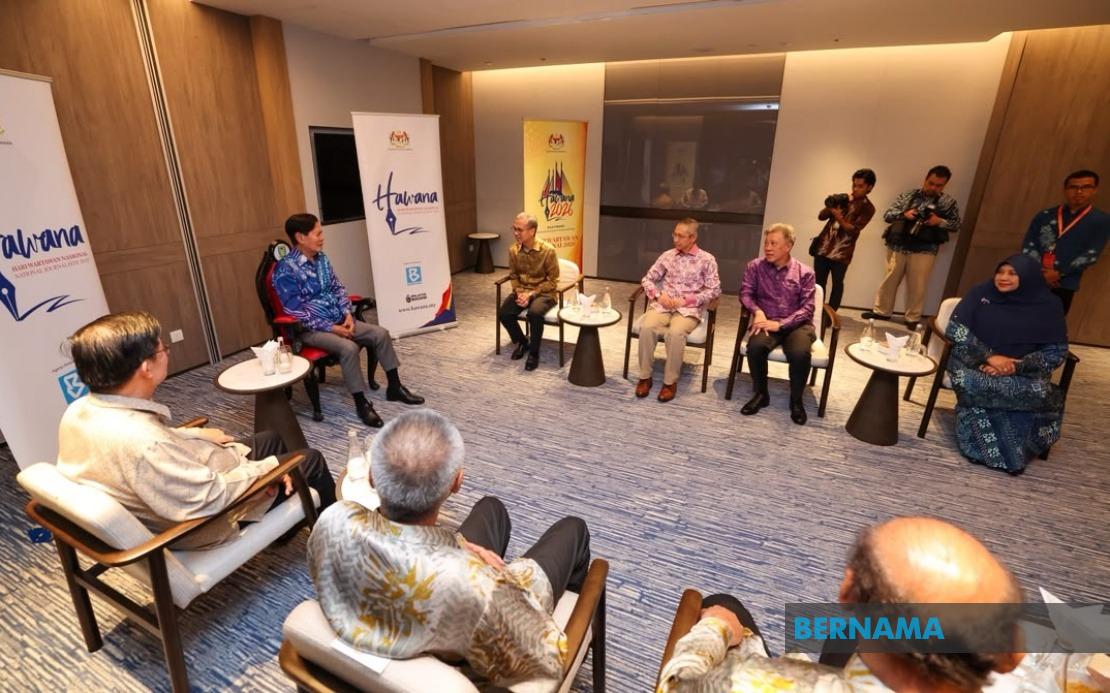
Communications Minister Datuk Fahmi Fadzil has made an impassioned appeal for media organisations throughout ASEAN to deepen their collaborative efforts in order to safeguard the quality and accuracy of regional journalism while combating the spread of false information. Delivering remarks at a state government dinner in conjunction with the National Journalists' Day (HAWANA) 2026 celebration in Butterworth on June 19, Fahmi underscored the critical importance of strengthened partnerships, knowledge exchange and the adoption of consistent best practices among journalism communities across Southeast Asia.
The minister's call reflects growing concern across the region about the speed and scale at which unverified information circulates through digital channels and social media platforms. In an era where narratives compete fiercely for public attention and information travels at unprecedented velocity, Fahmi argued that journalism grounded in truthfulness, professional integrity and ethical responsibility has become more essential than ever to regional stability and public trust in institutions.
Fahmi characterised the media's fundamental role as a vital conduit linking citizens to factual understanding of events unfolding around them. Beyond simply reporting news, he described journalism as a bridge connecting those who formulate policy with those tasked with implementation, and crucially, mediating between complex events and public comprehension. This intermediary function, he suggested, requires media practitioners to maintain the highest standards of verification and accountability, particularly when covering matters affecting multiple nations and diverse populations across Southeast Asia.
The HAWANA 2026 celebration being hosted by Penang represents more than ceremonial recognition of the journalism profession, according to Fahmi. Rather, it serves as a deliberate platform for reaffirming commitment to strengthening journalism during a period of unprecedented challenges to traditional media models and journalistic norms. The event brings together key stakeholders including Penang Chief Minister Chow Kon Yeow, state officials, Bernama leadership, and representatives from ASEAN Communications Ministers, creating opportunity for substantive discussion about the region's media landscape.
The presence of Bernama chairman Datuk Seri Wong Chun Wai and chief executive officer Datin Paduka Nur-ul Afida Kamaludin, who chairs the HAWANA 2026 Working Committee, underscores Malaysia's positioning as an advocate for regional media cooperation. Executives from major Malaysian media organisations attended alongside international counterparts, indicating the significance Malaysia places on fostering dialogue about cross-border journalism challenges and solutions.
For Malaysian readers and the broader Southeast Asian media industry, Fahmi's remarks carry particular weight given the region's vulnerability to coordinated disinformation campaigns and the transnational nature of digital information flows. ASEAN member states have experienced targeted misinformation affecting elections, public health campaigns and social cohesion, demonstrating that no single nation can effectively combat false narratives acting in isolation. The minister's emphasis on regional cooperation acknowledges this reality and suggests Malaysian commitment to elevating journalistic standards across multiple jurisdictions.
The timing of this appeal coincides with the broader digital transformation reshaping how information reaches audiences throughout Southeast Asia. Traditional gatekeeping functions once performed by established news organisations have been disrupted by citizen journalism, algorithm-driven content distribution and deliberately manufactured false narratives. Without coordinated effort to develop shared standards and cooperative verification mechanisms, the region faces the prospect of increasingly fragmented information ecosystems where misinformation flourishes unchecked.
Fahmi additionally expressed appreciation to the Penang State Government for hosting the celebration, characterising the decision as reflecting genuine respect for the media's contributions to society and national development. This acknowledgment of state-level support for journalism suggests recognition that media sustainability and professional development require backing from multiple levels of government and institutional leadership across ASEAN, not merely federal initiatives.
The call for stronger collaboration also implicitly addresses questions about media independence and the relationship between journalists and government actors throughout the region. By framing cooperation in terms of shared commitment to accuracy, integrity and responsibility rather than state control or editorial direction, Fahmi positioned regional media partnership as a means of reinforcing professional standards and public trust. This distinction carries significance in Southeast Asia, where concerns about press freedom and editorial independence remain relevant in several jurisdictions.
Moving forward, the substantive implementation of cross-border media cooperation will likely involve developing shared fact-checking protocols, creating platforms for rapid information verification during crisis situations, and establishing professional networks enabling journalists to consult peers across ASEAN when investigating stories with regional implications. Malaysian media organisations, given their relative institutional maturity and technological sophistication, may find themselves positioned to lead or facilitate such collaborative mechanisms.
The success of any regional misinformation-combating initiative ultimately depends on political will and resource commitment from both media organisations and governments throughout ASEAN. Fahmi's public articulation of Malaysia's support for such cooperation sends a signal to other regional leaders and media stakeholders that collaborative approaches merit serious investment. Whether this rhetoric translates into concrete institutional mechanisms and sustained funding remains to be demonstrated in the months following the HAWANA 2026 celebrations.

