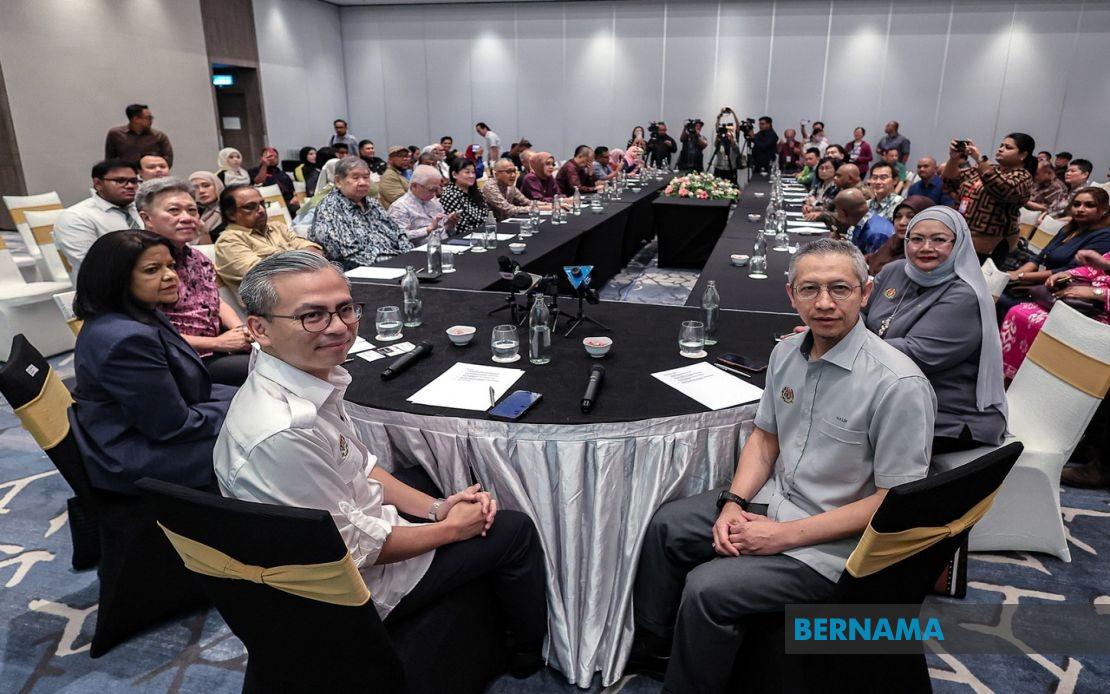
Communications Minister Datuk Fahmi Fadzil has unveiled a proposal to institutionalise retreat sessions between government officials and media practitioners at every future National Journalists' Day (HAWANA) celebration, establishing a more formal mechanism for industry-government engagement. The proposal emerged from an extended dialogue held in Butterworth during HAWANA 2026, where Fahmi outlined plans to leverage these annual gatherings as dedicated platforms for addressing the media sector's most pressing concerns and policy needs.
The structured retreat format represents a significant shift towards systematic feedback collection from newsrooms and media organisations across Malaysia. Rather than treating journalist engagement as ad hoc or event-based, Fahmi envisions recurring sessions that allow practitioners to articulate grievances, propose legislative amendments, and share insights about industry challenges directly with policymakers. The Communications Ministry intends to formally request the Malaysian Media Council to oversee the coordination and logistics of these retreat sessions, positioning MMC as a bridge institution between the government and media operators.
The scope of issues anticipated for these retreats extends beyond immediate operational concerns. Fahmi specifically referenced the potential for discussions on policy modifications, amendments to existing legislation, and comprehensive strategies addressing the long-term sustainability of Malaysia's media ecosystem. This framing signals governmental openness to revisiting media laws and regulations in consultation with practitioners themselves, rather than imposing changes unilaterally. For an industry that has frequently voiced concerns about regulatory uncertainty and legislative constraints, such an invitation represents a notable acknowledgment that viable media policy requires active industry participation.
Several senior government and media figures attended the inaugural dialogue, underlining its significance within official circles. Communications Ministry secretary-general Datuk Abdul Halim Hamzah and deputy secretary-general Datuk Bahria Mohd Tamil participated alongside Malaysian National News Agency (Bernama) chairman Datuk Seri Wong Chun Wai, MMC chairman Tan Sri Nallini Pathmanathan, and senior executives from major local media organisations. The two-hour discussion format allowed substantive exchange rather than ceremonial remarks, establishing a template for future sessions.
Among the most pressing issues tabled was the economic viability crisis confronting mainstream media organisations. Fahmi highlighted a particular paradox: media outlets invest substantially in creating quality journalism, yet when this content circulates on social media platforms, it generates no direct financial return to creators or publishers. This dynamic has accelerated revenue deterioration for traditional news organisations globally, but Malaysia's relatively concentrated media landscape amplifies the problem's impact on newsroom operations and employment.
The minister signalled genuine governmental concern about this dimension, explicitly stating readiness to support any role the Malaysian Media Council might play in engaging with social media platforms directly. This represents an important signal that the government recognises media sustainability as a policy challenge requiring intervention beyond traditional regulatory tools. Whether such engagement could yield meaningful changes to platform algorithms, revenue-sharing mechanisms, or content attribution frameworks remains uncertain, but the stated willingness to facilitate negotiations between industry bodies and technology companies offers at least symbolic commitment.
The retreat proposal also reflects broader regional trends in media-government relations. Across Southeast Asia, governments are increasingly recognising that sustainable news ecosystems require active support and structured dialogue rather than adversarial regulation alone. Singapore, Thailand, and Indonesia have each experimented with various policy mechanisms aimed at supporting commercial viability for news organisations, though approaches vary considerably in effectiveness and independence implications.
For Malaysian media practitioners, the proposal presents both opportunities and complexities. On one hand, annual retreats formalise input mechanisms that previously operated informally or sporadically. On the other, the participation of government officials and state entities in retreat discussions carries inherent power dynamics that could influence the candour with which private media voices their most critical positions. The inclusion of Bernama—the state news agency—in organising committees adds another layer of institutional complexity, though MMC's role as a professional body theoretically provides buffering.
The economic sustainability challenge deserves particular attention within the Malaysian context. The country's media landscape, dominated by a handful of large conglomerates alongside several independent operations, has contracted considerably over the past decade. Digital transformation has disrupted advertising models without generating adequate alternative revenue streams. Publications have reduced newsroom staff, closed regional bureaus, and curtailed investigative reporting. These structural pressures predate social media's dominance but have been dramatically accelerated by it, creating urgency around the search for workable solutions.
The proposal to institutionalise retreat sessions at HAWANA celebrations carries implications extending beyond immediate policy discussions. Regular formalised engagement could help rebuild institutional trust between government and media at a moment when both sectors face credibility challenges and resource constraints. Such dialogue, if conducted in good faith, might illuminate policy options that serve broader public interest objectives—reliable information access, diverse news sources, and economically viable journalism—rather than narrowly partisan interests.
Implementation details remain unclear, however. How frequently these retreats would occur, their scale, selection criteria for participating organisations, documentation protocols, and feedback mechanisms all require elaboration. Whether recommendations emerging from retreats would receive formal government response or lead to concrete policy action similarly demands specification. The sincerity of the government's openness to industry input will ultimately be judged through observable outcomes rather than rhetorical commitment.
For Southeast Asian media stakeholders monitoring Malaysian developments, this initiative may signal broader governmental recalibration toward media sustainability issues. Economic viability has emerged as a legitimate policy concern across the region, potentially opening space for substantive interventions that could support journalism without necessarily compromising editorial independence—though distinguishing such support from more subtle forms of control remains an ongoing governance challenge across all regional contexts.

