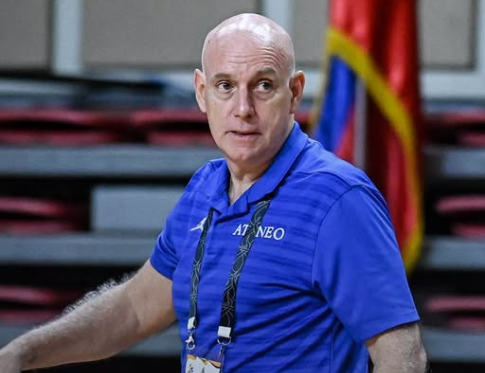
The Philippine National Police Criminal Investigation and Detection Group has recommended filing charges against former Ateneo de Manila University men's basketball coach Thomas Anthony 'Tab' Baldwin and 10 others for violations of the Anti-Hazing Act, stemming from a fatal beach training incident in Dipaculao, Aurora on June 8 that claimed the lives of players Rene Baterbonia and Divine Adili.
The recommendation from the PNP CIDG encompasses the head coach alongside strength and conditioning coaches Grant Dearns and Ceasar Vicent Javellana Elumba, assistant coaches Dean Caesar B. Castaño, Sandro Nicholas Romero Soriano, and Reynaldo Jacinto, student managers Paolo Manuel Maceda Adevoso and Andrew Lorenzo 'Drew' Bondoc Salud, physical therapist John Eric Quiambao Rueca, and utility personnel Aris Ramos Pronce and Joel 'Boy' Palmiano Rapa. According to authorities, all 11 individuals were present during the beach activity and bore responsibility for what transpired.
A pivotal element of the investigation centred on the timeline and intensity of physical demands imposed on the athletes throughout the day. The players began their ordeal at 4am, required to complete a four-kilometre run before sunrise. This was followed by a series of physically demanding games with punishments assigned to those who performed poorly, establishing a pattern of escalating physical stress well before the group entered the water around 2 to 2:30pm. What appears particularly damning is that officials scheduled the seawater activity at a time coinciding with the active high tide of 2:27pm, a period marked by hazardous ocean conditions.
The legal distinction authorities emphasised represents a significant shift in how hazardous training practices are prosecuted under modern Philippine law. Republic Act No. 11053, the Anti-Hazing Act, defines hazing more broadly than popular understanding might suggest. Rather than restricting the classification to traditional initiation ceremonies, the statute explicitly encompasses forced calisthenics and prolonged exposure to adverse weather and environmental conditions. Under this expanded definition, the Aurora training activity crossed a critical threshold from standard athletic preparation into prohibited hazing territory, fundamentally altering the legal exposure of everyone involved.
The deliberate nature of the activity looms as a crucial factor in the investigation. Authorities established that the exercise was ostensibly a team-building function but operated as a roster-determination mechanism. Twenty basketball players participated, yet only seventeen would ultimately be submitted to the University Athletics Association of the Philippines as official team members. This filtering purpose transforms the activity from routine conditioning into a trial with explicit stakes regarding continued team membership, satisfying elements of hazing law that require the practice to serve as a prerequisite or membership requirement.
The environmental hazards present that afternoon further underscored the recklessness of the decision. The open-sea environment where the activity occurred featured rip currents, forceful waves, and an unstable seabed with varying depths. These objective dangers were compounded by the players' already compromised physical state after hours of intensive exertion beginning before dawn. That no individual supervisor, coach, or staff member present intervened or raised concerns about the danger despite these evident risks became a damning observation during official briefings, with authorities noting that all eleven team personnel were present on the beach and bore collective responsibility for allowing the activity to proceed.
Baldwin had previously issued a public apology through a nearly nine-minute video statement distributed via Ateneo's social media channels, acknowledging the deaths of the two athletes. However, the issuance of an apology does not address the legal substance of whether protocols were violated, whether adequate safety measures were implemented, or whether the activity itself constituted hazing under statutory definition. The police recommendation indicates that investigators concluded the facts, regardless of remorse expressed, meet the legal threshold for prosecution.
This case carries significant implications for elite Philippine universities and athletic programmes generally. The Ateneo incident demonstrates that even prestigious institutions with longstanding athletic traditions cannot shield coaching staff from accountability when training methods cross into hazing territory. The broader lesson extends to coaching culture across Southeast Asia, where informal mentoring traditions and demanding physical conditioning have historically been accepted parts of athletic development without close legal scrutiny. Universities throughout the region now face potential exposure if their training practices employ forced physical exertion as a mechanism for roster determination or team selection.
The investigation also revealed that no weights were discovered on the bodies of either victim when recovered, countering earlier speculation about the mechanism of drowning. This detail remains significant for understanding the circumstances but does not negate the broader legal framework regarding environmental hazard exposure during the activity itself.
The case now moves into the Department of Justice system for case evaluation and preliminary investigation before formal charges can be filed. The pathway through the justice system will establish whether the PNP CIDG's findings and recommendations regarding Republic Act No. 11053 violations constitute sufficient grounds for prosecution. For Malaysian observers, the case demonstrates how neighbouring jurisdictions have strengthened legal protections against coaching practices that exploit power imbalances and organisational pressure to normalise dangerous physical conditioning, a contrast to local regulatory frameworks that may require consideration.

