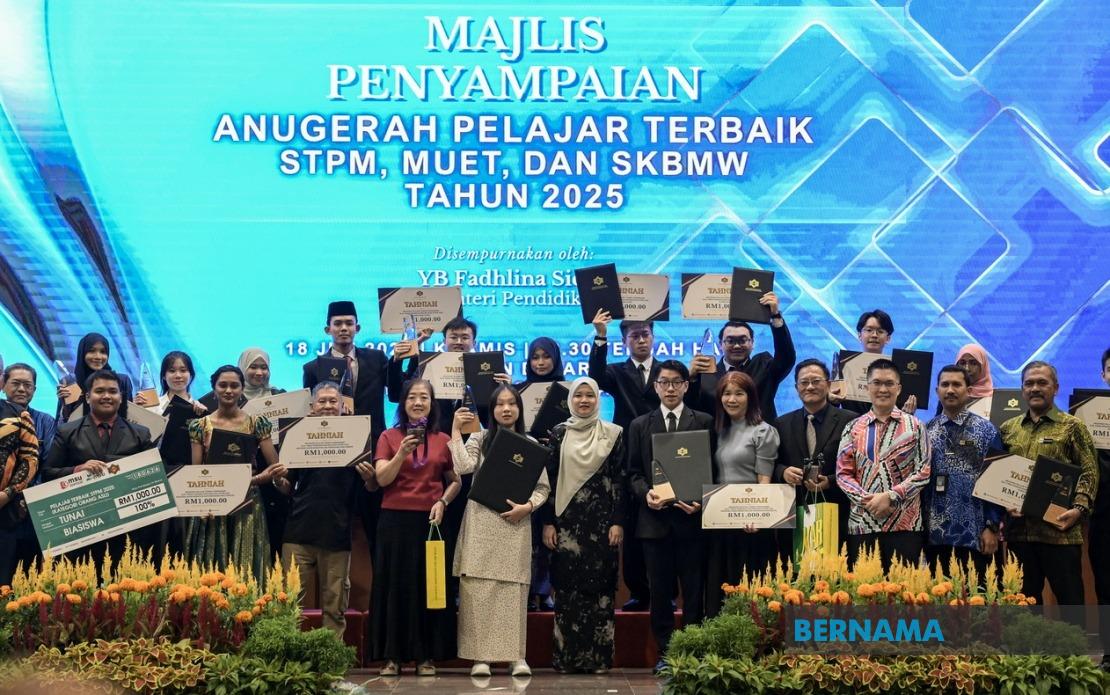
Education Minister Fadhlina Sidek has announced that the country's top 18 STPM 2025 students will be awarded scholarships covering tuition fees at public universities, signalling a fresh commitment to elevating Malaysia's pre-university education system. The initiative, unveiled at an awards ceremony held at the Malaysian Examinations Council headquarters in Kuala Lumpur on June 18, represents a significant shift in how the government incentivises academic excellence among Form Six students and encourages uptake of this established pathway into tertiary education.
The scholarship scheme is framed as part of a broader strategic effort to reinvigorate the Form Six ecosystem at a time when alternative routes such as private colleges and international qualifications continue to attract Malaysian students. By having each public university commit to awarding scholarships to top STPM performers, the government is attempting to make the pre-university route more financially accessible and prestigious. Fadhlina emphasised that the initiative reflects the collective willingness of Malaysia's public higher education institutions to recognise and reward academic achievement, setting a precedent that could potentially expand in future years as the programme gains momentum.
The announcement comes alongside evidence of improving overall academic standards within the STPM system. The national Overall Grade Point Average rose to 2.88 in 2025, up marginally from 2.85 the previous year, suggesting that curriculum refinements and institutional support measures are yielding tangible results. While the increase appears modest in absolute terms, such incremental improvements across a national cohort reflect genuine progress in student performance and teaching quality across Malaysia's Form Six colleges and secondary institutions offering the programme.
The scholarship initiative sits within a wider constellation of government interventions designed to strengthen Form Six as a viable and attractive educational pathway. These complementary measures include the expansion of Form Six College capacity nationwide, investment in classroom technology through the provision of smartboards, early school assistance programmes that reduce financial barriers for disadvantaged students, and the MADANI Book Vouchers scheme that improves access to learning materials. Together, these initiatives suggest a coordinated approach to addressing structural challenges in pre-university education rather than relying on any single intervention.
For Malaysian students considering their post-secondary options, the scholarship availability may prove decisive. The cost of higher education remains a significant barrier for many families, and eliminating tuition fees through merit-based scholarships effectively lowers the financial risk of pursuing a degree. This is particularly relevant in Malaysia's competitive educational landscape, where students often weigh the relative merits of completing STPM, pursuing diploma qualifications, or enrolling in private pre-university programmes. The scholarships directly address cost considerations that might otherwise push capable students toward alternative pathways.
The initiative also reflects international trends in tertiary education policy, where universities increasingly fund scholarships and financial aid from operational budgets rather than relying solely on government allocations. By distributing scholarship responsibilities across multiple public universities, the scheme distributes financial commitment while ensuring that no single institution bears disproportionate burden. This collegiate approach may also foster healthy competition among universities to attract the nation's most accomplished secondary students.
From a policy perspective, the timing of this announcement appears strategic. Form Six enrolment has faced persistent challenges in recent years, with declining numbers of students choosing the pre-university route in favour of diploma programmes or international qualifications. By making tuition-free education available to academically exceptional students, the government is signalling renewed institutional confidence in the STPM pathway while creating visible success stories that can inspire other students to pursue similar educational trajectories. The public recognition of award-winning students serves dual purposes: it validates their achievement while simultaneously marketing the Form Six system to younger cohorts still deciding on their educational futures.
The involvement of senior education officials, including Deputy Minister Wong Kah Woh and Malaysian Examinations Council leadership, underscores the importance placed on this initiative within government circles. Their attendance at the awards presentation ceremony signals that pre-university education remains a priority area within Malaysia's broader human capital development strategy. Such high-level engagement also suggests that this scholarship scheme may serve as a pilot or proof-of-concept for potentially more ambitious expansion in subsequent years.
Regionally, Malaysia's emphasis on strengthening pre-university pathways aligns with broader Southeast Asian trends in education policy. Neighbouring countries have similarly sought to balance the expansion of diverse educational options with maintaining robust traditional pathways. The scholarship approach reflects confidence that competitive academic incentives can effectively influence student choice in education systems where multiple legitimate options exist. This stands in contrast to more prescriptive models that attempt to channel students toward preferred pathways through regulation rather than incentive structures.
For the 18 award-winning STPM students, the scholarships represent immediate tangible recognition of their academic achievement, but the broader significance extends beyond individual benefit. These students become ambassadors for Form Six education, their success stories potentially influencing peers' educational decisions in subsequent years. Malaysian universities gain the opportunity to enrol highly motivated and academically capable students whose achievement is publicly validated, potentially enhancing institutional rankings and research output over time.
The scholarship initiative also provides valuable data for policy evaluation. By tracking the academic progress and outcomes of scholarship recipients through their undergraduate years, education officials can assess whether pre-university preparation adequately equips students for university-level study. Such longitudinal data becomes increasingly valuable as the government contemplates potential expansions of the scheme or modifications to Form Six curriculum and pedagogy. Success metrics would likely encompass undergraduate completion rates, degree classifications, and subsequent labour market outcomes.
Looking ahead, the sustainability and scalability of this initiative will largely depend on continued government commitment and public university cooperation. The scheme's success in attracting students to the Form Six pathway could generate momentum for similar incentive-based initiatives in other areas of education policy. Equally important will be ensuring equitable geographic and demographic distribution of scholarship opportunities, preventing concentration of benefits among students in urban centres with well-established Form Six provision.
Ultimately, the scholarship initiative reflects recognition that pre-university education requires ongoing investment and innovation to remain competitive within Malaysia's diverse education landscape. By combining modest financial incentives with systemic improvements across multiple educational support areas, the government is articulating a comprehensive vision for Form Six sustainability. Whether this approach proves sufficient to reverse longer-term enrolment trends or merely stabilises current participation levels will become evident as the programme matures and subsequent cohorts progress through the system.