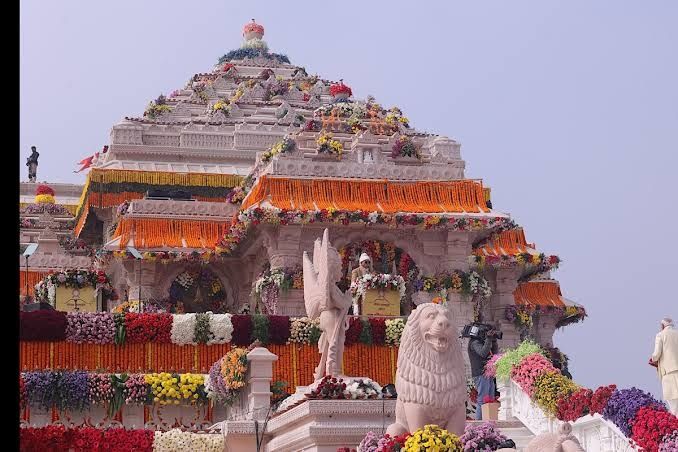
Eight individuals, including employees of the Ram Mandir temple in Uttar Pradesh, have been taken into custody by Indian authorities following an investigation into the alleged theft and misappropriation of donations made by devotees. The arrests occurred on Thursday following the registration of a criminal case, highlighting a major scandal at one of India's most prominent religious sites and a project closely associated with Prime Minister Narendra Modi's political agenda.
The Ram Mandir, situated in Ayodhya in northern Uttar Pradesh, was officially inaugurated in early 2024 with considerable ceremony presided over by Modi himself. The temple holds profound symbolic significance within Hindu nationalist politics, having been constructed on land where the Babri Mosque once stood for several centuries before its destruction in 1992 during communal tensions that became a defining moment in contemporary Indian political history. The mosque's demolition proved instrumental in galvanizing public support for the Bharatiya Janata Party, transforming it into the dominant political force that eventually unseated India's long-governing secularist Congress party.
The criminal investigation centres on irregularities uncovered in the management and accounting of donations collected from pilgrims and devotees. Those arrested were predominantly individuals tasked with the crucial responsibility of counting, verifying, and safeguarding the considerable sums of currency and precious materials, including gold and silver ornaments, that devotees contribute to the temple as offerings. The specific roles and extent of each suspect's involvement in the alleged financial irregularities remain subject to ongoing investigation by authorities.
While government officials have refrained from publicly stating the exact amount allegedly misappropriated, opposition parties and media investigations suggest the scale of the embezzlement could exceed US$20 million. This represents a troubling portion of the total resources entrusted to the temple's management. The absence of an official disclosure regarding the magnitude of the alleged theft has fuelled public speculation and raised questions about transparency in the handling of the temple's finances, an issue that carries particular weight given the sacred nature of the donations involved.
The charges laid against the detained individuals include criminal breach of trust, outright theft, criminal conspiracy, and corruption—offences that carry serious legal consequences under Indian criminal law. These charges reflect the gravity with which authorities are treating the allegations, suggesting evidence of systematic irregularities rather than isolated incidents of minor financial mismanagement.
The scandal has generated considerable dismay among the temple's donors and devotees, who now find themselves questioning the integrity of their contributions. Viti Saxena, a 44-year-old homemaker who had made donations to the temple, expressed profound disappointment and concern, articulating the spiritual and emotional impact of the revelations on believers. Her comments underscore the damage caused not merely by potential financial loss, but by the erosion of faith in an institution that occupies immense symbolic and religious importance for millions of Hindus across India and the diaspora. The controversy threatens to undermine the devotional trust upon which temples fundamentally depend.
Uttar Pradesh Chief Minister Yogi Adityanath, whose state government established the Special Investigation Team overseeing the inquiry, publicly committed to pursuing the case with rigour. His statement assuring that no culpable party would escape accountability appears designed to restore public confidence in the investigative process, though sceptics may question whether political considerations might influence the trajectory of such a high-profile case given the temple's centrality to the ruling party's ideological positioning.
The temple's construction itself represents a remarkable feat of fundraising, with the entire estimated cost of US$240 million sourced exclusively from public donations gathered across India. This demonstrates the extraordinary commitment Hindu devotees and sympathizers demonstrated toward the project's realisation. The reliance on voluntary contributions, however, places heightened responsibility on administrators to maintain impeccable financial stewardship and transparency—standards that the current allegations suggest may not have been consistently upheld.
The theological and historical foundations of the Ram Mandir rest on Hindu tradition holding that the deity Ram was born in Ayodhya more than seven millennia ago, with the Babri Mosque constructed over the sacred site by a sixteenth-century Mughal emperor. This historical narrative, disputed by scholars of Islamic and medieval Indian history, became the mobilizing force behind decades of Hindu nationalist activism that ultimately culminated in the mosque's destruction in 1992 and subsequent temple construction.
The theft allegations arrive at a particularly sensitive moment for India's ruling BJP, as they cast unfavourable light on an institution that has become central to the party's political identity and messaging. The scandal provides fodder for critics who question whether the BJP's handling of resources and institutions matches its claims of governance competence and moral authority. For Southeast Asian observers, the episode illustrates broader tensions within Indian democracy regarding communal politics, institutional accountability, and the management of religiously significant public projects in plural societies.
The investigation's ultimate findings will carry implications extending beyond mere financial accountability, as they will test whether Indian institutions can maintain independence and credibility when examining controversies touching the ruling establishment's most celebrated initiatives. The matter remains under active investigation, with authorities expected to pursue additional leads and potentially uncover further details about the alleged embezzlement scheme.

