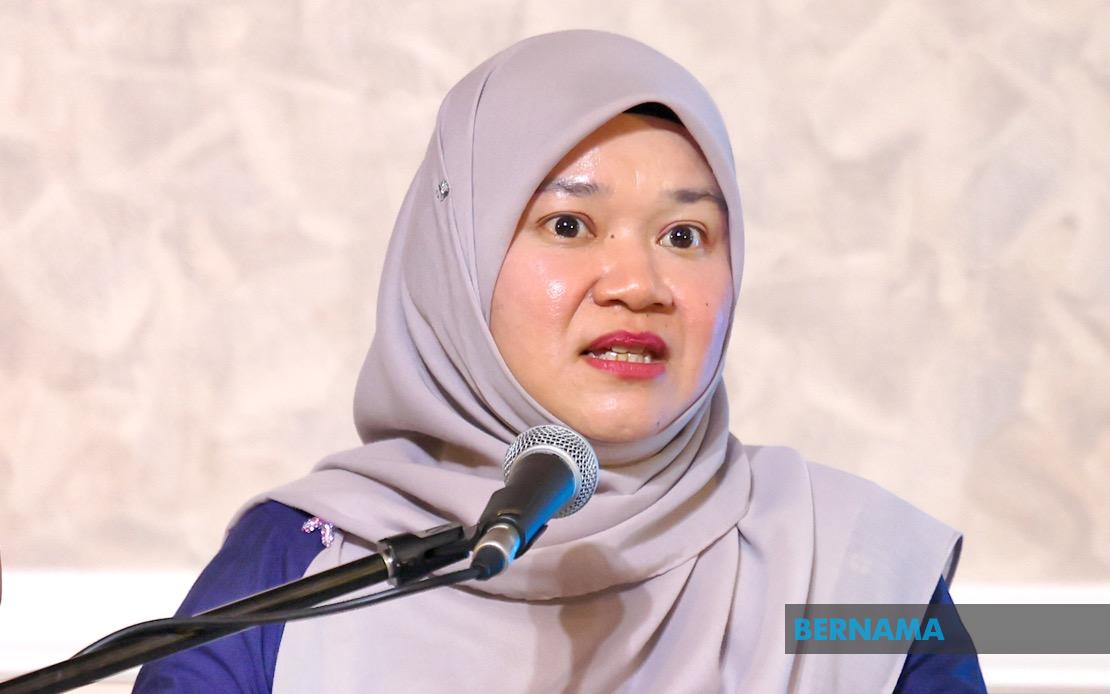
Education Minister Fadhlina Sidek, who heads the Parti Keadilan Rakyat (PKR) Wanita wing, has taken formal action against those responsible for spreading an artificial intelligence-generated video containing false and damaging claims about her. The move comes as digital manipulation technologies increasingly become weapons of choice for individuals seeking to damage public figures' reputations without accountability. Fadhlina's decision to lodge a police report signals an escalating concern about the misuse of deepfake technology in Malaysian politics, where women politicians appear to be disproportionately targeted.
In a statement released on June 24, Fadhlina characterised the video's circulation as fundamentally malicious and strategically designed to undermine both her personal standing and professional credibility. Rather than dismissing the matter as a passing internet phenomenon, she has chosen to engage the formal justice system, demonstrating a willingness to pursue legal remedies against digital harassment. This approach reflects a broader pattern emerging in Southeast Asian democracies, where political leaders increasingly resort to law enforcement channels when faced with coordinated disinformation campaigns that utilise synthetic media.
The Education Minister's statement emphasised that the disseminated video represents far more than simple gossip or political criticism—it constitutes what she views as a deliberate attempt at character destruction employing fabricated evidence. By framing the incident within a narrative of targeted harassment, Fadhlina has positioned her complaint within broader conversations about gendered attacks on female politicians. The specificity of her language—describing both reputation-tarnishing and character-destruction as the video's intended effects—suggests she recognises the dual damage such content inflicts: immediate reputational harm and longer-term erosion of public trust.
Fadhlina's call for police investigation underscores her confidence in Malaysia's legal framework to address digital crimes, though critics have previously questioned the adequacy of existing laws in managing AI-generated content. The Communications and Multimedia Act, Malaysia's primary legislation governing online content, predates widespread deepfake technology and contains ambiguities regarding jurisdiction and liability when artificial intelligence generates content. Her appeal to law enforcement effectively tests whether current investigative capabilities can trace the origins and perpetrators of sophisticated digital fabrications, a challenge that law enforcement agencies across the region continue to grapple with.
Beyond the immediate police investigation, Fadhlina leveraged her statement to call for collective action against defamation, character assassination, and sexual harassment targeting women in politics. This broader appeal carries particular weight in Malaysia's political landscape, where women remain significantly underrepresented in senior governmental positions and where anecdotal evidence suggests female politicians face more aggressive online harassment than their male counterparts. By connecting her personal experience to systemic patterns of abuse, she has framed the incident as emblematic of larger structural challenges within Malaysian politics.
The emergence of AI-generated defamatory content represents a novel challenge for Malaysia's political establishment and law enforcement infrastructure. Unlike traditional defamation cases, which typically involve clearly attributable statements or images created by identifiable individuals, deepfake videos exist in a grey area where the line between fabrication and manipulation becomes philosophically complex. Establishing intent, proving the falsity of claims made by synthetic media, and identifying responsible parties all present substantially greater evidentiary burdens than conventional defamation cases. Fadhlina's decision to pursue formal charges may therefore serve as a test case for how Malaysian courts and police handle such technology-driven harassment.
The timing of the incident reflects broader regional trends regarding the politicisation of artificial intelligence and synthetic media. Throughout Southeast Asia, observers have documented increasing attempts to weaponise deepfake technology during election cycles and periods of intense political competition. Thailand, Indonesia, and the Philippines have all reported instances where political actors or their supporters deployed AI-generated content to damage opponents. Malaysia's relative experience with such technology remains limited compared to other regional democracies, but the incident involving Fadhlina suggests the country is not immune to these emerging threats.
Fadhlina's public response also carries implications for how Malaysian women in politics respond to digital harassment going forward. By refusing to treat the matter as merely a social media annoyance and instead escalating it through formal governmental channels, she establishes a precedent that such attacks warrant serious institutional response. This approach may embolden other female politicians facing similar harassment to pursue comparable remedies, potentially creating a series of test cases that clarify legal boundaries around synthetic media defamation.
The Education Ministry's engagement with this incident carries particular significance given Fadhlina's portfolio responsibilities. As the minister overseeing educational policy, her credibility and public reputation directly affect public perception of government educational initiatives. The timing and targeting of defamatory synthetic media against someone in her position suggests awareness among perpetrators of the reputational leverage such attacks carry. This pattern—targeting individuals whose professional influence extends beyond their political role—represents a particular vulnerability for senior ministers across government.
Looking forward, Fadhlina's case will likely influence how Malaysian policymakers approach regulation of artificial intelligence and synthetic media. The incident provides concrete evidence that existing legal frameworks require updating to address technology that did not exist when current legislation was drafted. Policymakers will face pressure to clarify statutory definitions of defamation and harassment in contexts where content originates from algorithmic systems rather than human creators. The police investigation's outcome will substantially shape whether Malaysia's current legal infrastructure proves adequate for addressing such challenges or whether legislative reform becomes necessary.
The broader implications extend to Malaysia's democratic institutions and political culture. As artificial intelligence becomes increasingly sophisticated and accessible, the potential for weaponised disinformation grows correspondingly. Fadhlina's formal complaint represents an early institutional response to this emerging threat, but systematic solutions will require coordination between law enforcement, technology companies, media regulatory bodies, and political parties themselves. Her statement calling for collective action against harassment targeting women politicians suggests recognition that individual legal cases, while important, cannot alone address systemic vulnerabilities in Malaysia's digital information ecosystem.

