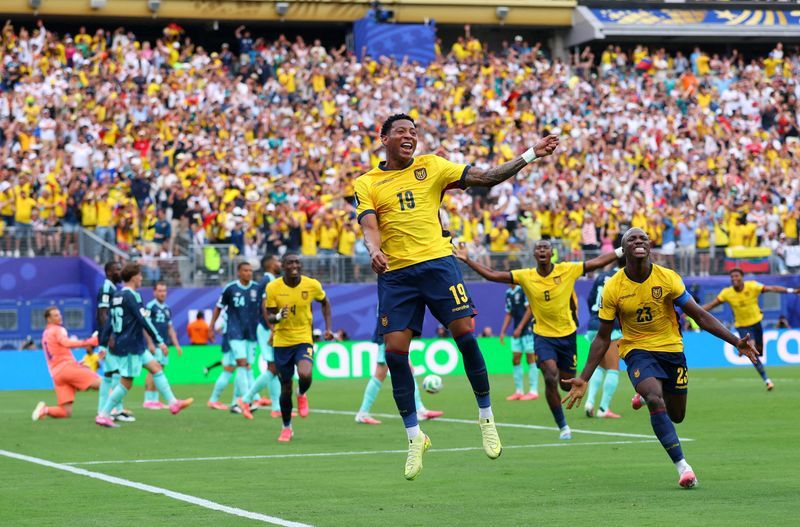
Ecuador pulled off one of the tournament's most dramatic comebacks by defeating Germany 2-1 at East Rutherford, New Jersey, on June 25, in a Group E encounter that saw the South American side snatch a place in the last 32 when their World Cup survival appeared to hang by a thread. Facing the prospect of elimination after disappointing results against Ivory Coast and Curacao, Ecuador desperately needed victory against the already-qualified Germans. What followed was a rollercoaster encounter in which Ecuador not only recovered from a devastating early setback but ultimately prevailed, sending their travelling supporters into wild celebration at the sold-out New York/New Jersey stadium.
The match began in calamitous fashion for Ecuador, who conceded in the second minute when Leroy Sane capitalized on a swift German attack. After Florian Wirtz received the ball following a rapid throw-in, he picked out Sane, who finished with his left foot from just inside the box. The goal marked a milestone for the German winger—his first ever goal at a major international tournament after 15 previous appearances at such competitions. Ecuador immediately protested that defender Aleksandar Pavlovic had committed a foul by catching Pedro Vite in the head with a raised boot during the buildup, but referee Tori Penso waved away the appeals and the goal stood.
Despite facing the prospect of a mountainous task, Ecuador responded with impressive composure and levelled the match just seven minutes later through Nilson Angulo. The goal held particular significance for the Andean nation, as it ended a lengthy run without scoring that had threatened to define their entire World Cup experience. Ecuador had entered the tournament with 39 unsuccessful attempts at goal before finally breaking through with their 40th shot, with Angulo curling his finish beyond goalkeeper Manuel Neuer from the edge of the penalty area. The goal sparked jubilation among the sea of yellow shirts filling the stands, as Ecuador's supporters sensed their team might yet salvage their campaign.
The complexity of the match increased as the second half unfolded, marked by another controversial refereeing decision. Referee Penso initially awarded Germany a penalty kick after Kai Havertz appeared to be brought down by defender Joel Ordonez following a pass from Felix Nmecha. However, a VAR review intervened and the decision was overturned when officials identified a foul by Germany in the buildup play that had gone unpunished. This reversal proved pivotal, as it kept Ecuador in the contest and allowed them to maintain their pressing attacking approach without the desperation of chasing a two-goal deficit.
Ecuador's crowning moment arrived in the 78th minute when Gonzalo Plata struck the decisive goal that would secure their passage to the knockout stage. After substitute Kevin Rodriguez flicked a corner kick toward the near post, Plata reacted with sharp alertness to stab the ball past Neuer before the goalkeeper could respond. The strike sent the stadium into uproar and clinched an improbable three-point haul that would allow Ecuador to progress as one of the eight best-performing third-placed teams across all groups. The victory represented a remarkable turnaround for a side that had arrived at this fixture under enormous pressure and with their tournament hopes seemingly slipping away.
Germany's defeat marked a significant blemish on what had otherwise been a dominant group stage performance. The European powerhouse had entered the final round having already secured top spot in Group E, and they finished with six points from their three matches. Their standing atop the group came at the expense of Ivory Coast, who accumulated four points after defeating Curacao 2-0 in their final fixture. Germany had been pursuing their 12th consecutive victory and a perfect three-win record in the group stage, but Ecuador's spirited display prevented both ambitions from being realized.
The loss highlighted recurring defensive vulnerabilities that had plagued Germany throughout the group phase. Most notably, Germany conceded in all three of their Group E matches, a concerning pattern that suggested their backline would face stern tests in the knockout rounds against more clinical finishing teams. Although Germany qualified as group winners, allowing three goals across the group stage—one to each of their three opponents—raised serious questions about the solidity of their defensive structure as the tournament progressed toward its more demanding phases.
For Ecuador, the victory provided vindication for their approach to the match and vindication for their ability to respond when facing adversity. The side's earlier inability to convert chances had created an atmosphere of anxiety that threatened to undermine team morale, but the breakthrough against Germany suggested their attackers had rediscovered their touch at precisely the moment when it mattered most. Angulo's goal, in particular, represented psychological liberation after weeks of accumulating near-misses, and it appeared to galvanize Ecuador's players with renewed belief and determination.
The implications of Ecuador's progression extend beyond their immediate satisfaction at surviving the group stage. As one of the better-performing third-placed teams, Ecuador would face a potential meeting with one of the group winners, adding another layer of challenge to their knockout campaign. Nevertheless, their ability to defeat an established European power demonstrated that they possessed the tactical discipline and offensive capability to trouble even the tournament's better-organized defenses, a factor that would likely concern their round-of-32 opponents.
From a regional perspective, Ecuador's qualification represents a significant achievement for South American football at this tournament. While traditional powerhouses like Brazil, Argentina, and Uruguay had been expected to advance, Ecuador's passage—secured through direct victory over a heavyweight rather than through fortunate circumstances—reflected the depth of talent and resilience present within the continent's football ecosystem. The victory also provided a narrative of redemption for a team that had appeared destined for early elimination, reminding observers that tournament football's unpredictability remains one of its enduring appeals.

