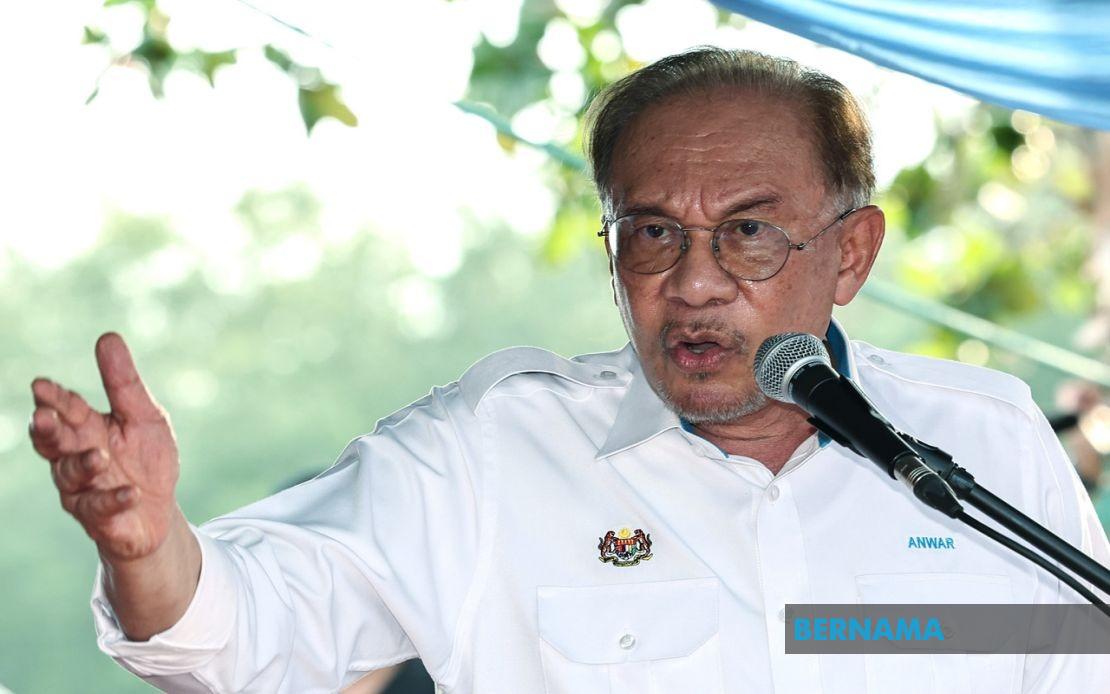
Prime Minister Datuk Seri Anwar Ibrahim has reiterated the government's commitment to ensuring that Malaysia's economic gains and development initiatives reach every segment of society, particularly those living in rural areas and at the grassroots level. Speaking during an engagement with fishing communities, farmers and local residents at Pantai Leka Food Court in Muar on June 15, Anwar underscored that national prosperity should not remain concentrated among urban centres or high-income groups, but must be tangibly felt by the broader population.
The Prime Minister's remarks highlight a growing emphasis within the MADANI administration on inclusive growth models that extend beyond headline-grabbing infrastructure megaprojects. While Malaysia has invested heavily in large-scale developments and technological initiatives, Anwar stressed that true progress is measured by the tangible improvements experienced by communities traditionally marginalised from economic opportunities. His comment that development "must be enjoyed by all" signals a philosophical shift toward more equitable distribution of benefits that accrue from national growth, a concern that resonates strongly in Malaysian politics given persistent wealth disparities between urban and rural areas.
Central to this vision is the recognition that farmers, fishermen, rice cultivators and small-scale business operators form the backbone of many rural economies yet frequently lack meaningful access to modernisation benefits. These communities often struggle with inconsistent income, limited access to technology, and inadequate infrastructure compared to their urban counterparts. By specifically naming these groups during his address, Anwar acknowledged their contributions to the nation while signalling that government support mechanisms will be redirected toward addressing their particular needs and challenges.
While technological advancement remains integral to Malaysia's competitive positioning in a globalising economy, Anwar cautioned against allowing artificial intelligence, digital transformation and other cutting-edge initiatives to become the sole focus of development strategy. The Prime Minister's assertion that welfare and income support for rural populations remain government priorities reflects recognition that technology adoption without complementary support systems risks deepening divides between digital haves and have-nots. This nuanced stance attempts to balance progress with pragmatism, acknowledging that rural communities may require different pathways to prosperity than urban and industrial sectors.
The Prime Minister emphasised his government's reliance on established social safety nets and targeted assistance programmes to reach vulnerable populations. According to Anwar, relevant government agencies and authorities continuously work to ensure that welfare initiatives and financial support reach intended beneficiaries efficiently. However, the effectiveness of these programmes depends significantly on whether they accurately identify genuine needs and whether distribution channels remain free from bureaucratic delays or misallocation. Strengthening these mechanisms remains crucial given persistent complaints from rural residents regarding programme accessibility and responsiveness.
Crucially, Anwar directed his remarks toward Cabinet ministers and political leaders at all levels, urging them to venture beyond their offices to hear directly from constituents about their grievances and challenges. This call for ground-level engagement reflects frustration with governance models that rely heavily on intermediaries or statistical data rather than direct interaction with affected communities. When political leaders personally engage with grassroots populations, they gain firsthand understanding of implementation gaps between policy intention and ground reality, enabling more responsive and effective interventions.
The Prime Minister's emphasis on "responsible leadership" carrying the courage to advocate for those positioned at society's economic margins suggests awareness that powerful interests often dominate policy discussions while marginalised voices struggle for representation. In Malaysia's political landscape, where rural constituencies wield considerable electoral influence, this positioning reflects both genuine commitment to inclusive governance and pragmatic recognition of political imperatives. Anwar's framing suggests that true leadership involves amplifying voices that lack institutional platforms rather than merely pursuing policies that advance narrow elite interests.
The worry expressed implicitly in Anwar's remarks concerns the risk of creating a two-tiered Malaysia where modernisation benefits concentrate among those already economically advantaged while rural and lower-income populations experience slower improvement in living standards. Such widening gaps can fuel social tensions, erode political stability, and ultimately constrain overall economic potential as large population segments remain unable to contribute fully to productivity and consumption. Addressing this requires deliberate policy choices that sometimes prioritise equity over pure efficiency metrics.
For Malaysian businesses operating in rural and agricultural sectors, the Prime Minister's statements signal potential shifts in government support mechanisms and procurement priorities. Companies serving farming communities, fisheries, and small-scale manufacturers may find increased opportunities through government programmes designed to enhance rural productivity and incomes. Additionally, businesses could benefit from government initiatives addressing rural infrastructure, technology transfer and market access for smallholder producers. However, translating rhetorical commitment into sustained resource allocation and effective programme implementation remains an ongoing challenge for any administration.
Regionally, Anwar's emphasis on inclusive development carries significance for Southeast Asian nations grappling with similar rural-urban divides and inequality challenges. Malaysia's approach to ensuring that technological progress and economic growth benefit broader population segments offers lessons and potential models for neighbouring countries pursuing development strategies. The emphasis on direct political engagement with grassroots communities also reflects broader regional trends toward more participatory governance approaches, though effectiveness varies significantly across implementations.
Looking forward, sustaining this inclusive development agenda requires more than periodic high-tea engagements or campaign events with rural communities. It demands systematic review of budget allocations, institutional reforms ensuring rural voice in policy decisions, and mechanisms holding officials accountable for programme outcomes in peripheral areas. The government's commitment will be measured ultimately through concrete improvements in rural incomes, agricultural productivity, infrastructure quality, and access to services rather than through political rhetoric alone.

