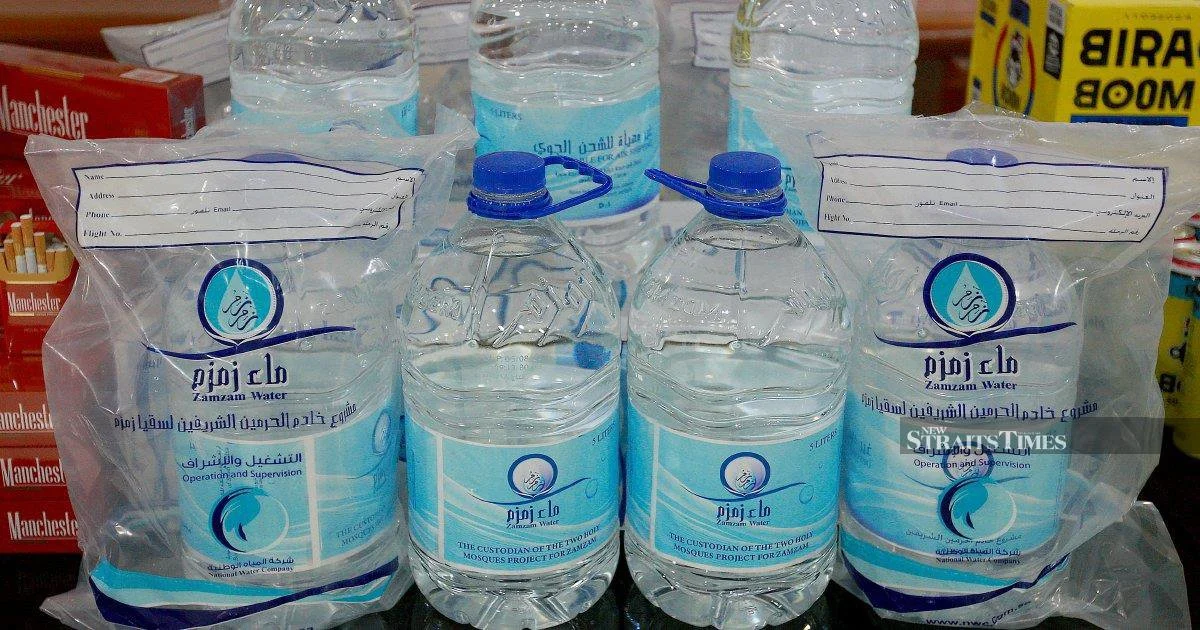
A ride-sharing driver appeared before the Klang Magistrate's Court and received a heavy financial penalty following his conviction for attempting to bring prohibited religious goods into Malaysia. The driver was ordered to pay RM101,750 after authorities determined he had attempted to import 5,500 bottles of zam-zam water, the holy water from Mecca that holds deep spiritual significance for Muslims worldwide, through West Port in Klang.
The case represents a notable intersection of religious commerce, border enforcement, and Malaysia's strict customs regulations. Zam-zam water, sourced from the well of Zam-zam in the Grand Mosque compound in Mecca, is considered sacred in Islam and is often sought by pilgrims and believers as blessed water with spiritual properties. However, Malaysia maintains stringent prohibitions on the importation of zam-zam water in commercial quantities, treating it as a controlled substance rather than a standard beverage commodity.
The timeline of this prosecution underscores the lengthy investigative and judicial processes involved in customs-related offences. The attempted smuggling occurred approximately five years prior to the court's verdict, indicating the considerable duration required for Malaysian customs authorities to build their case, complete investigations, and navigate the legal system. This extended period is not unusual for complex smuggling cases involving port operations and commercial imports, where evidence must be meticulously compiled and cross-referenced with shipping records and container manifests.
West Port, one of Malaysia's primary maritime gateways and a critical hub for regional trade, serves as the entry point for thousands of shipments monthly. The port's scale and volume make it both strategically important for legitimate commerce and attractive to those attempting to circumvent import restrictions. Customs officials at West Port work continuously to identify prohibited goods among legitimate cargo flows, combining physical inspections with intelligence gathering and documentation review.
The substantial fine imposed—exceeding RM101,000—reflects the seriousness with which Malaysian authorities treat violations of import prohibitions. Courts typically calculate penalties based on the volume of goods involved, the nature of the prohibition, and the circumstances of the attempted import. In this instance, the quantity of 5,500 bottles represented a commercial-scale operation rather than personal religious consumption, suggesting the driver's involvement was profit-oriented rather than driven by individual faith-based motivations.
For e-hailing and transport drivers in Malaysia, this case serves as a cautionary reminder about involvement in contraband operations. Transport workers and logistics personnel are sometimes targeted by smuggling networks precisely because their regular border-crossing activities provide cover for illicit goods. Drivers who knowingly or unknowingly participate in such schemes face severe legal consequences, including substantial fines that can accumulate into life-altering financial burdens.
Malaysia's regulatory approach to zam-zam water reflects broader governmental concerns about controlling religious goods and maintaining oversight of items considered spiritually significant. The prohibition is designed partly to prevent commercial exploitation of religious goods and to ensure quality and authenticity standards. Unofficial channels often lack proper documentation and certification, creating potential public health and religious authenticity issues that authorities seek to prevent through import restrictions.
The case also illuminates the operational methods of smuggling networks that target religious merchandise. These organized efforts typically involve identifying gaps in enforcement, recruiting transport operatives, coordinating port access, and arranging onward distribution channels. The five-year lag between the smuggling attempt and conviction suggests authorities conducted thorough investigation to trace the supply chain and identify all parties involved, though the focus of this particular prosecution remained on the driver's role.
Customs enforcement at Malaysian ports has intensified substantially over recent years, with enhanced technologies including advanced scanning equipment, risk-profiling systems, and intelligence sharing platforms helping identify suspicious shipments. The detection of 5,500 bottles of zam-zam water among the thousands of daily container movements demonstrates the effectiveness of these detection mechanisms, even amid the enormous cargo volumes processed regularly.
For readers involved in international trade, logistics, or transportation sectors, this conviction underscores the critical importance of complete transparency regarding shipment contents and full compliance with Malaysian import regulations. Penalties for customs violations extend beyond monetary fines and can include criminal records affecting future employment and business opportunities, particularly in regulated sectors.
The judgment also raises broader questions about the enforcement of religious commodity restrictions across Southeast Asia, where several nations maintain similar prohibitions on imported zam-zam water. Regional customs cooperation frameworks increasingly facilitate information sharing about smuggling patterns, enabling authorities to coordinate responses to organized import violations.

