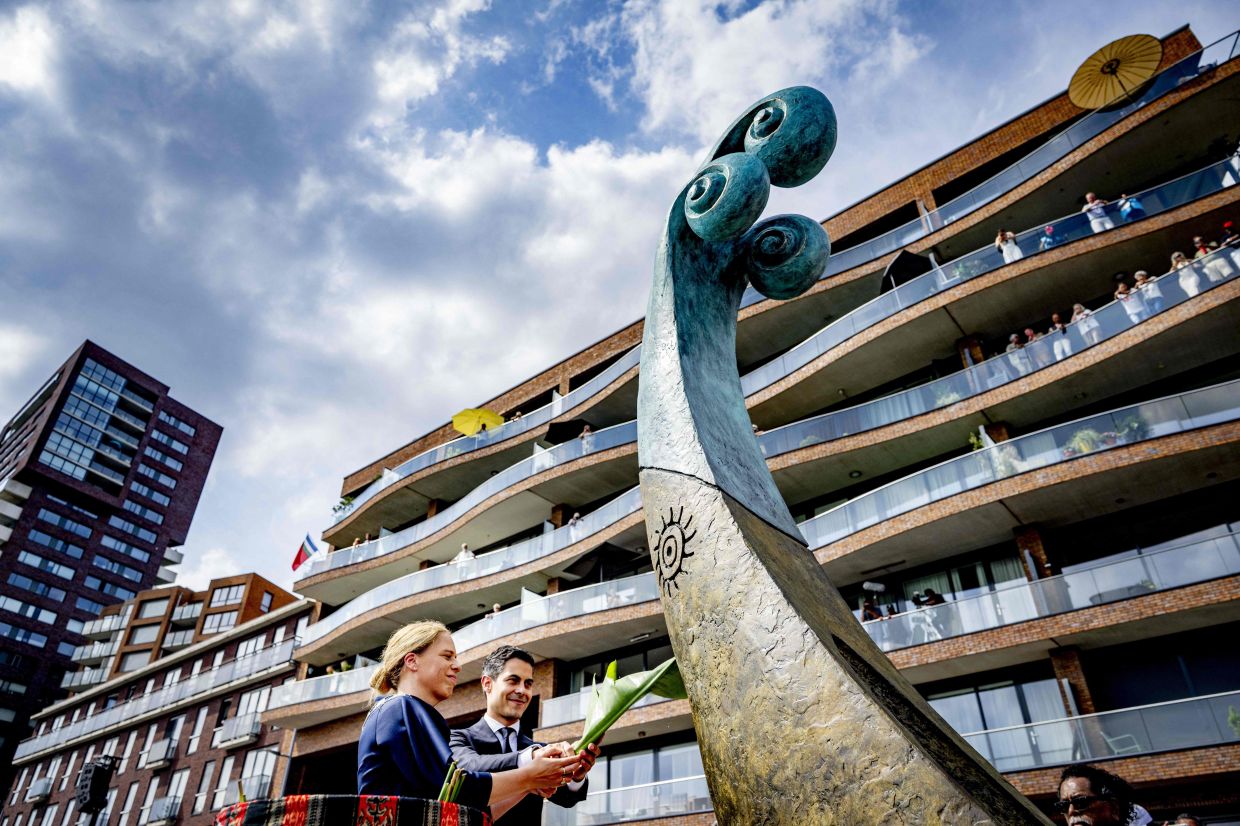
Dutch Prime Minister Rob Jetten delivered a formal state apology on Sunday to members of the Moluccan community, acknowledging decades of mistreatment and broken commitments by the Netherlands. The ceremony, held in Rotterdam with hundreds of Moluccans in attendance, marked a significant moment of official recognition for one of the darker chapters in post-war Dutch history involving the descendants of Indonesia's spice islands.
The Moluccans' predicament began during the Indonesian struggle for independence from Dutch colonial rule. Many from the Moluccan islands in eastern Indonesia had enlisted in the Dutch colonial military, fighting alongside the Dutch forces in the conflict that followed World War II. When Indonesia finally secured independence in 1949, these armed Moluccan soldiers found themselves in a precarious position, facing potential reprisals from independence-era nationalists who viewed them as collaborators with their former colonial masters.
To address this humanitarian crisis, the Dutch government orchestrated an organised mass transfer, bringing approximately 12,500 Moluccans to the Netherlands. Officials at the time framed this relocation as a temporary measure, a brief sanctuary until conditions stabilized in Indonesia and they could safely return home. Negotiations between Dutch and Indonesian authorities supposedly established this understanding, with repatriation presented as inevitable within a relatively short timeframe.
Yet the promised homecoming never materialised. Instead of temporary asylum, the Moluccans became trapped in a state of permanent limbo, relegated to substandard housing and effectively abandoned by the Dutch state. The newly arrived community received minimal integration support and faced systematic barriers to employment and social participation in Dutch society. Many were housed in former Nazi concentration camps that had been repurposed as accommodation centres, a particularly jarring indignity given the camps' recent horrific history.
At the unveiling of the Ulu Kora monument on the Lloydkade in Rotterdam—the very dock where the first ships carrying displaced Moluccans had arrived—Prime Minister Jetten addressed the assembled crowd with evident emotion. He explicitly acknowledged failures across multiple dimensions of the treatment they endured. "For the inadequate reception and housing. For being unseen and abandoned. For the unfulfilled longing for home. And for the grief and pain in so many families. For this, I offer my apologies today on behalf of the Dutch government," he stated.
The situation festered for decades, creating profound generational consequences. By the 1970s, second-generation Moluccans who had grown up in displacement and dislocation, harbouring resentment at the Dutch failure to secure them an independent homeland, began engaging in violent protests and confrontations. These actions reflected the accumulated frustration of a community that had been promised return but received only indefinite exile, systematic exclusion, and the erosion of their cultural and national identity.
Jetten's remarks balanced recognition with honest assessment of apology's limitations. "I realise the injustice cannot be suddenly removed with apologies," he acknowledged to the gathered crowd, many clutching photographs of first-generation Moluccans now deceased. "We cannot change the course of history and the reality of today with a few sentences." This candid framing avoided the trap of symbolic gestures masquerading as substantive redress, instead positioning the apology as one necessary but incomplete step.
For Malaysia and other Southeast Asian nations, this Dutch acknowledgement carries particular resonance. The Moluccan experience illustrates how colonial legacies and the politics of decolonisation created durable displacements and diasporic communities throughout the region. The delayed justice served here—more than seven decades after the wrongs occurred—underscores how postcolonial grievances can persist across generations unless formally addressed through state recognition.
The monument itself serves as a physical reminder of this historical injustice, anchored to the Rotterdam dock where displacement began. Such commemorative infrastructure, particularly when accompanied by formal governmental apology, can provide communities with official validation of their suffering and a landmark for collective memory. For descendants of the original Moluccans—many now thoroughly integrated into Dutch society yet maintaining connection to their parents' and grandparents' experiences—the recognition represents acknowledgement that their family histories of loss and displacement were not merely private sorrows but matters of state responsibility.
The timing of this apology also reflects broader contemporary reckoning with colonial histories across Europe. Nations grapple increasingly with how to meaningfully address historical wrongs without simply offering empty symbolic gestures. Jetten's statement positioned the apology explicitly as "a form of recognition and an act of historical justice," language suggesting active responsibility rather than passive regret. This distinction matters for how communities assess whether states are genuinely committed to confronting legacies of injustice or merely performing contrition.
The Moluccan case particularly resonates within Indonesian and Southeast Asian contexts because it demonstrates how decolonisation processes created vulnerable populations whose allegiances and identities became liabilities in newly independent nations. That the Netherlands initially recognised this vulnerability through organised transfer, then betrayed that recognition through indefinite detention and neglect, illustrates the fragility of humanitarian commitments when political convenience shifts. For Malaysia, which has navigated its own postcolonial complexities including management of diverse communities, the Moluccan experience offers cautionary perspective on how exclusion and broken promises generate long-term social fragmentation.
Moving forward, the symbolic significance of this apology may prove as important as any material restitution. For an aging community that endured decades of official erasure and abandonment, formal state recognition that injustices occurred and that the Dutch government bears responsibility provides a form of closure that many believed would never arrive. Whether this moment catalyses additional practical measures—financial compensation, further historical documentation, or deeper institutional reforms—remains to be seen, but the threshold of official acknowledgement has been decisively crossed.

