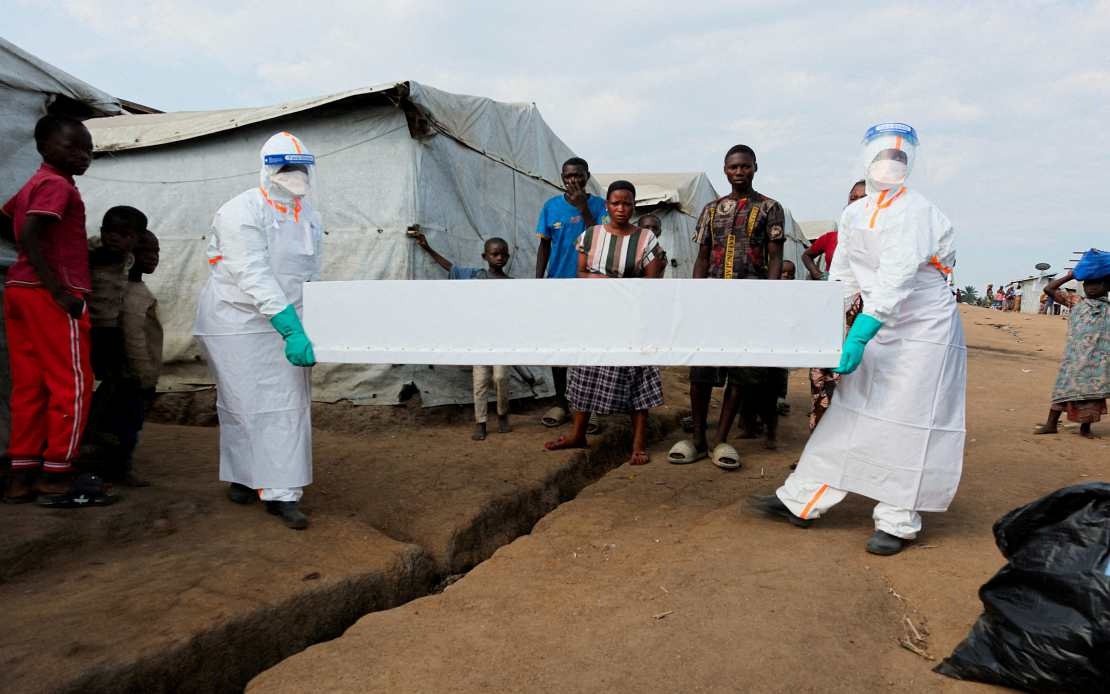
The Democratic Republic of Congo's Ebola outbreak has crossed a grim threshold, with confirmed cases now exceeding 1,000 as the crisis deepens across central Africa. As of mid-June, health officials documented 1,003 confirmed cases accompanied by 254 deaths, translating to a fatality rate of 25.3 per cent since the outbreak declaration on May 15. The mounting toll underscores the severity of an epidemic that has prompted regional and international concern about its trajectory and potential to spread beyond the Democratic Republic's borders.
The progression of infections signals both the challenges facing response teams and the unpredictable nature of viral transmission in affected communities. Despite intensive containment measures, new cases continue to emerge in provinces including Ituri, North Kivu and South Kivu, where health infrastructure remains stretched. Officials have nevertheless reported some encouraging developments, particularly a growing number of recoveries reaching at least 100 individuals, though this remains substantially lower than the total case load. Currently, 365 patients remain hospitalised or in isolation, requiring significant medical resources and trained personnel to manage.
Health Minister Roger Kamba acknowledged the complexity of the response, noting that while community engagement and diagnostic capabilities have been strengthened, one particular challenge has emerged: the contact follow-up rate has declined. This metric proves critical in Ebola containment, as tracing and monitoring of individuals exposed to confirmed cases directly correlates with transmission prevention. The deterioration in this area suggests that despite committed efforts, maintaining comprehensive surveillance networks across affected regions presents an ongoing operational hurdle for the response teams.
International health experts have issued stark warnings about the potential trajectory of this outbreak. The Africa Centres for Disease Control and Prevention cautioned last week that without rapid implementation of effective transmission controls, the current epidemic could exceed the devastation witnessed during the 2014-2016 West African crisis. That outbreak claimed more than 11,000 lives across Guinea, Liberia and Sierra Leone, becoming the deadliest Ebola event in recorded history. Such comparisons, though sobering, serve to mobilise resources and emphasise the urgency of containing the Democratic Republic's outbreak before it reaches similar proportions.
A significant scientific development emerged from joint investigations conducted by Uganda's Department of National Health Laboratory and Diagnostic Services alongside Congo's Institute of National Biomedical Research. Researchers identified the current strain as Ebola Bundibugyo and determined that it originated from a new wildlife spillover event. This finding carries important implications, as it rules out the possibility that the outbreak stems from hidden transmission chains or reactivation of previous infections. Instead, it points to fresh zoonotic transmission, suggesting that wildlife-to-human contact mechanisms continue to facilitate viral emergence in the region.
The Ebola Bundibugyo strain, while belonging to the same viral species as other known variants, represents a distinct lineage with potentially different epidemiological characteristics. Understanding the specific strain helps epidemiologists refine predictions about transmission rates, severity patterns and treatment effectiveness. The wildlife origin also prompts questions about environmental and ecological factors in central Africa that may be facilitating increased human-animal contact, a consideration with long-term implications for disease prevention strategy.
Response authorities have concentrated their efforts on three key pillars: community communication, enhanced diagnostic capacity and improved case management protocols. These interventions directly address the chain of transmission by raising awareness among populations, enabling faster identification of suspected cases and ensuring that confirmed patients receive appropriate clinical care. Health Minister Kamba emphasised that intensification of these measures remains the primary operational focus, recognising that technical and social interventions must advance simultaneously to achieve meaningful progress.
For Southeast Asian readers and policymakers, the Democratic Republic of Congo outbreak carries cautionary significance. While geographical distance provides some protection, the region's deepening trade ties and people-to-people connections with central Africa mean that novel pathogens circulating there warrant vigilant monitoring. Malaysia's health authorities, alongside those across ASEAN, have likely heightened surveillance at ports and airports for travellers from affected regions. The outbreak demonstrates how rapidly infectious disease can overwhelm even moderately-resourced health systems and underscores the importance of investing in regional epidemiological capacity and cross-border disease surveillance networks.
The convergence of humanitarian crisis, scientific challenge and geopolitical significance makes this outbreak a critical test of international disease response mechanisms. The Africa CDC's involvement reflects broader recognition that containing African epidemics protects global health security. For a region like Southeast Asia, characterised by high population density, significant international mobility and emerging market economies, investing in robust early warning systems and preparedness capacity represents prudent risk management in an era of recurring pandemic threats.

