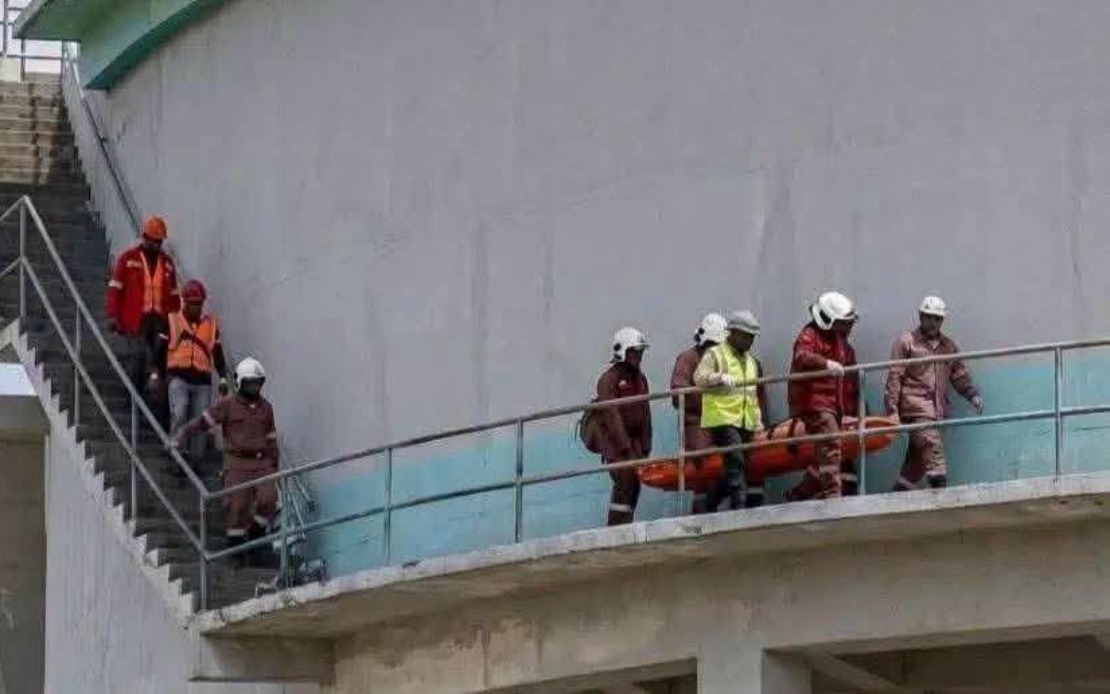
Malaysia's Department of Occupational Safety and Health (DOSH) has initiated a comprehensive investigation into a workplace fatality that claimed the life of an industrial trainee during water tank cleaning operations at Menara Saujana Perdana 1 in Sungai Buloh, Selangor, on June 16. The incident highlights ongoing workplace safety concerns in confined space operations, a sector that has long presented significant hazards to workers across the country.
DOSH director-general Hazlina Yon disclosed that investigators from the department's Selangor office have already conducted an inspection of the accident scene and implemented protective measures to preserve evidence. A notice has been issued preventing any unauthorized disturbance to the site, a standard procedure that allows authorities to conduct thorough forensic and technical investigations without interference. The departmental team is currently gathering statements from witnesses and compiling documentation that will form the basis of the formal investigation report.
The investigation will proceed under Sections 15, 17 and 18 of the Occupational Safety and Health Act 1994, a legislative framework that establishes the fundamental obligations of employers, self-employed persons, and other relevant parties to guarantee the safety, health and welfare of their workforce and anyone else who might be exposed to workplace hazards. These statutory provisions represent Malaysia's primary mechanism for enforcing occupational safety standards and form the basis for potential enforcement actions should violations be identified.
Confined space work represents one of the most dangerous categories of industrial activity globally, and water tank cleaning falls squarely within this high-risk classification. Such operations present multiple overlapping hazards including oxygen depletion, toxic gas accumulation, atmospheric contamination, and physical dangers from equipment and the confined environment itself. The nature of the Sungai Buloh incident underscores why DOSH has specifically emphasized the necessity for employers to implement rigorous safety protocols before permitting worker entry into confined spaces.
Hazlina's statement stressed that all work involving confined spaces must be executed in strict adherence to established safe work procedures, with particular emphasis on obtaining the required work permits before commencing operations. Control measures must be implemented and verified before any worker is permitted to enter such environments. This multi-layered procedural approach is designed to create redundancy in safety systems, ensuring that lapses in any single safeguard do not result in catastrophic outcomes.
The role of employers in risk management cannot be overstated in the context of this incident. Under Malaysian occupational safety law, employers bear primary responsibility for identifying and evaluating all risks associated with their work activities before operations commence. This responsibility intensifies dramatically when the work involves high-risk operations such as confined space entry. The assessment process must be thorough, documented, and reviewed to identify control measures that can reduce or eliminate identified hazards.
Training and supervision emerge as critical vulnerabilities in many workplace accidents. DOSH emphasized that industrial trainees and newly hired workers engaged in high-risk activities must receive comprehensive occupational safety and health training and receive detailed briefings specific to their assigned tasks. Equally important is ensuring these workers are placed under the supervision of competent supervisors who have themselves received appropriate training and possess the knowledge to oversee complex, hazardous operations. The supervisory relationship serves as the final human safeguard against operational failures.
The department's statement underscores a fundamental principle: every individual involved in work activities must develop a clear understanding of the specific risks they face, demonstrate compliance with established work procedures, and possess the capability to perform their duties safely. This principle applies equally to direct employees, industrial trainees, vendors, and contractors. The shared responsibility extends throughout the entire supply chain of any work activity, with no exceptions for contingent or temporary workers.
For Malaysian businesses engaged in maintenance, cleaning, and infrastructure work, this investigation carries immediate practical implications. Employers must conduct urgent audits of their confined space procedures, ensure all personnel have received current training, verify that appropriate permits and control systems are in place, and confirm that supervisory structures are adequate. Non-compliance with these requirements now carries heightened risk following this fatal incident, as regulatory scrutiny will intensify across the sector.
The broader context in Southeast Asia suggests that water tank and confined space accidents remain persistent problems despite regulatory frameworks being in place throughout the region. Several factors contribute to recurring incidents: cost-cutting pressures that incentivize bypassing proper procedures, insufficient training budgets, inadequate supervision due to understaffing, and sometimes a cultural normalization of risk-taking in certain industries. The Sungai Buloh case provides an opportunity for the region's safety professionals to reassess their approaches.
DOSH's investigation will likely produce detailed findings regarding what specifically failed in the safety chain at Menara Saujana Perdana 1. Whether deficiencies are found in pre-work assessment, permit systems, worker training, supervisory oversight, or equipment provision, the resulting findings will inform enforcement decisions and establish important precedents for similar operations. Past DOSH investigations have resulted in substantial fines and, in egregious cases, criminal prosecution of responsible company officers.
The statement's repeated emphasis on employer responsibility reflects a deliberate enforcement strategy. By repeatedly articulating employer obligations in public communications following serious incidents, regulatory agencies signal their prioritization of accountability and establish clear expectations for the business community. This approach serves both to deter non-compliance and to provide employers with concrete guidance about what constitutes acceptable practice.
Looking forward, this incident will likely prompt sector-wide safety reviews among facilities management companies, building maintenance contractors, and industrial cleaning services throughout Malaysia. Insurance providers may also tighten their underwriting standards for confined space work, potentially increasing premiums or demanding enhanced safety documentation. The ripple effects of a single fatal incident often extend far beyond the immediate investigation, reshaping industry practices and risk management expectations across entire operational categories.

