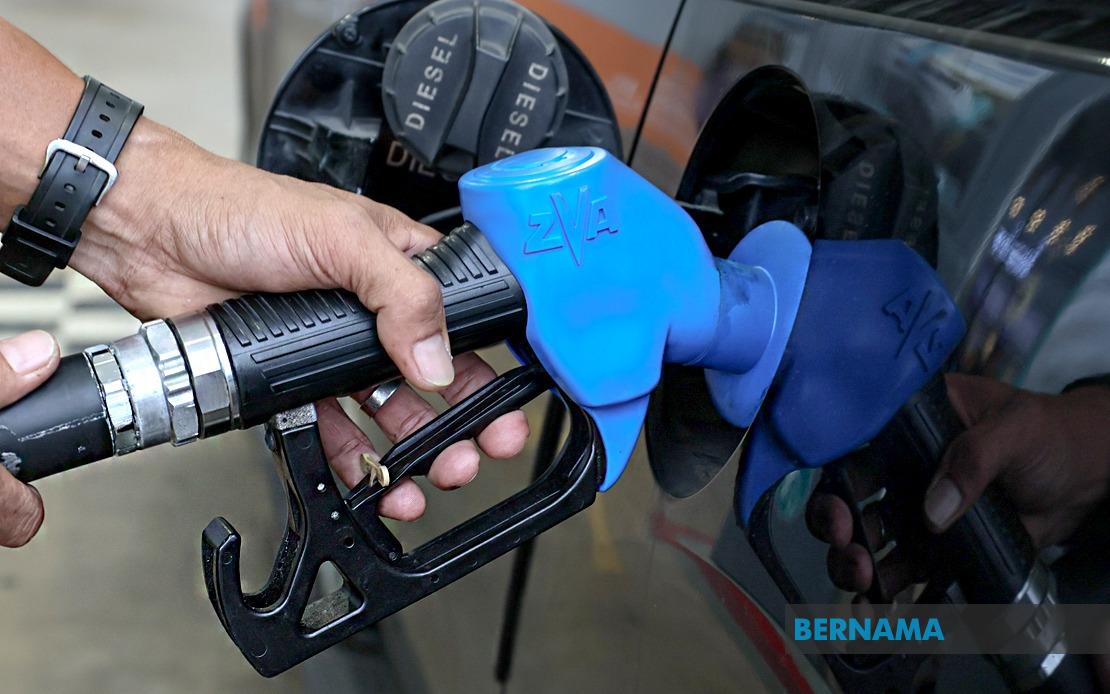
Prime Minister Datuk Seri Anwar Ibrahim's announcement of a subsidised diesel price reduction to RM2.10 per litre starting in July represents a significant shift in Malaysia's fuel subsidy architecture, with economists predicting measurable benefits across the transport and retail sectors. The initiative, delivered through the BUDI95 verification programme using MyKad identification, aims to create a more uniform national pricing structure while maintaining affordability for ordinary Malaysians. Currently, diesel carries a subsidised price of RM2.15 per litre in Sabah and Sarawak, contrasting sharply with the unsubsidised Peninsula rate of RM4.37 per litre—a disparity that has generated longstanding concerns about equity and economic efficiency.
Dr Nanthakumar Loganathan, a professor of economics at Universiti Teknologi Malaysia, emphasises that the agriculture and fresh produce sectors stand to gain substantially from lower diesel expenses. Most components of the basic food supply chain remain heavily dependent on fuel costs, making them acutely vulnerable to price fluctuations. Traders have consistently attributed retail price increases to climbing energy bills, suggesting that even modest reductions at the pump could translate into tangible savings for consumers purchasing vegetables, fruits, and other perishables transported via diesel-powered vehicles. The reduction should prompt corresponding adjustments throughout distribution networks, provided merchants pass savings forward rather than absorbing them as margin improvements.
However, Dr Loganathan raises an important caveat regarding the sustainability of the RM2.10 benchmark should global crude oil prices surge unexpectedly. The government may need to secure additional budgetary allocations to maintain subsidy levels, potentially requiring diversified sourcing arrangements beyond conventional Middle Eastern suppliers. He suggests exploring alternative supply guarantees from producers such as Russia or non-Arab region oil-exporting nations to insulate Malaysia from price volatility and ensure long-term programme viability. This consideration underscores the tension between fiscal responsibility and the political imperative to shield citizens from energy cost shocks.
The nationwide coordination of diesel prices, including the alignment of Sabah and Sarawak pricing with Peninsular Malaysia standards, signals a deliberate pivot towards standardised national policy architecture. Dr Novel Lyndon from Universiti Kebangsaan Malaysia's Centre for Development, Social and Environmental Studies argues this represents an attempt to eliminate regional pricing disparities that have fuelled resentment and inflated operational costs for consumers in higher-priced zones. Historically, East Malaysian states benefited from lower diesel rates due to geographical remoteness, elevated logistics expenses, and heavy reliance on land and river transport infrastructure. Bringing these areas into a unified subsidy framework demonstrates governmental commitment to equitable treatment, though such standardisation carries implementation risks for economically vulnerable populations.
The professor cautions that rural communities across Sabah and Sarawak depend heavily on diesel-powered transport for agricultural output, fishing operations, goods distribution, and routine mobility. If targeted assistance mechanisms fail to materialise effectively, operational cost increases could impose severe burdens on smallholder farmers, fishing communities, and remote traders who already operate with thin profit margins. Such constituencies lack alternative transport options and cannot easily absorb price rises, meaning insufficient policy design could ultimately raise living costs for precisely those populations the subsidy programme intends to protect. The risk of unintended consequences demands careful policy implementation monitoring.
From a governance perspective, Dr Lyndon emphasises that transparent public communication remains essential for policy legitimacy. Citizens will evaluate the diesel price initiative not solely on fuel economics but on whether broader subsidy rationalisation translates into observable improvements in infrastructure, educational services, healthcare delivery, and general cost-of-living support. The government's credibility depends on demonstrating that budgetary efficiencies achieved through subsidy restructuring genuinely benefit the electorate rather than disappearing into administrative overheads or unrelated expenditures. This narrative dimension proves crucial for maintaining public confidence in reform initiatives and validating claims of fiscal responsibility.
Bank Muamalat Malaysia's chief economist Dr Mohd Afzanizam Abdul Rashid identifies the MyKad verification mechanism as a cornerstone innovation for enhancing subsidy distribution precision. The previous RON95 petrol subsidy programme demonstrated that identity-based verification systems can function reliably while simultaneously generating comprehensive fuel consumption data and curtailing illegitimate activities such as fuel smuggling. Extending this proven mechanism to diesel subsidies promises to minimise leakages inherent in earlier distribution systems, ensuring that subsidised fuel reaches intended beneficiaries rather than being diverted to unqualified purchasers or exported illicitly. This technological approach represents a modernisation of subsidy administration that previous governments struggled to achieve.
The analyst emphasises that targeted assistance mechanisms enabled by digital verification create opportunities for refined policy calibration previously impossible with blanket price controls. Rather than subsidising all diesel consumption equally regardless of user category, MyKad-based systems allow governments to differentiate support levels according to income, occupational status, or regional location if desired. This granularity potentially maximises welfare benefits while minimising fiscal outlays, addressing one of the persistent challenges plaguing energy subsidy programmes across developing economies. Malaysia's implementation approach thus positions the nation as a regional leader in deploying administrative technology for subsidy optimisation.
Looking ahead, the success of the RM2.10 diesel initiative depends fundamentally on coordinated execution across multiple government agencies, transport associations, and retail sectors. Businesses must respond positively by adjusting downstream pricing, requiring clear government communication about subsidy benefits and explicit encouragement for traders to pass savings to consumers. Without such coordination, even substantial wholesale price reductions may fail to generate expected retail relief, undermining policy credibility and public support for subsequent reform efforts. The government faces a critical test of its capacity to implement coherent economic policy affecting millions of transactions daily.
The broader context reveals Malaysia's evolving approach to subsidy reform, balancing fiscal sustainability against social protection objectives. Rather than abruptly eliminating fuel price controls—a approach that triggered unrest elsewhere—the government pursues gradual rationalisation coupled with targeted support mechanisms. This incremental strategy acknowledges that energy subsidies, while economically inefficient, serve essential functions for low-income households and geographically disadvantaged populations. The diesel price initiative therefore represents not capitulation to subsidy dependency but a sophisticated recalibration recognising that blanket price support can coexist with improved design and reduced leakage. For Malaysian consumers and business operators, the July implementation date marks a consequential moment potentially reshaping logistics economics and consumer price trajectories across the region.

