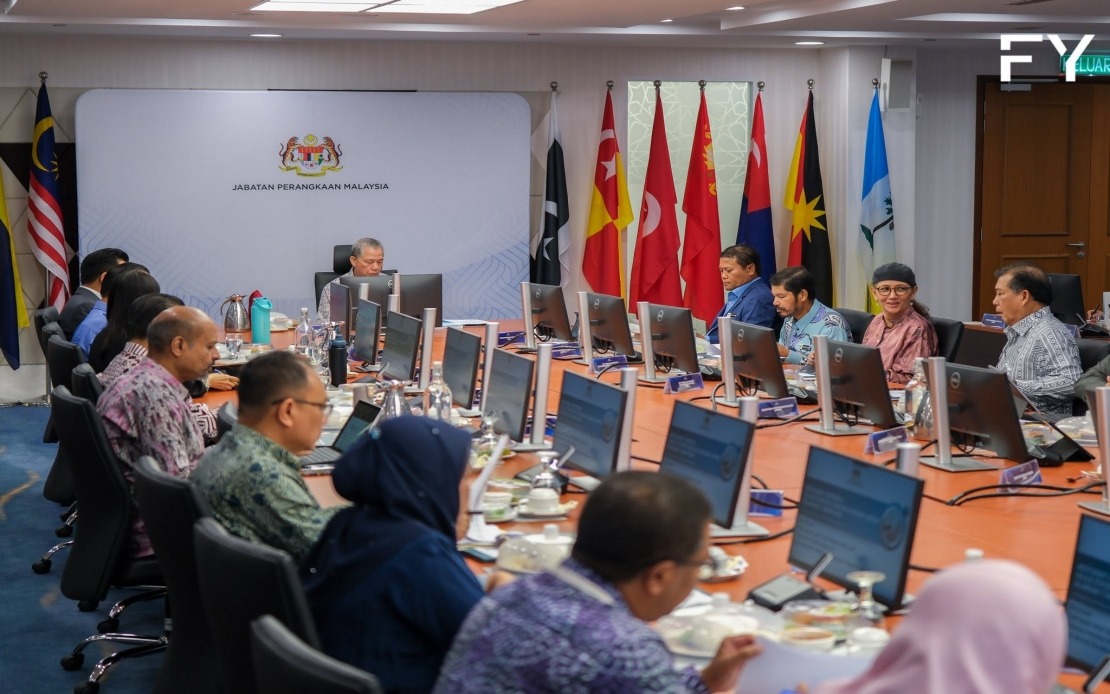
Malaysia's pathway to successful implementation of the 13th Malaysia Plan hinges on building a robust, data-centric governance framework underpinned by advanced analytics and artificial intelligence, according to Deputy Prime Minister Datuk Seri Fadillah Yusof. Speaking after chairing a high-level meeting of the National Statistics and Data Council, Fadillah articulated a vision where official statistics and data assets transcend their traditional informational role to become strategic instruments of national development, directly influencing how the government formulates, executes and evaluates policies through 2030.
The government's commitment to reinforcing the National Statistical System reflects an acknowledgment that contemporary policymaking operates in an increasingly complex global environment. Fadillah highlighted how economic uncertainties, geopolitical volatility, digital transformation acceleration, climate change impacts and rapid technological innovation—particularly in artificial intelligence—demand decision-making anchored in quality intelligence rather than intuition or historical precedent. This represents a significant institutional shift toward evidence-based governance, positioning data integrity and analytical capability as competitive advantages in an era where nations compete on innovation and adaptive capacity.
Malaysia's recent economic performance underscores the potential of data-informed strategy. The nation recorded a gross domestic product expansion of 5.4 per cent in the first quarter of 2026, a result Fadillah attributed directly to development policies grounded in rigorous data analysis. This correlation between statistical rigor and measurable outcomes provides political validation for continued investment in strengthening data infrastructure and analytical systems, demonstrating tangible returns that justify resource allocation to statistical institutions and technology infrastructure.
Critical to this agenda is the development of an integrated database ecosystem capable of synthesizing information from disparate sources while maintaining security, ethical standards and analytical integrity. Fadillah emphasized that the fragmentation of data across ministries, agencies and sectors represents a lost opportunity for comprehensive understanding of national challenges. By creating interoperable systems that allow secure data sharing and integration, the government aims to generate insights unavailable from siloed datasets, enabling holistic policy responses to multifaceted problems spanning health, economy, environment and social development.
The council meeting identified several strategic priorities that will shape Malaysia's data infrastructure development. Standardizing official statistical methodologies across government establishes consistency and comparability, essential for tracking progress against the 13MP's key performance indicators. Simultaneously, strengthening data governance frameworks ensures that expanded data collection and utilization respects privacy, protects against misuse, and maintains public trust—increasingly important as government agencies accumulate detailed information on citizens' activities and characteristics.
Energy transition, climate action, water sector modernization and sustainable development represent priority domains where comprehensive data support becomes transformational. These sectors inherently demand long-term planning horizons and integration across multiple stakeholder groups. Enhanced data systems enable government agencies, private sector partners and state authorities to align strategies, identify synergies and monitor collective progress toward ambitious environmental and resource management objectives outlined in the 13MP framework.
The elevation of artificial intelligence as a policy lever reflects Malaysia's positioning within broader regional and global technological trends. Rather than viewing AI as a peripheral tool, the government increasingly recognizes algorithmic systems as central to processing large-scale datasets, identifying patterns imperceptible to traditional analysis, and automating routine administrative functions to free resources for strategic work. This shift parallels comparable efforts across Southeast Asia, where countries including Singapore and Indonesia are similarly investing in AI capability as a development accelerator.
Big data analytics capacity development is interlinked with talent cultivation in science, technology and innovation sectors. Fadillah's mention of developing a dedicated science, technology and innovation talent database signals recognition that analytical capabilities depend fundamentally on human expertise. Building Malaysia's pool of data scientists, statisticians and AI specialists requires targeted investment in education, competitive compensation and institutional support structures that retain talent against regional competition.
Youth engagement with data governance emerged as a notable priority during the council's deliberations. By empowering young Malaysians to work with data resources and participate in development-oriented analytics, the government seeks to cultivate a generation comfortable with quantitative reasoning and evidence-based problem-solving. This cultural shift toward data literacy has long-term implications for institutional capacity and democratic engagement, as citizens equipped with data skills can better scrutinize government claims and participate meaningfully in policy discussions.
National road asset management exemplifies the granular, operational dimension of the data agenda. Effective infrastructure stewardship depends on detailed knowledge of asset conditions, maintenance requirements and usage patterns. Integrating road data into the broader national information ecosystem allows for optimization across competing priorities, preventive maintenance scheduling and resource allocation decisions that balance immediate needs against long-term network resilience and safety objectives.
The collaborative architecture underpinning Malaysia's statistical strengthening involves federal and state authorities, academic institutions, research organizations and private sector entities. This multi-stakeholder approach acknowledges that comprehensive data ecosystems cannot be constructed through central government action alone. Universities contribute research expertise, state governments provide local knowledge and administrative data, while private sector partners bring technological capacity and operational insights from their own data environments. Regional cooperation mechanisms may also prove essential, given that many challenges—from supply chain disruption to climate impacts—transcend national boundaries.
For Malaysian stakeholders monitoring governance developments, Fadillah's articulation of a data-driven 13MP signals intensified reliance on statistical evidence in policy debates. Civil society organizations, business associations and academic observers increasingly need statistical literacy to engage credibly in public discourse. The strengthened National Statistical System should theoretically enhance transparency and accountability, enabling independent verification of government claims and fostering more substantive policy discussions grounded in shared factual foundations rather than competing ideological positions.
Looking forward, the 13MP's success will ultimately depend on whether institutional commitments to data infrastructure and AI integration translate into tangible improvements in service delivery, economic opportunity and quality of life. Statistical systems and advanced analytics are enabling tools rather than ends in themselves. Their value emerges only through application to genuine policy challenges and demonstrated willingness among decision-makers to modify strategies based on evidence. As Malaysia navigates the 2026-2030 planning period amid persistent global uncertainties, the strength of its data foundations and analytical capacity may prove as consequential as traditional factors like financial resources or policy ambition.