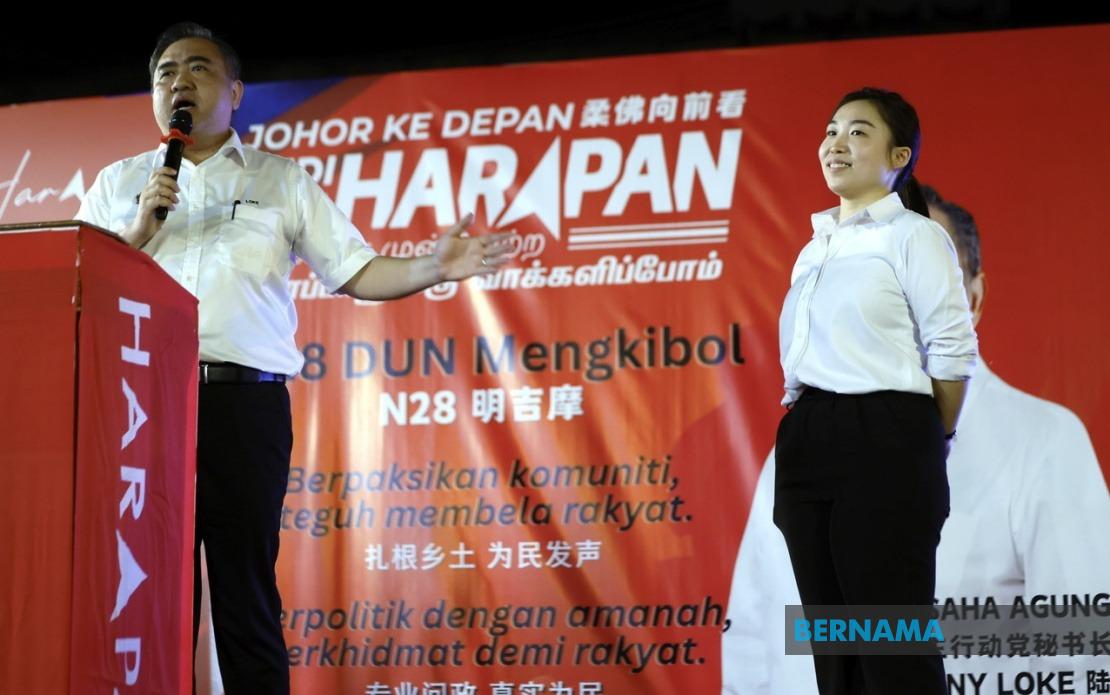
The Democratic Action Party has unveiled its opening salvo in the Johor state election campaign, announcing 33-year-old lawyer Chu Poh Yee as its standard-bearer for the Mengkibol seat. The appointment marks a generational shift in the constituency, as the party transitions from two terms of incumbent representation towards fresh political talent with legal expertise and deep community connections.
Party secretary-general Anthony Loke revealed the decision at a candidate announcement ceremony in Kluang, positioning Chu's nomination as part of a broader organisational strategy to expand opportunities for women in elected office. The move reflects growing pressure across Malaysian political parties to demonstrate commitment to gender diversity in their candidate lists, particularly as voters increasingly expect greater female representation in state and federal legislatures.
Chu's appointment comes as the incumbent assemblyman, Chew Chong Sin, transitions to higher political ambitions. Rather than seek re-election to his current seat, Chew has been identified by party leadership as a potentially strong parliamentary contender for the Labis federal constituency. This repositioning becomes possible following Labis MP Pang Hok Liong's decision to step back from electoral politics after his current term ends, creating an opening that DAP believes Chew can effectively contest.
The strategic reshuffling demonstrates how party leadership manages career progression among senior members while simultaneously injecting new energy into constituencies where incumbents have completed multiple terms. Loke framed Chew's transition as recognition of his legislative maturity and parliamentary potential, suggesting the DAP regards him as capable of contesting a larger, more competitive federal seat.
Look emphasised Chu's extensive background in providing legal assistance to residents on matters beyond traditional party politics, particularly her work supporting local elected representatives with legal aid cases. This hands-on community engagement positions her as someone with practical understanding of constituent needs rather than theoretical political knowledge. Her fluency in multiple languages and strong academic credentials further strengthen her appeal in an increasingly diverse Malaysian electorate that values technical competence alongside political affiliation.
The nomination aligns with DAP's explicit commitment to gender parity in candidate selection, a position that distinguishes the party somewhat from competitors in Malaysian politics where female candidates historically received fewer winnable seats. By fielding Chu in what party leadership characterises as a holding seat—one currently in DAP hands—the party demonstrates substantive rather than merely rhetorical commitment to women's political advancement.
Due to Mengkibol's current status as a DAP stronghold, Chu enters the campaign from a position of relative advantage compared to candidates defending marginal seats. This placement suggests party strategists regard her as capable of maintaining and potentially expanding the incumbent's winning margins, notwithstanding the transition from Chew's established local network to her emerging political profile.
The Mengkibol candidacy represents only the initial phase of DAP's Johor deployment. Party leadership confirmed that the full roster for the party's 17 targeted state seats has been finalised, comprising ten currently held constituencies, four previously lost seats the party intends to reclaim, and three additional targets. This comprehensive candidate slate indicates DAP's ambition to significantly expand its Johor footprint beyond current holdings.
Despite widespread speculation about Johor's electoral timeline, DAP's measured rollout of candidate announcements suggests confidence in the party's organisational readiness. Loke indicated four additional candidates would be revealed within days, with the remaining slate announced in coordination with broader Pakatan Harapan coalition strategy. This sequencing reflects ongoing negotiations between coalition partners regarding seat allocation and strategic messaging ahead of the state election campaign proper.
The Mengkibol announcement carries particular significance for understanding DAP's evolving approach to state-level politics in Johor, traditionally a Barisan Nasional stronghold where opposition gains have been incremental rather than transformative. By promoting younger, professionally qualified candidates like Chu into visible constituencies, DAP signals intention to position itself as a forward-looking alternative to longer-established parties, appealing to voters increasingly focused on meritocratic credentials and technical competence rather than traditional patronage networks.
For Malaysian women considering political careers, Chu's nomination offers both opportunity and precedent. Her selection demonstrates that professional achievement in law can provide pathways into electoral politics, particularly within parties explicitly committed to gender diversity. Her successful candidacy could influence other professional women across Malaysia to contemplate legislative service, potentially contributing to gradual but meaningful shifts in parliamentary gender composition.