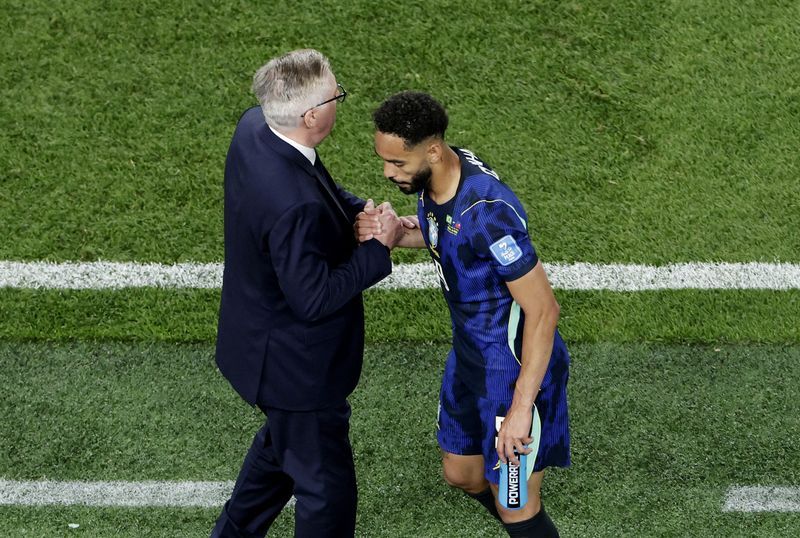
Brazil's commanding 3-0 dismissal of Haiti in Philadelphia demonstrated that Carlo Ancelotti's vision for the Seleção is beginning to crystallise, even if the Italian coach acknowledged that one impressive half hardly resolves the underlying issues that plagued his team's opening draw against Morocco. For supporters grown weary of Brazil's laboured performances, the performance offered genuine hope that a clearer direction has emerged, though significant questions remain about whether this tactical framework can withstand genuine scrutiny at the tournament's business end.
The stark contrast between Brazil's opening stalemate with Morocco and their emphatic victory over Haiti stemmed primarily from two substitutions that fundamentally altered the team's approach and movement. The most consequential change saw Matheus Cunha replace Igor Thiago in the attacking third, a modification that immediately restored the fluidity and interconnectedness between Brazil's midfield and forward players that had been conspicuously absent in their opening fixture. This switch did more than simply rotate the squad; it unlocked a natural positional balance that allowed Brazil's attacking phases to flow with renewed purpose and directness.
Cunha's introduction served as the catalyst for Ancelotti's diamond midfield formation to function meaningfully for the first time. The system, which had appeared unwieldy and disconnected against Morocco, suddenly possessed the threading and movement necessary to generate attacking momentum. Lucas Paqueta, who had been extensively criticised for his laboured first-half display in the opener, flourished in his role as the left-sided midfielder, recovering the energy and tactical awareness that had made him an integral figure in Brazil's midfield ecosystem. The combination of Paqueta's positioning, Cunha's intelligent movement, and Vinicius Junior's explosive runs down the flank created a dynamic unit that proved irresistible against Haiti's makeshift defence.
The left-sided dominance that emerged represented perhaps the most encouraging development for Ancelotti's tenure. Cunha drifted naturally across the pitch's left half, creating passing lanes and combining with both Paqueta and Vinicius in ways that seemed instinctive rather than rehearsed. This organic chemistry has been conspicuously absent on that flank since Neymar's serious injury removed one of world football's most creative forces from Brazil's ranks. The efficiency with which all three players operated together suggests that Ancelotti may have finally discovered a functional replacement for the creative responsibility Neymar previously shouldered, even if Cunha operates according to a different stylistic template.
Whereas Brazil's left flank blossomed, the right side presented a starkly contrasting picture of inefficiency and disconnection. Raphinha's performance deteriorated further from an already disappointing opening, as he struggled to impose himself despite occupying more conventional wide-forward positioning than he typically occupies in his Barcelona role. The Barcelona winger's timing proved consistently awry, his passing wayward, and his ball control inconsistent throughout the match. His earlier absence from training due to foot blisters appeared to have left lasting effects on his sharpness and confidence, and when he was eventually withdrawn, it represented an acknowledgment of those physical shortcomings.
Raphinha's struggles highlight a broader tactical awkwardness that extends beyond individual performance. In his club environment, Raphinha operates in a more fluid, interior role similar to the one Cunha exploited so effectively against Haiti. Brazil's current system pins him to the touchline, a constraint that diminishes his most dangerous attributes and forces him into a role that ill suits his strengths. The question of whether to persist with this positional assignment or to reconfigure the formation entirely to accommodate Raphinha's natural instincts becomes increasingly pressing as the tournament progresses.
Beyond the wide positions, deeper structural concerns persist regarding Brazil's defensive solidity in midfield. The 34-year-old Casemiro, operating as the diamond's base, performed adequately against Haiti's limited attacking threat but faces the genuine prospect of being overwhelmed by more sophisticated opponents with genuine pressing intensity and creative ambition. The possibility of deploying Bruno Guimaraes in a more defensive role, dropping him back from his right-midfield position to offer Casemiro additional protection and to aid in constructive play from defence, has evident merit. Such an adjustment would sacrifice offensive thrust on the right but could provide the defensive foundation necessary to compete against tournament heavyweights.
Should Raphinha's injury concerns prevent him from facing Scotland, Brazil possesses alternative options on the right wing, though each presents distinct limitations. Rayan, who appeared off-balance during his brief substitute appearance against Haiti, offers limited evidence of readiness for tournament football at this level. Luiz Henrique emerges as the more compelling alternative, offering greater technical assurance and positional intelligence, yet he too remains an untested entity in this particular tactical system.
Ancelotti's evident progress in establishing a functioning diamond framework cannot be dismissed, particularly given the frustration that characterised the Morocco encounter. The manager has identified a formation that, when properly populated with compatible players, produces attacking movements of genuine incision and purpose. However, the lopsided nature of his team's performance against Haiti—with one flank flourishing while the other remained moribund—demonstrates that the tactical jigsaw remains incomplete. The coming fixtures will reveal whether Ancelotti possesses the flexibility to address his right-sided vulnerability and whether Casemiro's midfield solidity can withstand the increased pressure that stronger opponents will inevitably apply. For now, Brazil possesses a discernible direction, but the road to tournament success demands far greater tactical coherence across all areas of the pitch.

