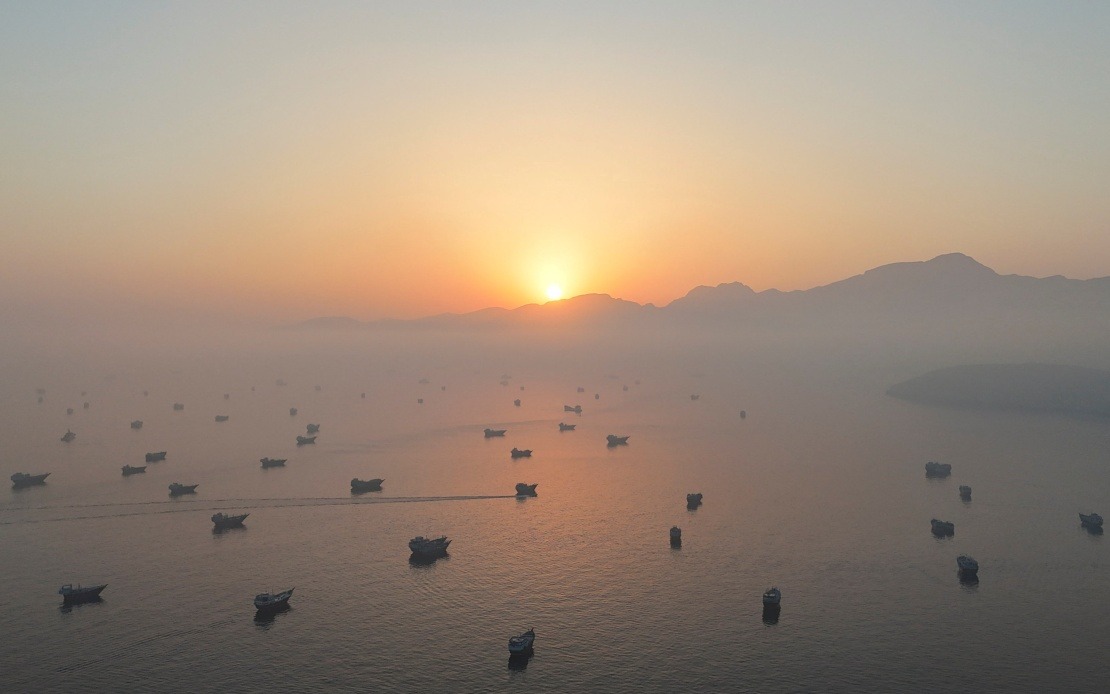
The Comprehensive and Progressive Agreement for Trans-Pacific Partnership (CPTPP), comprising twelve trading nations spanning four continents, has voiced strong support for the US-Iran agreement and accompanying measures to restore freedom of navigation through the Strait of Hormuz. The endorsement, issued through a joint ministerial statement following a virtual meeting on June 26, reflects growing alarm among major trading economies about the cascading effects of regional tensions on global commerce, particularly in the energy sector.
The twelve member states—Australia, Brunei, Canada, Chile, Japan, Malaysia, Mexico, New Zealand, Peru, Singapore, the United Kingdom and Vietnam—represent a combined economic force with substantial stakes in uninterrupted energy flows. Their collective statement underscores a fundamental anxiety shadowing international trade: the vulnerability of critical maritime chokepoints to geopolitical disruption. The Strait of Hormuz, through which roughly one-third of globally traded seaborne oil passes, has long held outsized importance to regional stability, and any prolonged restrictions directly threaten economic activity from Northeast Asia to Western Europe.
The ministerial group specifically highlighted the strategic significance of maintaining open and secure sea lanes, ensuring freedom of navigation and overflight, and guaranteeing safe, unimpeded and continuous transit passage through the Strait of Hormuz. This language carries particular resonance for nations like Malaysia and other Southeast Asian economies that depend heavily on stable energy supplies to fuel manufacturing and power generation. Any disruption to oil and liquified natural gas shipments cascades rapidly through supply chains, driving up input costs for industries across the region and compressing profit margins for energy-intensive sectors.
Beyond crude oil itself, the joint statement explicitly acknowledged the interconnected nature of modern energy trade by identifying petroleum products such as diesel, natural gas, petrochemical goods and fertilisers as commodities whose uninterrupted flow remains essential to global food security and industrial capacity. This broader perspective reveals how a regional crisis in the Middle East can quickly metastasize into shortages affecting agriculture, chemicals and manufacturing worldwide. For Malaysia in particular, which relies on imported energy and serves as a major petrochemical hub, such disruptions pose twin threats: higher input costs and reduced export competitiveness.
The ministers reaffirmed their determination to minimise disruptions to energy trade flows in accordance with the United Nations Convention on the Law of the Sea (UNCLOS), signalling that the group intends to anchor its energy security framework in established international law rather than allowing regional powers to operate outside recognised conventions. This emphasis on rules-based trade reflects a subtle but significant push-back against unilateralism and demonstrates that the CPTPP bloc increasingly views its collective voice as a counterweight to great-power competition in strategic sea lanes.
In recognising the importance of free and open markets and rules-based trade in energy and other affected products, the ministers positioned energy security as inseparable from broader prosperity. They reaffirmed commitments not to impose unjustified trade restrictive measures and called on other nations to adopt the same posture. This language carries implicit warnings to any state contemplating secondary sanctions or unilateral restrictions that might further snarl global commerce. For Malaysia and fellow Southeast Asian members, such statements represent efforts to preserve the predictable, law-governed trade environment upon which their export-dependent economies depend.
The bloc also recognised emerging regional initiatives aimed at building more resilient energy supply chains, including the Partnership On Wide Energy and Resources Resilience Asia (POWERR Asia). This framework emphasises close coordination between producer and consumer nations, acknowledging that energy security cannot be achieved unilaterally. By promoting producer-consumer dialogue, the CPTPP members are essentially arguing that inclusive cooperation and transparent negotiations offer better outcomes than confrontational postures. For resource-importing nations in Southeast Asia, such initiatives provide mechanisms to diversify supplier relationships and reduce overdependence on any single region or trading partner.
The ministerial statement specifically acknowledged the particular vulnerability of small-island developing countries in the Pacific, many of which face extreme energy security challenges due to geographic isolation and limited storage capacity. This acknowledgement signals that the CPTPP recognises how energy shocks disproportionately harm the most fragile economies within the bloc and commits to addressing these asymmetries through targeted trade diversification efforts. The broader principle—that supply chain resilience requires protecting the most vulnerable participants—carries lessons applicable to other trade relationships across Southeast Asia.
The timing of this endorsement reflects broader anxieties within the global trading community about cascading crises. The ministers explicitly framed their statement within a context of ongoing disruption to international supply chains, positioning the US-Iran agreement as one necessary step among many required to restore stability. This language suggests that CPTPP members view regional conflicts and their economic consequences as interconnected challenges requiring coordinated responses that combine diplomatic support, trade policy adjustments and investment in alternative supply routes.
For Malaysian policymakers and businesses, the CPTPP statement carries several implications. First, it signals that Malaysia's fellow trading partners view energy security as a shared challenge requiring collective action rather than zero-sum competition. Second, it reinforces the value of rules-based multilateral frameworks in stabilising global commerce during periods of geopolitical tension. Third, it suggests that diversifying energy suppliers and shipping routes, while costly, increasingly represents an economic necessity rather than a discretionary preference. As energy prices remain volatile and geopolitical risks persist, Malaysian manufacturers and exporters should anticipate continued pressure to adapt supply chains and hedge against maritime disruptions.

