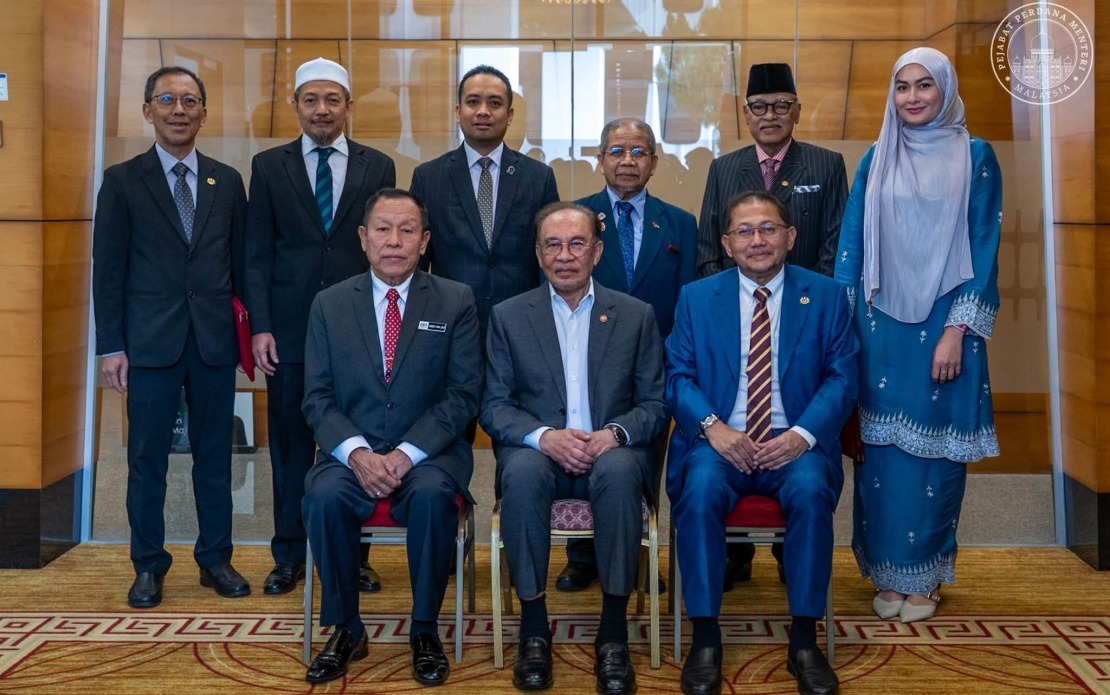
Prime Minister Datuk Seri Anwar Ibrahim has emphasized that addressing corruption in Malaysia cannot rest on the shoulders of any single institution, instead demanding a comprehensive, coordinated response involving multiple stakeholders across the public and private domains. Speaking at Parliament on June 30, Anwar underscored the necessity of collaboration spanning enforcement agencies, advisory bodies, lawmakers, the government apparatus, business community, and ordinary citizens working in concert toward the shared goal of stamping out corruption.
The Prime Minister's remarks came as he formally presented appointment instruments to newly selected members of two critical oversight bodies: the Special Committee on Corruption (JKMR) and the Anti-Corruption Advisory Board (LPPR). These appointments, made following approval from the Yang di-Pertuan Agong, mark an important institutional development in Malaysia's anti-corruption infrastructure. Anwar conveyed a resolute message to the incoming members, calling upon them to deepen their commitment to the nation's anti-corruption agenda and leverage their collective expertise toward meaningful systemic reform.
The composition of both bodies reflects a deliberate effort to ensure balanced representation and institutional independence. The JKMR, established under Section 14 of the Malaysian Anti-Corruption Commission Act 2009 (Act 694), draws its membership from both Government and Opposition representatives within the Senate and Dewan Rakyat. This cross-party structure inherently positions the committee as a check-and-balance mechanism, ensuring that anti-corruption efforts remain insulated from partisan manipulation and retain public credibility across the political spectrum.
Similarly structured to maximize objectivity, the LPPR operates under Section 13 of the same legislation, comprising individuals of demonstrated integrity who have either served the public sector with distinction or achieved eminence in their professional fields. Rather than relying on political appointment alone, this board draws from a broader pool of respected figures, whose credentials span diverse sectors and backgrounds. The deliberate inclusion of non-political appointees strengthens the board's capacity to offer independent and critical perspectives on government anti-corruption initiatives.
Anwar's emphasis on collective responsibility reflects a maturation in Malaysia's anti-corruption discourse. Rather than viewing the fight against graft as primarily a law enforcement function—the traditional purview of the Malaysian Anti-Corruption Commission—the Prime Minister articulated a vision where success depends upon institutional checks, public participation, corporate accountability, and societal commitment to ethical standards. This holistic framing acknowledges that systemic corruption cannot be eliminated through enforcement mechanisms alone, particularly when such mechanisms may themselves face pressures or limitations.
The appointment of new committee members across ideological divides carries particular significance in Malaysia's current political environment. The inclusion of Opposition figures in anti-corruption oversight bodies demonstrates institutional recognition that combating corruption transcends party politics and demands consensus-building on fundamental national values. This approach, while potentially creating productive tension through competing viewpoints, also fortifies public confidence that anti-corruption work is not being deployed selectively for political advantage.
From a regional perspective, Malaysia's institutional architecture for anti-corruption mirrors approaches adopted by other Southeast Asian democracies seeking to strengthen transparency and accountability. The two-tier system—combining a parliamentary committee with a professional advisory board—creates redundant oversight mechanisms that collectively exceed what either could achieve independently. The JKMR's legislative oversight capability complements the LPPR's expert analysis, producing a system resilient against institutional capture or degradation.
Anwar's statement that appointees from varied backgrounds share common responsibility to strengthen anti-corruption efforts speaks to an underlying principle: that integrity transcends professional specialization or political affiliation. By articulating this unity of purpose despite diversity of backgrounds, the Prime Minister framed the appointment process not as a distribution of political patronage but as a conscription of respected individuals into a shared mission of national importance. This rhetorical positioning—whether matched by subsequent performance—sets expectations for how these bodies should conduct themselves.
For Malaysian readers and Southeast Asian observers, the significance of these appointments extends beyond ceremonial installation of committee members. The statement signals government intention to maintain and strengthen institutional oversight of its own anti-corruption enforcement, a posture that distinguishes more transparent governance systems from those where executive power remains insufficiently constrained. By voluntarily subjecting its anti-corruption machinery to external parliamentary and advisory scrutiny, the government creates mechanisms through which corruption—if it occurs—becomes more likely to be identified and exposed.
The challenge ahead lies in translating institutional design into operational effectiveness. Oversight bodies are only as valuable as the autonomy, resources, and political will afforded them. The JKMR and LPPR will face tests regarding their willingness to criticize government decisions, their access to information necessary for informed analysis, and their capacity to influence anti-corruption policy when their recommendations conflict with executive preferences. The composition and appointment of new members represent necessary but insufficient conditions for meaningful institutional contribution.
Looking forward, the effectiveness of Malaysia's multi-stakeholder anti-corruption approach will depend significantly on how rigorously both the government and these oversight bodies fulfill their respective responsibilities. The Prime Minister's articulation of collective responsibility must be matched by concrete mechanisms ensuring that private sector actors, civil society organizations, and ordinary citizens possess both incentive and capacity to participate meaningfully in anti-corruption efforts. Public servants themselves must demonstrate that integrity is genuinely prized within the civil service, not merely paid lip service.
The appointment of new JKMR and LPPR members under Anwar's tenure represents an opportunity to test whether Malaysia can sustain effective institutional constraints on corruption despite the country's substantial informal power networks and historical vulnerabilities to graft. Success would demonstrate that even established democracies with governance challenges can strengthen their anti-corruption infrastructure through serious institutional investment and multi-sector collaboration. Regional peers facing similar challenges would note the outcome with considerable interest.

