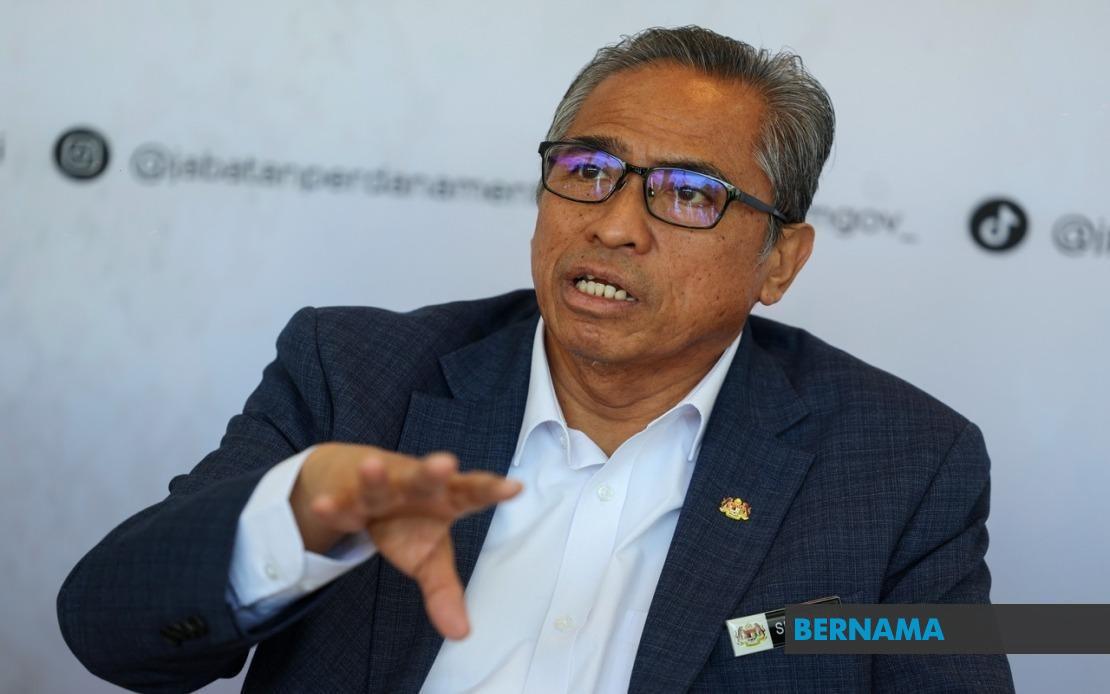
The Malaysian civil service has been tasked with a critical responsibility: converting the nation's recent diplomatic successes into tangible benefits for ordinary Malaysians. Chief Secretary to the Government Tan Sri Shamsul Azri Abu Bakar issued this call during remarks underlining how the public sector must become the engine translating Malaysia's elevated international standing into economic gains at home.
Recent working visits by Prime Minister Datuk Seri Anwar Ibrahim to Russia and Turkmenistan have repositioned Malaysia strategically in the global arena, particularly in identifying fresh export markets and deepening ties with established trading partners. These missions represent more than symbolic diplomacy; they signal Malaysia's intent to play a more assertive role in navigating the complex geopolitical and economic landscape reshaping the world order. However, Shamsul Azri emphasized that diplomatic victories remain hollow without swift implementation by the bureaucracy charged with executing policy on the ground.
The Chief Secretary framed the civil service as the institutional backbone upon which Malaysia's global ambitions must rest. Government officials, he stressed, must view these international achievements not as endpoints but as launching pads requiring immediate domestic action. This perspective reflects a growing recognition across Malaysia's leadership that external positioning means little if the country's internal capacity cannot quickly mobilize to seize the opportunities created. The gap between diplomatic achievement and economic realization is where implementation failures often occur, and Shamsul Azri's remarks suggest heightened attention to closing that gap.
Ministries overseeing economic affairs and trade carry particular responsibility in this regard. Shamsul Azri called for these institutions to operate with heightened readiness and operational velocity. Officials must move beyond traditional bureaucratic rhythms and develop the flexibility to respond rapidly to emerging opportunities. This requires not merely incremental improvements to existing procedures but a fundamental recalibration of how government agencies approach problem-solving and decision-making in an era when market conditions shift rapidly and competitors act decisively.
The Chief Secretary articulated a vision of civil servants as strategically sophisticated players capable of understanding shifts in the global economic order. This goes beyond technical competence in trade administration; it demands that officials develop genuine insight into how international commerce is transforming, which sectors are attracting capital flows, and where Malaysia can differentiate itself as an investment destination. Building this capacity requires sustained investment in training, exposure to global best practices, and incentive structures rewarding officials who think beyond conventional departmental silos.
Shamsul Azri emphasized the importance of MADANI Diplomacy—the government's stated framework for international engagement—and urged all public service personnel to internalize its principles in daily governance. Alongside this is the "Whole-of-Government" approach, which transcends the traditional compartmentalization of government agencies. Under this model, different departments recognize they are working toward shared national objectives rather than protecting institutional turf. For Malaysia, adopting this orientation could accelerate project implementation and ensure that investments attracted through diplomatic channels are greeted with coordinated, professional state responses.
The Ease of Doing Business initiative emerged as a central priority in the Chief Secretary's remarks. Malaysia has long sought to position itself as an attractive investment hub, yet foreign investors frequently encounter bureaucratic obstacles that frustrate deal-making. Streamlining administrative processes and removing unnecessary red tape must become systemic priorities rather than sporadic improvement efforts. This demands that senior officials make bold decisions to eliminate archaic requirements and that government rewards civil servants for facilitating business rather than creating obstacles.
Crucially, Shamsul Azri connected international engagement to concrete domestic outcomes: job creation for Malaysians, supply chain security, and sustained competitiveness as a destination for foreign capital. These linkages matter enormously for public legitimacy. If new trade relationships and foreign investment inflows translate into employment opportunities and rising living standards, public support for the diplomatic and institutional efforts underpinning them will strengthen. Conversely, if diplomatic wins remain visible only to elites while ordinary citizens experience no tangible improvement, confidence in government erodes.
The Chief Secretary positioned these imperatives within Malaysia's broader Public Service Reform Agenda, which includes an "internationalisation" component designed to create a higher-capacity bureaucracy aligned with national development objectives. This framing suggests that civil service modernization is not simply an administrative exercise but a strategic national project with implications for Malaysia's trajectory in a competitive region and world. Southeast Asian neighbors like Singapore, Thailand, and Vietnam maintain highly efficient public sectors that quickly translate policy intentions into implemented projects, and Malaysia increasingly must compete on similar terms.
Shamsul Azri's emphasis on building "a high-capacity public service that supports the nation's development agenda" implies recognition that Malaysia's current institutional arrangements, while functional, may be inadequate for the rapid execution demands of 21st-century economic competition. This is both a diagnosis of present limitations and a call for systematic reform. The civil service must evolve from an institution primarily concerned with administering existing arrangements into one capable of pioneering new economic relationships and removing barriers to growth.
For Malaysian businesses, these pronouncements suggest that government support systems should become more responsive and less obstructive. Exporters seeking to penetrate markets newly opened through diplomatic channels should encounter capable public institutions able to provide market intelligence, facilitate connections, and remove regulatory impediments. Similarly, foreign investors considering Malaysia should encounter a state apparatus that understands their needs and acts with professional efficiency.
The broader implications extend to Malaysia's regional standing. As ASEAN and the broader Indo-Pacific region experience economic and geopolitical realignment, nations that can rapidly translate diplomatic initiatives into economic results will gain advantage. Shamsul Azri's remarks suggest Malaysia's leadership understands this imperative and is pushing the civil service toward greater dynamism and external orientation. Whether institutional culture and incentive structures will actually shift remains to be seen, but the rhetorical commitment to transformation is now unmistakable.

